Post: AI’s Strategic Transformation of HR & Recruiting for Peak Efficiency
13 Strategic Ways AI is Reshaping HR and Recruiting for Unprecedented Efficiency
The landscape of HR and recruiting is undergoing a seismic shift, driven by the relentless advancement of Artificial Intelligence. For too long, HR departments have grappled with manual processes, data silos, and time-consuming administrative tasks that detract from strategic initiatives. From the initial stages of talent acquisition to ongoing employee development and retention, the traditional models are struggling to keep pace with the demands of a dynamic workforce and a competitive market. This isn’t merely about adopting new technology; it’s about fundamentally rethinking how talent is attracted, managed, and nurtured. Businesses today cannot afford inefficiencies that stifle growth or compromise the employee experience. High-growth B2B companies, in particular, need scalable solutions that eliminate human error, reduce operational costs, and free up high-value employees from low-value work.
At 4Spot Consulting, we’ve seen firsthand how integrating AI and automation can transform HR and recruiting, saving businesses 25% of their day and driving significant ROI. This isn’t about replacing human judgment but augmenting it, allowing HR professionals to focus on the human element that truly matters while AI handles the repeatable, data-intensive tasks. The opportunities are vast, extending beyond simple chatbots to sophisticated predictive analytics, personalized learning, and bias mitigation. For HR leaders, COOs, and founders, understanding these strategic applications of AI isn’t just an advantage—it’s a necessity for future-proofing their organizations. Ignoring these trends risks falling behind competitors who are already leveraging AI to build more agile, efficient, and engaged workforces. Let’s explore the key areas where AI is making the most profound impact, offering practical insights that can be implemented today.
1. Revolutionizing Candidate Sourcing and Discovery with Advanced AI Algorithms
One of the most time-consuming and often inefficient aspects of recruiting is identifying and attracting suitable candidates. Traditional methods rely heavily on keyword searches, manual database sifting, and limited professional networks. AI, however, is dramatically expanding the reach and precision of candidate sourcing. Advanced AI algorithms can now analyze vast pools of data from various sources—job boards, professional social networks, academic databases, and even open-source platforms—to identify passive candidates who may not be actively looking for a new role but possess the ideal skills and experience. These systems go beyond simple keyword matching, understanding context, sentiment, and inferring soft skills from online interactions. By learning from past successful hires and correlating specific attributes with job performance, AI can predict which candidates are most likely to excel in a given role and within a company’s culture. This means recruiters spend less time searching and more time engaging with high-potential individuals, ultimately reducing time-to-hire and improving the quality of applications. For instance, using tools like Make.com, we can integrate these AI sourcing engines directly with CRM systems like Keap, ensuring a continuous pipeline of qualified leads automatically flows into the recruitment funnel, categorized and prioritized for immediate action by your team.
2. Streamlining Resume Screening and Parsing for Enhanced Efficiency and Objectivity
The sheer volume of resumes received for popular job openings can overwhelm even the most dedicated recruiting teams. Manually sifting through hundreds or thousands of applications is not only laborious but also prone to human error and unconscious bias. AI-powered resume screening and parsing tools have emerged as a game-changer in this domain. These systems can rapidly process resumes, extracting key information such as skills, experience, education, and previous roles with remarkable accuracy. More importantly, they can be trained to identify specific qualifications and discard irrelevant applications, presenting recruiters with a highly refined shortlist. Beyond simple data extraction, some AI tools can analyze the content for indicators of cultural fit or potential, based on predefined criteria. A significant benefit is the reduction of bias; by focusing purely on objective criteria and anonymizing certain demographic details, AI can help ensure candidates are evaluated solely on their merit. At 4Spot Consulting, we’ve implemented solutions where AI parses resumes, extracts data, and automatically updates CRM records or even initiates the next step in the hiring process, such as sending an assessment. We helped an HR tech client save over 150 hours per month by automating their resume intake and parsing process using Make.com and AI enrichment, then syncing to Keap CRM. This level of automation significantly boosts efficiency, allowing recruiters to engage more deeply with truly qualified prospects.
3. Automating Interview Scheduling and Logistics for Seamless Candidate Experience
One of the most frustrating and time-consuming administrative tasks in recruiting is coordinating interviews. The back-and-forth emails, calendar clashes, time zone differences, and rescheduling efforts can consume hours, especially for roles requiring multiple interview stages with various stakeholders. AI-powered scheduling assistants eliminate this friction entirely. These tools integrate directly with calendars (like Google Calendar or Outlook) and can automatically find mutually agreeable times for candidates and interviewers. They handle all communications—sending invitations, reminders, rescheduling requests, and even providing pre-interview materials. The benefits extend beyond mere efficiency; an automated, streamlined scheduling process significantly enhances the candidate experience, projecting an image of professionalism and organization. Candidates appreciate the ease of booking and the clarity of communication, reducing the likelihood of no-shows and improving their overall perception of the company. For businesses, this means interview processes move faster, vital feedback is gathered more promptly, and recruiters are freed from administrative burdens to focus on qualitative candidate assessment. Implementing such a system is a straightforward win for any HR department looking to optimize its operational workflow and present a best-in-class candidate journey from the very first interaction.
4. Enhancing Candidate Engagement with AI-Powered Chatbots and Virtual Assistants
In today’s competitive talent market, providing immediate and comprehensive support to candidates is crucial for attracting top talent. However, HR teams often struggle to answer repetitive questions or provide 24/7 assistance. AI-powered chatbots and virtual assistants are filling this gap, offering instantaneous support to candidates throughout their journey. These chatbots can be deployed on career pages, job application portals, or even messaging platforms, providing answers to frequently asked questions about company culture, benefits, specific job requirements, or application status. They can guide candidates through the application process, help troubleshoot common issues, and even conduct initial screening questions to assess basic qualifications. This not only improves the candidate experience by providing always-on support but also significantly reduces the workload on HR staff, allowing them to focus on more complex inquiries and strategic interactions. Furthermore, chatbots can collect valuable data on candidate queries, helping HR teams identify common points of confusion or areas where their communication could be clearer. Bland AI’s voice AI can even take this a step further, providing natural language conversations that feel genuinely human, making the initial qualification and engagement process even more seamless and effective.
5. Leveraging Predictive Analytics for Proactive Turnover and Retention Strategies
Employee turnover is a costly problem for any organization, impacting productivity, morale, and recruitment expenses. Identifying employees at risk of leaving before they make the decision is a critical challenge. AI-driven predictive analytics tools are transforming how HR departments approach retention. By analyzing historical data—such as employee performance, tenure, compensation, engagement survey results, manager feedback, and even sentiment analysis from internal communications—AI algorithms can identify patterns and predict which employees are at a higher risk of attrition. These insights allow HR leaders to intervene proactively with targeted retention strategies, whether it’s through personalized development plans, mentorship opportunities, compensation adjustments, or addressing underlying workplace issues. This shift from reactive to proactive retention not only saves significant costs associated with replacing employees but also fosters a more engaged and satisfied workforce. Understanding these hidden patterns within your HR data, an outcome of our OpsMesh framework, allows for data-driven decisions that directly impact your bottom line and create a more stable, committed team. It’s about using data to nurture your most valuable asset: your people.
6. Creating Personalized Candidate Experiences Through AI-Driven Communication
In a world saturated with generic outreach, personalization is key to standing out and attracting top talent. AI enables HR and recruiting teams to deliver highly personalized experiences to candidates, from the initial contact to post-hire follow-ups. Instead of one-size-fits-all emails, AI can generate tailored communications that reflect a candidate’s specific skills, experience, and aspirations, making them feel genuinely valued and understood. This personalization extends to recommending relevant job openings, providing targeted content about the company culture, or even suggesting specific resources for interview preparation. By integrating AI with CRM systems like Keap, recruiters can automate sequences of personalized emails, follow-ups, and content delivery based on a candidate’s stage in the pipeline and their interactions with previous communications. This creates a more engaging and relevant journey for each individual, significantly improving response rates and the overall candidate perception of the organization. The goal is to move beyond transactional interactions and build meaningful relationships with potential hires, showcasing that your company invests in its people from day one, rather than treating them as just another application.
7. Automating Onboarding Workflows for Enhanced Efficiency and Employee Integration
The onboarding process is a critical phase for new hires, setting the tone for their entire employee journey and impacting retention rates. Yet, it’s often burdened with manual paperwork, fragmented communication, and disjointed tasks. AI and automation can revolutionize onboarding, transforming it into a seamless, highly efficient, and engaging experience. This includes automating the delivery of welcome packets, company policies, and mandatory training modules. AI can guide new hires through essential steps, answer common questions, and even personalize the learning path based on their role and prior experience. Tools like PandaDoc, integrated via Make.com, can automate the generation and signing of contracts, NDAs, and other essential documents, ensuring compliance and eliminating manual errors. Furthermore, AI can trigger tasks for various departments—IT for equipment setup, HR for benefits enrollment, and managers for initial check-ins—ensuring nothing falls through the cracks. This holistic automation not only saves countless HR hours but also ensures new employees feel supported, informed, and integrated from day one, leading to faster productivity and higher job satisfaction. An effective onboarding automation significantly reduces the time it takes for new hires to become fully contributing members of the team.
8. Transforming Performance Management and Feedback Systems with AI-Assisted Insights
Traditional annual performance reviews are often seen as archaic, providing infrequent and sometimes subjective feedback. AI is ushering in an era of continuous performance management, making feedback more timely, objective, and actionable. AI tools can analyze various data points—project contributions, peer feedback, self-assessments, and even communication patterns—to provide a more holistic and unbiased view of an employee’s performance. These systems can identify skill gaps, recommend personalized learning resources, and flag potential issues before they escalate. Furthermore, AI can assist managers in crafting more constructive feedback by analyzing their input for tone and clarity, ensuring it is both supportive and effective. Some platforms use AI to facilitate continuous feedback loops, prompting employees and managers for regular check-ins and goal updates, moving away from a single, high-stakes annual review. This leads to more dynamic growth paths, improved employee engagement, and better alignment with organizational objectives. By providing a clearer, data-driven understanding of performance, AI empowers both employees to grow and managers to lead more effectively, making performance management a tool for continuous development rather than just evaluation.
9. Personalizing Learning and Development Paths with AI-Driven Recommendations
In a rapidly evolving professional landscape, continuous learning and development are paramount for employee growth and organizational agility. However, generic training programs often fall short of addressing individual needs and career aspirations. AI is revolutionizing corporate learning by creating highly personalized and adaptive development paths. By analyzing an employee’s current skills, past performance, career goals, and even their learning style, AI algorithms can recommend specific courses, articles, mentors, and projects that are most relevant and beneficial. This ensures that learning resources are not just consumed but are genuinely impactful, closing skill gaps and fostering professional growth. AI can also track an employee’s progress, adapt the learning content in real-time based on their comprehension, and suggest next steps. This tailored approach makes learning more engaging and efficient, leading to a more skilled and future-ready workforce. For example, within an OpsMesh framework, we can integrate learning platforms with HR systems, allowing AI to identify trending skill requirements in the market and proactively suggest relevant training to your team members, ensuring your workforce remains competitive and innovative.
10. Mitigating Bias in Hiring and Promotion Decisions through AI-Powered Tools
Unconscious bias remains a persistent challenge in HR, leading to unfair hiring practices and limiting diversity. AI holds significant promise in actively mitigating these biases, leading to more equitable and inclusive workplaces. AI tools can analyze job descriptions to identify biased language that might deter certain demographic groups, suggesting more inclusive phrasing. During the screening process, as discussed, AI can focus purely on objective qualifications, reducing the impact of personal biases related to names, gender, age, or background. Furthermore, AI can be used in interview processes to standardize questions and evaluate responses based on predefined rubrics, ensuring all candidates are assessed fairly. Some advanced systems even use facial and voice analysis (though this is a more contentious area and must be used with extreme caution and ethical oversight) to flag potential interviewer bias, helping to train recruiters to be more objective. The goal is not to eliminate human judgment but to provide data and tools that support more objective decision-making, ensuring that talent is recognized and rewarded irrespective of personal characteristics unrelated to job performance. This commitment to fairness not only strengthens your employer brand but also broadens your talent pool, leading to a more diverse and innovative workforce.
11. Enhancing HR Data Analytics and Reporting with AI-Driven Insights
HR departments generate vast amounts of data, from recruitment metrics to employee engagement scores, performance reviews, and compensation information. However, without effective analytical tools, this data often remains siloed and underutilized. AI is transforming HR analytics by making it easier to extract meaningful insights and create actionable reports. AI-powered analytics platforms can process complex datasets, identify trends, detect anomalies, and even forecast future HR challenges, such as potential skill shortages or surges in demand for specific roles. These systems can create intuitive dashboards, allowing HR leaders to visualize key metrics at a glance and make data-driven decisions that impact strategic planning. For instance, AI can correlate engagement scores with turnover rates, or training investments with performance improvements, providing clear ROI for HR initiatives. Our OpsMesh framework specifically focuses on integrating these disparate data sources into a single source of truth, enabling AI to perform comprehensive analysis across all HR functions. This empowers HR professionals to move beyond administrative tasks and become strategic partners, providing insights that drive business growth and optimize human capital management.
12. Proactive Employee Wellness and Engagement through AI-Powered Platforms
Employee well-being and engagement are crucial for productivity, retention, and overall organizational health. AI is enabling HR teams to take a more proactive and personalized approach to supporting employee wellness and fostering engagement. AI-powered platforms can analyze anonymized data from internal communication tools, engagement surveys, and other sources (with strict privacy protocols in place) to identify patterns indicating stress, burnout, or disengagement within specific teams or segments of the workforce. This allows HR to intervene with targeted support, resources, or wellness programs before issues escalate. Furthermore, AI can provide personalized recommendations for well-being resources, such as mindfulness exercises, mental health support, or fitness programs, tailored to individual needs and preferences. Chatbots can also offer confidential support and direct employees to appropriate resources, ensuring they feel heard and supported. By proactively addressing wellness and engagement, companies can create a healthier, happier, and more productive work environment. This isn’t just about offering benefits; it’s about leveraging intelligence to genuinely care for your employees, demonstrating that their well-being is a core business priority and fostering a culture where everyone feels valued and supported.
13. Automating Compliance and Policy Management for Reduced Risk and Agility
Navigating the complex landscape of labor laws, company policies, and regulatory compliance is a constant challenge for HR departments, especially in multi-national or rapidly growing organizations. Manual compliance checks and policy updates are prone to error and can be incredibly time-consuming, exposing the company to significant risks. AI and automation are providing powerful solutions to streamline compliance and policy management. AI-powered systems can monitor changes in labor laws and regulations, automatically flagging relevant updates and suggesting necessary adjustments to company policies. These tools can also ensure that all required documentation, training, and acknowledgments are completed by employees, maintaining an auditable trail. For example, automated workflows can ensure that new hires complete all necessary compliance training modules and digitally sign off on company policies. This reduces the risk of non-compliance fines, legal challenges, and reputational damage. By automating these critical, yet often tedious, tasks, HR teams can ensure that the organization remains agile and compliant without diverting excessive resources. This frees up HR professionals to focus on strategic initiatives rather than getting bogged down in administrative minutiae, ensuring that your business operates securely and ethically in an ever-changing regulatory environment.
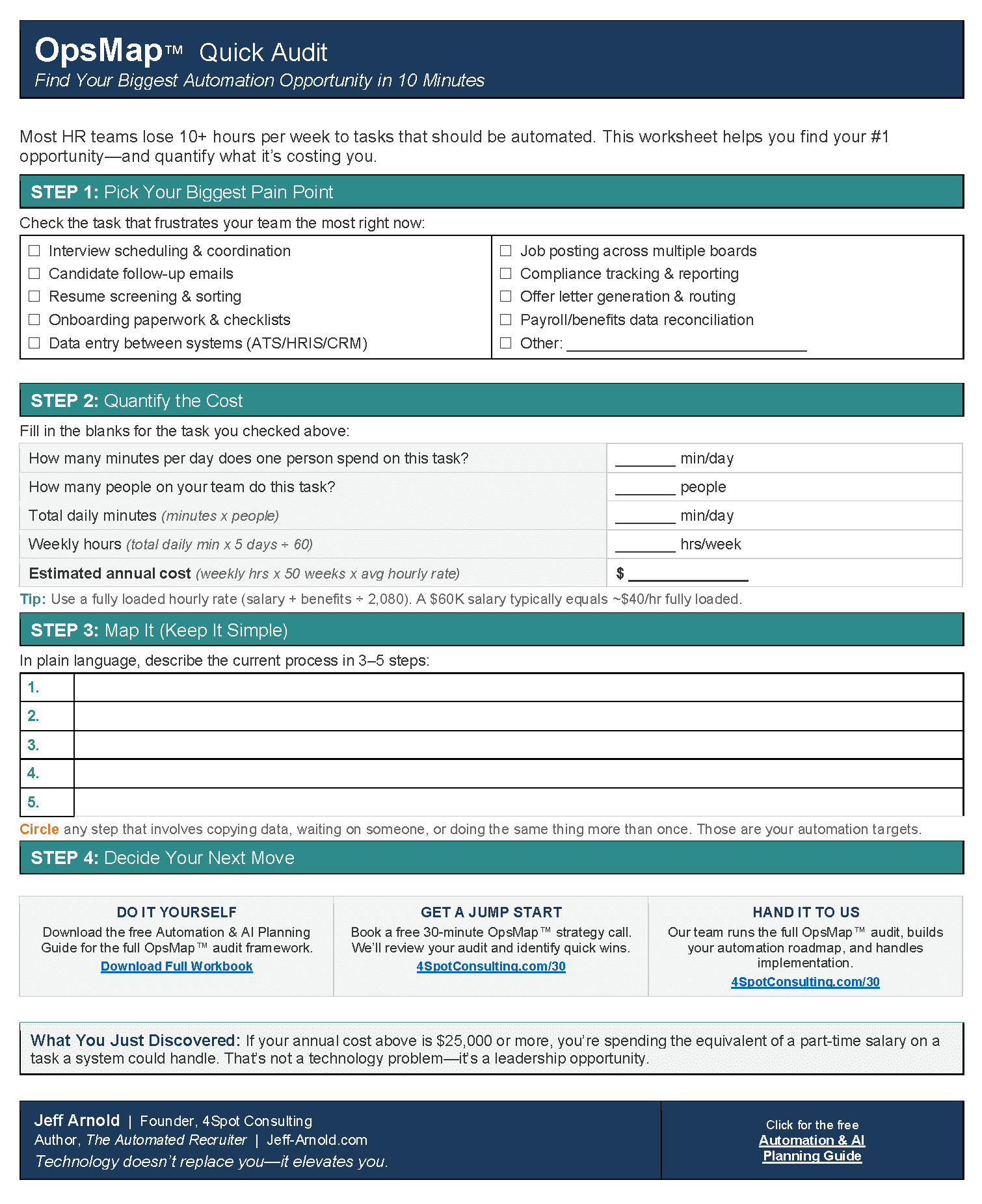
The strategic integration of AI into HR and recruiting is no longer a futuristic concept; it is a present-day imperative for high-growth businesses. From optimizing the entire talent acquisition lifecycle to fostering a culture of continuous learning and proactive employee well-being, AI offers unprecedented opportunities to elevate the HR function. By embracing these intelligent technologies, organizations can move beyond manual bottlenecks, eliminate human error, and free their most valuable employees—including HR professionals—to focus on strategic initiatives that truly impact the bottom line. This isn’t just about saving time; it’s about building a more resilient, efficient, and human-centric workforce that is ready for the challenges of tomorrow. At 4Spot Consulting, we specialize in helping companies navigate this transformation, implementing tailored automation and AI solutions that deliver measurable ROI. If you’re ready to uncover how these innovations can save your business 25% of its day, an OpsMap™ diagnostic is your next strategic step.
If you would like to read more, we recommend this article: The Future of Work: Automating for Hypergrowth


RELATED POST