Post: Transform Your HR & Recruiting: 7 AI Applications to Boost Efficiency & Gain a Competitive Edge
7 Transformative AI Applications Revolutionizing HR & Recruiting
The landscape of HR and recruiting is undergoing a seismic shift, driven by the relentless march of artificial intelligence. For HR leaders, COOs, and recruitment directors, this isn’t just about adopting new tech; it’s about fundamentally reshaping how talent is acquired, managed, and retained. At 4Spot Consulting, we’ve seen firsthand how strategic AI integration can save organizations a significant portion of their day—often 25% or more—by eliminating human error, reducing operational costs, and boosting scalability. The traditional approaches to sourcing, screening, onboarding, and even employee development are no longer sufficient in a competitive talent market. Manual, repetitive tasks consume valuable time that high-value employees could spend on strategic initiatives. This is where AI steps in, not as a replacement for human ingenuity, but as a powerful co-pilot, automating the mundane and empowering teams to focus on what truly matters: people. This article will explore seven practical, actionable AI applications that are not just trends, but essential tools for any forward-thinking HR and recruiting professional looking to optimize their operations and gain a distinct competitive edge.
From intelligent candidate matching to predictive analytics that can foresee turnover, AI offers a spectrum of solutions to perennial HR challenges. The goal isn’t just efficiency; it’s about creating a more human-centric experience for candidates and employees alike, while simultaneously driving unprecedented operational gains. We understand that business leaders value time and outcomes, which is why our focus is always on implementable, ROI-driven strategies. Let’s delve into how AI can be leveraged to transform your HR and recruiting functions from reactive to proactive, ensuring your organization is not just keeping pace, but leading the charge in the future of work.
1. AI-Powered Resume Screening and Candidate Matching
One of the most time-consuming and often biased tasks in recruiting is the initial screening of resumes. Human reviewers can take minutes to scan a single resume, and when faced with hundreds or thousands of applications for a single role, this quickly becomes an insurmountable bottleneck. AI-powered resume screening tools revolutionize this process by rapidly analyzing resumes against predefined job requirements, keywords, and even desired soft skills. These systems can parse vast amounts of unstructured data, identifying relevant experience, education, and certifications with far greater speed and accuracy than any human. Beyond simple keyword matching, advanced AI algorithms can infer candidate fit by analyzing the context and semantic meaning within their applications, reducing the likelihood of overlooking strong candidates due to minor keyword discrepancies.
The benefits extend beyond mere speed. AI can significantly reduce unconscious bias by focusing solely on objective criteria, ensuring a more equitable and diverse candidate pool. For example, by integrating with platforms like Make.com, we can automate the entire resume intake process, where applications from various sources (career pages, job boards) are fed into an AI parser. This AI extracts key data points, scores candidates based on a pre-defined rubric, and then automatically syncs qualified profiles into your CRM (like Keap) for recruiter review. This not only saves hundreds of hours per month, as demonstrated in our work with an HR tech client, but also ensures that recruiters are engaging with the most promising candidates from the outset, leading to faster hires and a more efficient use of resources. This automation eliminates the “drowning in manual work” feeling and establishes a system that simply works, allowing your team to focus on meaningful candidate engagement rather than data entry.
2. Intelligent Chatbots for Candidate Engagement and Support
In today’s fast-paced environment, candidates expect immediate responses and personalized engagement. Traditional recruiting processes, with their delays and generic communications, often lead to candidate drop-off and a poor brand image. AI-powered chatbots are transforming candidate engagement by providing instant, 24/7 support throughout the entire recruitment lifecycle. These sophisticated bots can answer frequently asked questions about job descriptions, company culture, benefits, and application status, freeing up recruiters from repetitive inquiries. Furthermore, they can pre-screen candidates with initial qualification questions, gather basic information, and even schedule interviews directly into recruiters’ calendars, integrating seamlessly with tools like Calendly or Google Calendar.
The power of these chatbots lies in their natural language processing (NLP) capabilities, allowing them to understand and respond to candidate queries in a conversational, human-like manner. For instance, using tools like Bland AI, we can deploy conversational AI agents that go beyond basic FAQs, conducting preliminary phone screenings or follow-up calls to gather more nuanced information from candidates. This creates a highly engaging and efficient experience for candidates, ensuring they feel valued and informed, while significantly reducing the administrative burden on your recruiting team. By automating these initial touchpoints, organizations can maintain a strong candidate pipeline, reduce time-to-hire, and enhance the overall candidate experience, all contributing to a stronger employer brand in a competitive market.
3. AI-Enhanced Onboarding and Employee Journey Personalization
The onboarding process is critical for new hire retention and productivity, yet it’s often a disjointed, manual, and overwhelming experience. AI can inject much-needed personalization and efficiency into onboarding, ensuring new employees feel supported and integrated from day one. Imagine an AI-powered onboarding portal that tailors content—training modules, policy documents, team introductions—based on the new hire’s role, department, and even learning style. This goes beyond static checklists, offering interactive experiences and guiding new employees through their initial weeks with personalized prompts and resources.
Beyond content delivery, AI can automate numerous administrative tasks associated with onboarding. This includes document generation (offer letters, contracts via PandaDoc), system access requests, IT setup notifications, and even scheduling introductory meetings with key team members. For example, using an OpsBuild approach with Make.com, we can design workflows that automatically trigger a sequence of actions upon a new hire’s acceptance: generate and send the contract, initiate background checks, provision software licenses, and assign an AI-driven mentor or buddy program. This ensures a seamless, error-free process, eliminating the typical first-day paperwork deluge. Furthermore, AI can monitor early employee engagement and performance, flagging potential issues or areas where additional support might be needed. This proactive approach to personalization and automation during onboarding significantly improves new hire satisfaction, accelerates time-to-productivity, and reduces early-stage turnover, demonstrating a tangible ROI for your HR investments.
4. Predictive Analytics for Talent Retention and Succession Planning
Losing key talent is incredibly costly, impacting productivity, morale, and recruitment budgets. AI-powered predictive analytics offers HR professionals a proactive defense against unwanted turnover. By analyzing vast datasets—including employee performance reviews, engagement survey results, compensation data, tenure, promotion history, and even external market factors—AI algorithms can identify patterns and predict which employees are at the highest risk of leaving the organization. This isn’t about surveillance; it’s about providing actionable insights to HR leaders so they can intervene effectively. For instance, an AI might flag that employees in a particular department with X years of tenure, who haven’t received a promotion in Y years, and whose compensation is Z% below market average, have a 70% likelihood of leaving within the next six months.
These insights empower HR teams to initiate targeted retention strategies, such as personalized development plans, mentorship opportunities, compensation adjustments, or career path discussions, *before* an employee decides to look elsewhere. Beyond retention, predictive analytics is invaluable for strategic succession planning. AI can identify high-potential employees, assess skill gaps within the organization, and forecast future leadership needs based on business growth projections. This allows organizations to proactively develop internal talent pipelines, ensuring critical roles can be filled from within, fostering internal growth, and reducing reliance on costly external recruitment. By leveraging AI in this way, companies can move from reactive talent management to a strategic, data-driven approach that safeguards their most valuable asset: their people.
5. AI-Driven Performance Management and Feedback Systems
Traditional annual performance reviews are often seen as a bureaucratic burden, providing infrequent and sometimes subjective feedback. AI is transforming performance management into a continuous, data-driven, and more objective process. AI-powered systems can gather and analyze real-time performance data from various sources, including project management tools, communication platforms, and HRIS systems. This allows for more frequent and granular insights into employee contributions, progress on goals, and areas for development. For example, AI can analyze communication patterns to identify collaboration strengths or areas where individuals might be feeling disengaged, or it can summarize feedback from multiple sources to provide a more holistic view.
Beyond data aggregation, AI can assist managers in delivering more effective feedback. Some tools offer sentiment analysis of written feedback, ensuring tone is constructive and supportive. Others can suggest personalized learning resources or coaching tips based on an employee’s performance data and career aspirations. This shifts the focus from backward-looking evaluations to forward-looking development. For a business leader, this means more productive employees, better alignment with organizational goals, and a culture of continuous improvement. By integrating AI into performance management, HR can move beyond administrative tasks to become a strategic partner in employee growth, ensuring that performance discussions are meaningful, timely, and directly contribute to individual and organizational success. This is about making every employee a high-value asset, with AI providing the tools to nurture their potential effectively.
6. Automating Interview Scheduling and Logistics with AI
The back-and-forth of interview scheduling is a notorious time sink for recruiters, hiring managers, and candidates alike. Coordinating multiple calendars, time zones, and communication preferences can consume hours for each role. AI-powered scheduling tools virtually eliminate this administrative overhead. These systems integrate directly with calendars (e.g., Google Calendar, Outlook) and leverage AI to identify optimal interview slots that suit all parties involved, factoring in availability, meeting room booking, and even travel time if necessary. Candidates receive a personalized link to view available times and book their slot directly, bypassing the endless email chains.
Beyond initial scheduling, AI can manage the entire interview logistics. This includes sending automated reminders to all participants, providing candidates with necessary information (e.g., virtual meeting links, directions, interviewer bios), and even automatically rescheduling if conflicts arise. For high-volume recruiting, this is an absolute game-changer. For example, using our OpsBuild methodology, we can integrate an AI scheduling assistant with your applicant tracking system (ATS) and CRM (like Keap). Once a candidate is moved to the “interview” stage, the AI takes over, handling all coordination until the interview is confirmed. This not only significantly reduces administrative burden for your recruiting team, allowing them to focus on talent assessment and building relationships, but also provides a much smoother, more professional experience for candidates. The efficiency gained means faster interview cycles, reduced time-to-hire, and a stronger impression of your organization’s professionalism, all critical factors in securing top talent in a competitive market.
7. AI for HR Knowledge Base and Employee Self-Service
HR departments are constantly inundated with routine inquiries about policies, benefits, payroll, and company procedures. These questions, while important, can consume a significant portion of HR’s time, preventing them from focusing on more strategic initiatives. AI-powered HR knowledge bases and self-service portals offer an elegant solution. These systems leverage natural language processing (NLP) to understand employee questions, often phrased in conversational language, and provide instant, accurate answers by drawing from a comprehensive, up-to-date knowledge repository. Think of it as an intelligent assistant available 24/7, capable of explaining the intricacies of your benefits package, detailing the process for requesting time off, or clarifying expense report policies.
The benefits are multi-fold. Employees gain immediate access to information, enhancing their overall experience and reducing frustration. HR teams are freed from repetitive queries, allowing them to dedicate their expertise to complex employee relations issues, strategic planning, or talent development. This shift aligns perfectly with our mission at 4Spot Consulting: reducing low-value work from high-value employees. By implementing an AI-driven self-service portal, perhaps integrated with your existing HRIS via Make.com for data synchronization, you empower your workforce while optimizing HR operations. It reduces human error, provides consistent answers, and demonstrates a commitment to employee support through modern, efficient channels. This application of AI doesn’t just save time; it elevates the entire employee experience, fostering a more independent and informed workforce.
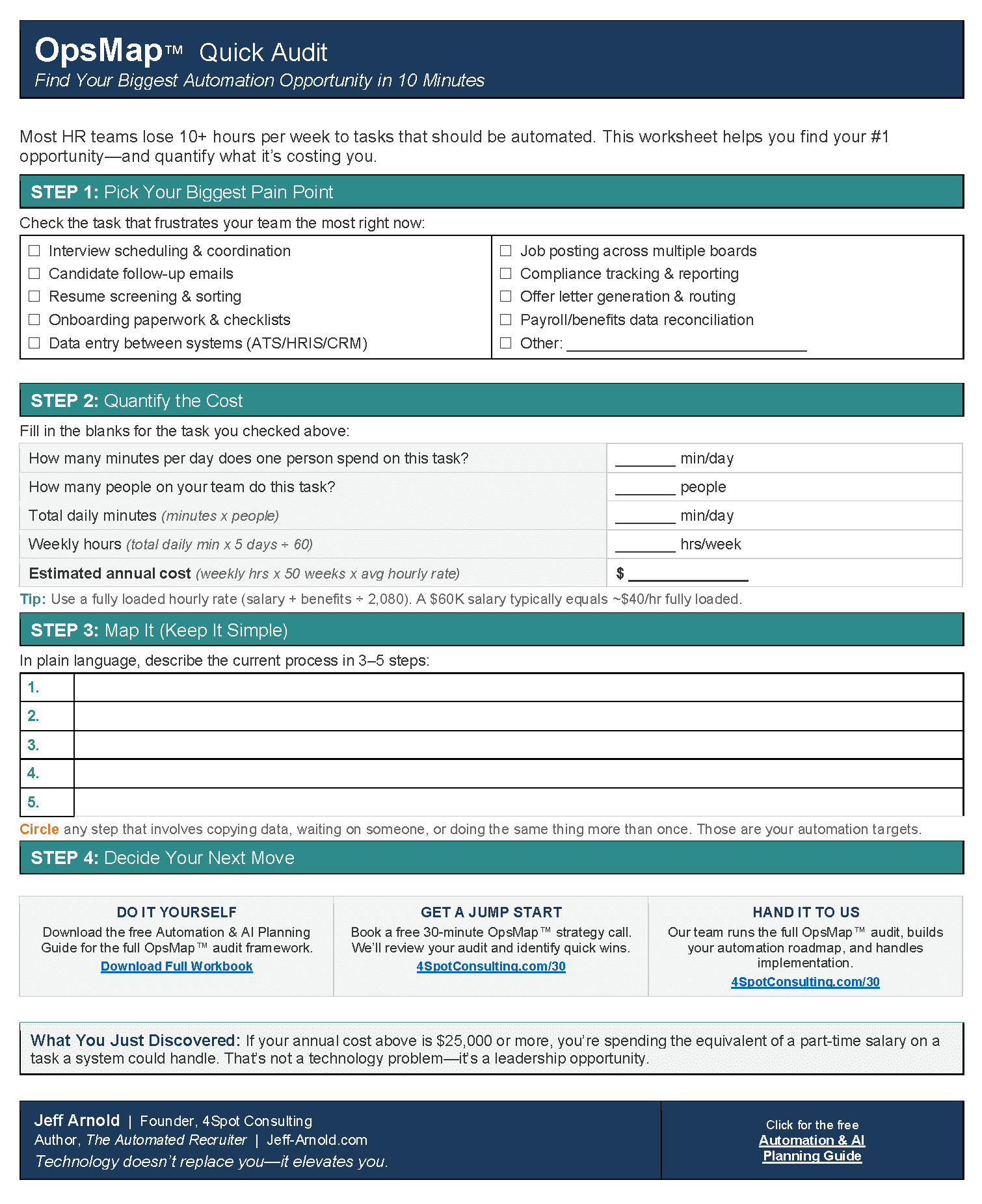
The integration of AI into HR and recruiting is no longer a futuristic concept; it’s a present-day imperative for organizations aiming to remain competitive and efficient. From automating the initial stages of candidate screening to providing predictive insights for talent retention, AI offers tangible solutions to perennial challenges. These seven applications demonstrate how intelligent automation can free up valuable human capital, reduce operational costs, and create a more equitable, engaging experience for both candidates and employees. At 4Spot Consulting, we believe in strategic, ROI-focused implementation—not just building tech for tech’s sake, but ensuring every solution is tied to clear business outcomes. Ready to uncover automation opportunities that could save you 25% of your day? Book your OpsMap™ call today.
If you would like to read more, we recommend this article: The Ultimate Guide to AI Automation for HR & Recruiting


RELATED POST