A Glossary of Key Terms in HR & Recruiting Automation
In today’s fast-evolving talent landscape, leveraging automation and artificial intelligence is no longer optional for HR and recruiting professionals—it’s essential. Navigating this new frontier requires a clear understanding of the underlying terminology. This glossary provides essential definitions for key concepts in HR and recruiting automation, empowering you to speak the language of innovation and strategically apply these technologies to streamline operations, enhance candidate experience, and make more informed hiring decisions. Understanding these terms is the first step toward reclaiming significant portions of your day and building a more efficient, scalable HR function.
Application Programming Interface (API)
An API acts as a software intermediary, allowing two applications to talk to each other. In HR and recruiting, APIs are crucial for integrating disparate systems such as an Applicant Tracking System (ATS) with a Human Resources Information System (HRIS), or a background check service with a candidate management platform. For instance, an API might enable a new hire’s data from an ATS to automatically populate payroll and benefits systems, eliminating manual data entry and reducing errors. For recruiting professionals, understanding APIs helps in evaluating how seamlessly different HR tech tools can communicate and share data, which is vital for building a cohesive and automated workflow.
Applicant Tracking System (ATS)
An ATS is a software application designed to manage the recruitment and hiring process. It tracks applicants from initial application through to hiring and onboarding. Modern ATS platforms integrate capabilities like resume parsing, automated interview scheduling, communication templates, and compliance reporting. For HR and recruiting professionals, an ATS is the central hub for managing candidate pipelines, ensuring a consistent candidate experience, and automating many administrative tasks. An effective ATS helps reduce time-to-hire, improves candidate quality through better screening, and ensures that recruiters can focus more on strategic engagement rather than manual data management.
Artificial Intelligence (AI)
AI refers to the simulation of human intelligence in machines that are programmed to think and learn. In HR and recruiting, AI is used for tasks such as screening resumes for relevant keywords, chatbots for candidate interaction, predictive analytics for turnover risk, and even identifying bias in job descriptions. For example, AI can analyze thousands of resumes in minutes, flagging top candidates based on predefined criteria, thereby drastically reducing manual review time. HR leaders leverage AI to enhance decision-making, personalize candidate experiences at scale, and automate repetitive tasks, leading to more efficient and equitable hiring processes.
Business Process Automation (BPA)
BPA involves using technology to automate routine, repeatable business tasks or processes. In HR, this could include automating employee onboarding workflows, leave request approvals, or performance review cycles. BPA differs from general automation by focusing on end-to-end processes that often span multiple systems and departments. For recruiting teams, BPA might mean automating the entire post-offer process, from background checks to benefits enrollment and system provisioning. Implementing BPA helps organizations eliminate human error, increase operational efficiency, reduce costs, and ensure compliance by standardizing processes.
Candidate Experience
Candidate experience encompasses every interaction a job applicant has with an organization, from initial awareness of a job opening to the final offer or rejection. In an automated HR environment, this experience is often shaped by digital tools like career websites, application portals, AI chatbots, and automated communication sequences. A positive candidate experience, facilitated by seamless automation (e.g., instant application confirmations, automated interview scheduling reminders), is crucial for attracting top talent and maintaining employer brand reputation. Poor automation, however, can lead to frustration and a negative perception of the company, even if the underlying intent was efficiency.
Chatbot
A chatbot is an AI-powered program designed to simulate human conversation through text or voice. In HR and recruiting, chatbots are used to answer frequently asked questions from candidates (e.g., about benefits, company culture, application status), screen candidates by asking preliminary questions, and even schedule interviews. Chatbots provide instant responses, available 24/7, improving candidate engagement and freeing up recruiters from repetitive inquiries. For organizations, chatbots enhance scalability, reduce the administrative burden on HR teams, and offer a consistent, immediate point of contact for applicants and employees.
CRM (Candidate Relationship Management / Customer Relationship Management)
While often associated with sales, CRM systems are increasingly vital in HR and recruiting. A Candidate Relationship Management (CRM) system helps recruiters manage and nurture relationships with potential candidates, similar to how sales CRM manages customer leads. It tracks interactions, communications, and interest levels over time. A robust recruiting CRM enables proactive sourcing, talent pooling, and personalized engagement, ensuring that valuable candidates are not lost. For HR, integrating a recruiting CRM with an ATS creates a comprehensive view of talent, from initial outreach to hiring and beyond, enhancing long-term talent acquisition strategies.
Data Silo
A data silo refers to a collection of data held by one part of an organization that is isolated from the rest of the organization. In HR and recruiting, data silos often occur when different departments use separate, unintegrated systems for HRIS, ATS, payroll, and performance management. This isolation prevents a holistic view of employee data, leads to inefficiencies, duplicate data entry, and hampers strategic decision-making. Overcoming data silos through robust integration platforms (often enabled by APIs) is a core goal of automation, allowing for a “single source of truth” and unlocking comprehensive analytics for HR professionals.
Digital Transformation
Digital transformation is the process of adopting digital technology to fundamentally change how an organization operates and delivers value to customers. In HR, this involves moving beyond traditional paper-based or manual processes to fully integrated, automated, and data-driven systems. It’s about rethinking how HR functions, from recruiting and onboarding to performance management and employee development, can be optimized through technology. For HR leaders, digital transformation is not just about implementing new tools, but about a cultural shift towards agile, data-informed decision-making and continuous process improvement.
Hyperautomation
Hyperautomation is a strategy where organizations automate as many business processes as possible using a combination of advanced technologies like Robotic Process Automation (RPA), Artificial Intelligence (AI), Machine Learning (ML), and low-code platforms. In HR, this could mean not only automating resume screening but also predictive analytics for employee retention, automated personalized learning paths, and intelligent document processing for compliance. Hyperautomation aims to connect disparate automation efforts, creating end-to-end digital processes that significantly boost efficiency, scalability, and agility across the entire HR ecosystem.
Integration
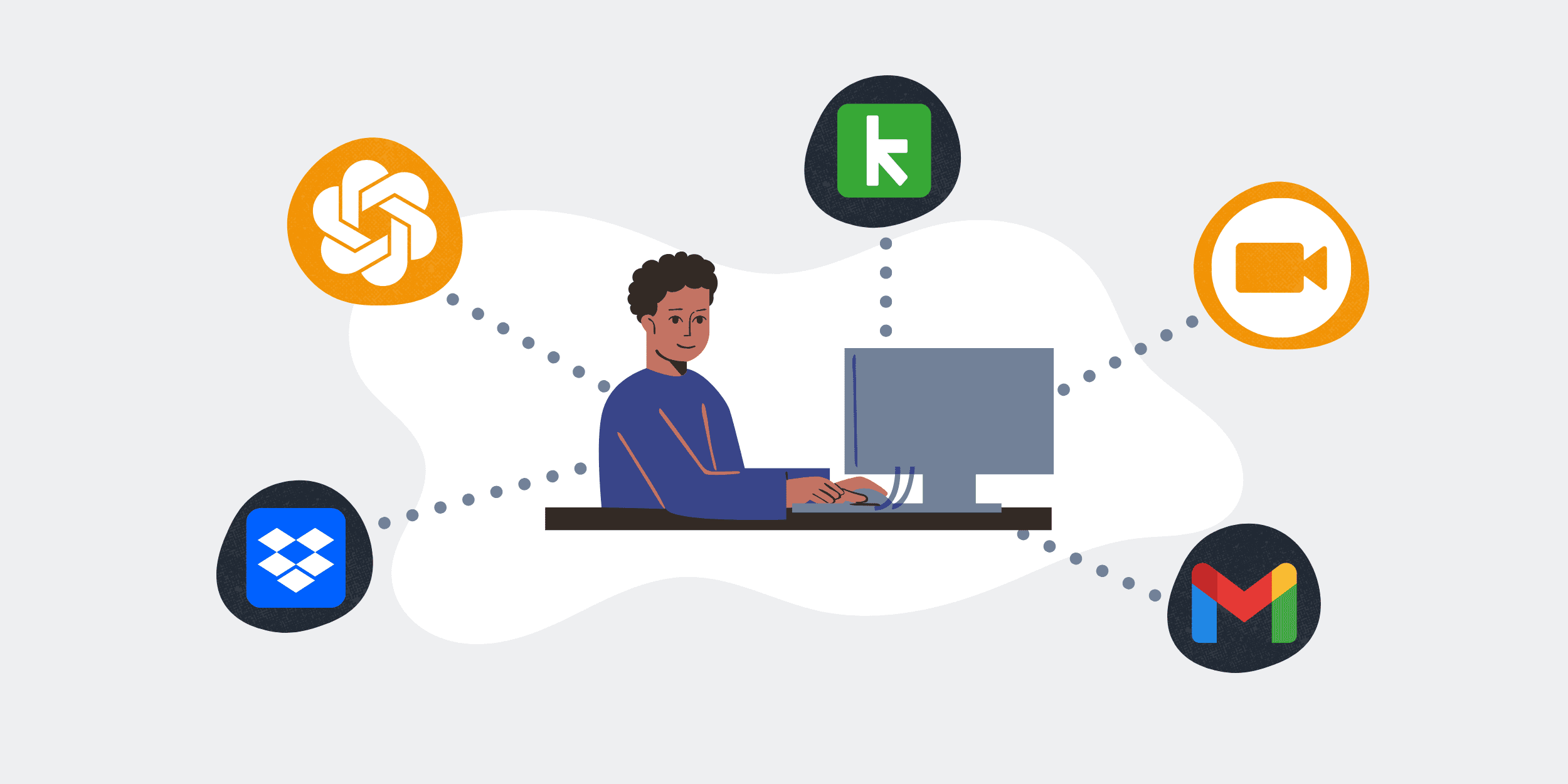
Integration in the context of HR and recruiting automation refers to the process of connecting different software applications and systems so they can share data and communicate seamlessly. For instance, integrating an ATS with a background check provider means that once a candidate reaches a certain stage, the background check is automatically initiated. Effective integration eliminates manual data transfer, reduces errors, improves data consistency, and provides HR professionals with a unified view of information. Platforms like Make.com specialize in facilitating these complex integrations, enabling robust, end-to-end automated workflows across various HR tech stacks.
Low-Code/No-Code Platforms
Low-code/no-code platforms allow users to create applications and automate workflows with little to no traditional coding. Low-code uses visual interfaces with minimal custom code, while no-code relies entirely on drag-and-drop functionality. In HR, these platforms empower professionals to build custom dashboards, automate reporting, or create new workflow automations without needing deep technical expertise. For instance, an HR manager could use a no-code tool to automate the creation of offer letters based on a template and candidate data, significantly speeding up the hiring process and reducing reliance on IT departments.
Machine Learning (ML)
Machine Learning is a subset of AI that enables systems to learn from data, identify patterns, and make decisions with minimal human intervention. In HR and recruiting, ML powers advanced analytics for predicting employee turnover, optimizing job posting reach, or identifying skills gaps within an organization. For example, ML algorithms can analyze past hiring data to predict which candidates are most likely to succeed in a role, or identify patterns in employee data that indicate a higher risk of departure. This allows HR professionals to move from reactive to proactive strategies, making data-driven interventions to improve outcomes.
Robotic Process Automation (RPA)
RPA uses software robots (“bots”) to mimic human interactions with digital systems to perform repetitive, rule-based tasks. Unlike APIs that connect systems at a deep technical level, RPA operates at the user interface level, essentially doing what a human would do on a computer. In HR, RPA bots can automate tasks like data entry into multiple systems, report generation, processing bulk applications, or verifying candidate credentials. For recruiting teams, RPA can significantly reduce the time spent on administrative tasks, allowing recruiters to dedicate more time to engaging with candidates and strategic talent acquisition efforts.
Workflow Automation
Workflow automation is the design and implementation of systems to automatically execute a series of tasks or steps in a business process. This involves defining rules, triggers, and actions that occur without manual intervention. In HR, this can include automating the entire onboarding sequence, from sending welcome emails and initiating background checks to setting up IT access and benefits enrollment. For recruiting, it streamlines everything from candidate screening and interview scheduling to offer letter generation. Effective workflow automation ensures consistency, reduces delays, minimizes human error, and frees up HR teams to focus on more complex, value-added activities.
If you would like to read more, we recommend this article: The Ultimate Guide to HR Automation Strategy