Post: 9 Practical AI Applications Revolutionizing HR & Recruitment
9 Practical Applications of AI in HR and Recruiting
The landscape of HR and recruiting is undergoing a seismic shift, driven by the relentless pace of technological innovation, particularly in artificial intelligence. For HR leaders, COOs, and recruitment directors, this isn’t just about adopting new tools; it’s about fundamentally rethinking how talent is attracted, managed, and retained. The promise of AI extends far beyond simple automation; it offers the potential to transform HR from a reactive, administrative function into a proactive, strategic powerhouse. At 4Spot Consulting, we’ve seen firsthand how high-growth B2B companies, particularly those struggling with manual processes and data fragmentation, can leverage AI to eliminate human error, drastically reduce operational costs, and build scalable systems. This isn’t theoretical; it’s about tangible ROI, freeing up high-value employees from low-value work, and creating a single source of truth for your most critical asset: your people. Navigating the complex world of AI integration requires a strategic approach, one that starts with understanding where AI can deliver the most impact. Let’s explore some of the most practical and impactful applications that are reshaping modern HR and recruiting.
1. AI-Powered Resume Screening and Shortlisting
One of the most time-consuming and often biased aspects of the recruitment process is the initial screening of resumes. Traditional methods rely heavily on keyword matching and human review, which can lead to overlooking qualified candidates or spending excessive time on unsuitable ones. AI-powered screening tools analyze resumes and cover letters with unprecedented speed and accuracy, going beyond keywords to understand context, identify relevant skills, and even predict job fit. These systems can process hundreds, even thousands, of applications in minutes, flagging top candidates based on predefined criteria, historical success data, and cultural alignment indicators. For instance, an AI tool integrated via Make.com could ingest resumes from various sources (ATS, career pages, job boards), parse them, and then enrich candidate profiles with data on experience, skills, and potential, pushing only the most promising profiles directly into your CRM like Keap or an HRIS for human review. This drastically reduces the manual effort, ensures a wider, more diverse talent pool is considered, and allows recruiters to focus their valuable time on engaging with truly qualified individuals, rather than sifting through irrelevant applications. The precision of AI minimizes human error and reduces unconscious bias, leading to more equitable hiring outcomes and a higher quality of hire.
2. Enhanced Candidate Sourcing and Outreach
Finding the right talent in a competitive market requires more than just posting job ads; it demands proactive sourcing. AI tools revolutionize candidate sourcing by identifying passive candidates who possess the exact skills and experience your organization needs, often before they even start looking for a new role. These platforms leverage vast datasets across professional networks, academic publications, and public profiles to pinpoint potential candidates. Beyond identification, AI can personalize outreach messages, making initial contact more relevant and engaging. By analyzing a candidate’s profile, AI can craft tailored communications that highlight aspects of the role or company culture most likely to resonate with them. For example, an AI-driven system could automatically identify a candidate with niche experience, draft a personalized email referencing their specific projects or publications, and then schedule it to be sent at an optimal time based on engagement data. This targeted approach significantly increases response rates compared to generic outreach campaigns. Integrating this with platforms like Keap ensures that all candidate interactions are tracked and managed efficiently, preventing duplication of effort and providing a comprehensive view of the candidate journey. This transforms sourcing from a laborious, hit-or-miss activity into a strategic, data-driven initiative that consistently surfaces top-tier talent.
3. AI-Assisted Interviewing and Assessment
The interview process is critical for evaluating candidates, but it can be prone to subjectivity and inconsistency. AI is introducing new layers of objectivity and efficiency to interviewing and assessment. Tools like AI-powered video interviewing platforms can analyze verbal and non-verbal cues, tone of voice, and facial expressions to provide objective insights into a candidate’s communication style, confidence, and engagement. While these tools should never be the sole determinant, they offer supplementary data that can help interviewers ask more targeted questions and ensure a more standardized evaluation across candidates. Furthermore, AI can power advanced skills assessments, beyond traditional multiple-choice tests. These assessments can simulate real-world scenarios, testing problem-solving abilities, coding skills, or creative thinking, with AI grading and providing immediate feedback. This means recruiters can gain deeper insights into a candidate’s actual capabilities and potential fit, rather than relying solely on self-reported skills or subjective interviewer impressions. Such an approach significantly streamlines the assessment phase, providing rich, data-driven insights that empower hiring managers to make more informed decisions and reducing the overall time-to-hire.
4. Predictive Analytics for Employee Retention
High employee turnover is a significant cost for any business, impacting productivity, morale, and recruitment budgets. AI offers powerful predictive analytics capabilities that can identify employees at risk of leaving before they actually do. By analyzing a vast array of internal data points—such as performance reviews, compensation, engagement survey results, tenure, management feedback, and even sentiment analysis from internal communications—AI algorithms can detect patterns and indicators associated with flight risk. For example, a system might flag an employee who has recently experienced a dip in engagement scores, hasn’t received a promotion in a longer-than-average period, and whose skill set is in high demand externally. This early warning system allows HR teams to proactively intervene with targeted retention strategies, such as mentorship programs, training opportunities, salary adjustments, or simply having a conversation to address concerns. Implementing such a system requires careful integration of various data sources, often achievable through platforms like Make.com, ensuring a single, consolidated view of employee data. Proactive retention powered by AI not only saves significant recruitment costs but also fosters a more stable, engaged, and productive workforce, directly contributing to long-term business success.
5. Automated Onboarding and Training Personalization
The first few weeks and months are crucial for a new employee’s success and retention. A disjointed or overwhelming onboarding process can lead to early departures. AI can significantly enhance the onboarding experience by automating administrative tasks and personalizing the learning journey. AI-powered chatbots can answer common new-hire questions 24/7, guiding them through paperwork, company policies, and system access without requiring constant HR intervention. Beyond administration, AI can tailor training paths based on an individual’s role, prior experience, and learning style. For example, after an initial assessment, an AI system could recommend specific training modules, resources, or internal mentors, ensuring new hires acquire the most relevant skills quickly and efficiently. This personalized approach accelerates time-to-productivity and boosts engagement. Imagine a new sales hire receiving AI-curated training content relevant to their specific product line and target market, delivered through an adaptive learning platform. This ensures they are not only productive faster but also feel more supported and integrated into the company culture from day one. By automating these processes, HR teams can dedicate more time to strategic initiatives and human connection, fostering a stronger start for every new team member.
6. AI-Driven Employee Experience and Engagement
Employee experience (EX) is increasingly recognized as a critical driver of business performance. AI can play a pivotal role in creating a more responsive, personalized, and engaging work environment. AI-powered sentiment analysis tools can monitor internal communications, feedback platforms, and anonymous surveys to gauge employee morale, identify recurring issues, and detect potential hotspots of dissatisfaction. This provides HR with real-time insights into the health of the workforce, allowing for timely interventions. Furthermore, AI chatbots can serve as virtual HR assistants, providing instant answers to questions about benefits, PTO policies, or company directories, reducing the burden on HR staff and empowering employees with self-service options. AI can also facilitate personalized communication, recommending relevant internal opportunities, training, or social events based on an employee’s profile and interests. Imagine an AI system suggesting a relevant internal mentorship program to an employee looking to develop a specific skill. By leveraging AI to understand and respond to employee needs more effectively, organizations can foster a culture of open communication, support, and continuous improvement, leading to higher engagement, reduced turnover, and a more positive overall employee journey. This proactive approach to EX is a hallmark of modern, forward-thinking HR departments.
7. Optimizing Workforce Planning and Succession
Strategic workforce planning is about having the right people with the right skills in the right roles at the right time. AI brings unparalleled foresight to this complex challenge. By analyzing internal data (employee skills, performance, career paths, and tenure) combined with external market trends (industry growth, skill shortages, demographic shifts), AI algorithms can forecast future talent needs and identify potential skill gaps within the organization. This allows HR and leadership to proactively develop recruitment strategies, upskilling programs, or even internal mobility initiatives. For succession planning, AI can identify high-potential employees who possess the attributes and readiness for future leadership roles, cross-referencing their development paths with organizational needs. For instance, an AI tool could analyze project success rates, leadership potential assessments, and learning platform engagement to suggest a pool of ready-now or ready-soon leaders for critical positions. This transforms succession planning from an often subjective, informal process into a data-driven, strategic imperative. By leveraging AI, organizations can ensure they always have a robust talent pipeline, mitigate risks associated with key role vacancies, and build a resilient workforce capable of adapting to future challenges and opportunities. This foresight is invaluable for sustained growth and stability.
8. Boosting HR Operational Efficiency and Compliance
Beyond talent management, AI significantly boosts the operational efficiency of HR departments, freeing up valuable time and ensuring compliance. Many routine, repetitive HR tasks can be automated with AI and robust integration platforms like Make.com. This includes everything from data entry and updating employee records to managing time-off requests and processing benefits enrollments. For example, an AI-driven system could automatically verify data submitted through forms, trigger approvals based on pre-set rules, and update multiple systems (HRIS, payroll, benefits platforms) without human intervention. This not only saves countless hours but also drastically reduces the risk of human error in critical administrative functions. Furthermore, AI tools can assist with compliance by monitoring changes in labor laws and regulations, flagging potential issues, and ensuring that HR policies and practices remain up-to-date. They can also audit internal processes to ensure adherence to company standards and regulatory requirements, generating reports as needed. The precision and speed of AI in these areas mean HR professionals can shift their focus from tactical, low-value administrative work to strategic initiatives that drive business outcomes, making the HR function more agile, accurate, and impactful.
9. AI for Diversity, Equity, and Inclusion (DEI) Initiatives
Creating a truly diverse, equitable, and inclusive workplace is a paramount goal for modern organizations, but achieving it requires consistent, data-driven effort. AI can be a powerful ally in advancing DEI initiatives by helping to identify and mitigate biases across the employee lifecycle. As mentioned, AI-powered resume screening can remove unconscious bias in the initial candidate review. Beyond that, AI tools can analyze job descriptions for gender-coded language or exclusionary terms, suggesting neutral alternatives to attract a broader applicant pool. During performance reviews, AI can help identify patterns of bias in feedback or promotion recommendations, prompting managers to reflect and adjust their approach. For example, if an AI system detects that male employees consistently receive more specific, actionable feedback than female employees for similar roles, it can flag this as a potential bias for HR to investigate. AI can also analyze engagement survey data to pinpoint specific demographic groups that may be experiencing lower levels of inclusion or satisfaction, allowing HR to develop targeted interventions. By providing objective data and actionable insights, AI empowers organizations to move beyond good intentions and implement measurable, impactful DEI strategies, fostering a more fair and equitable environment for all employees.
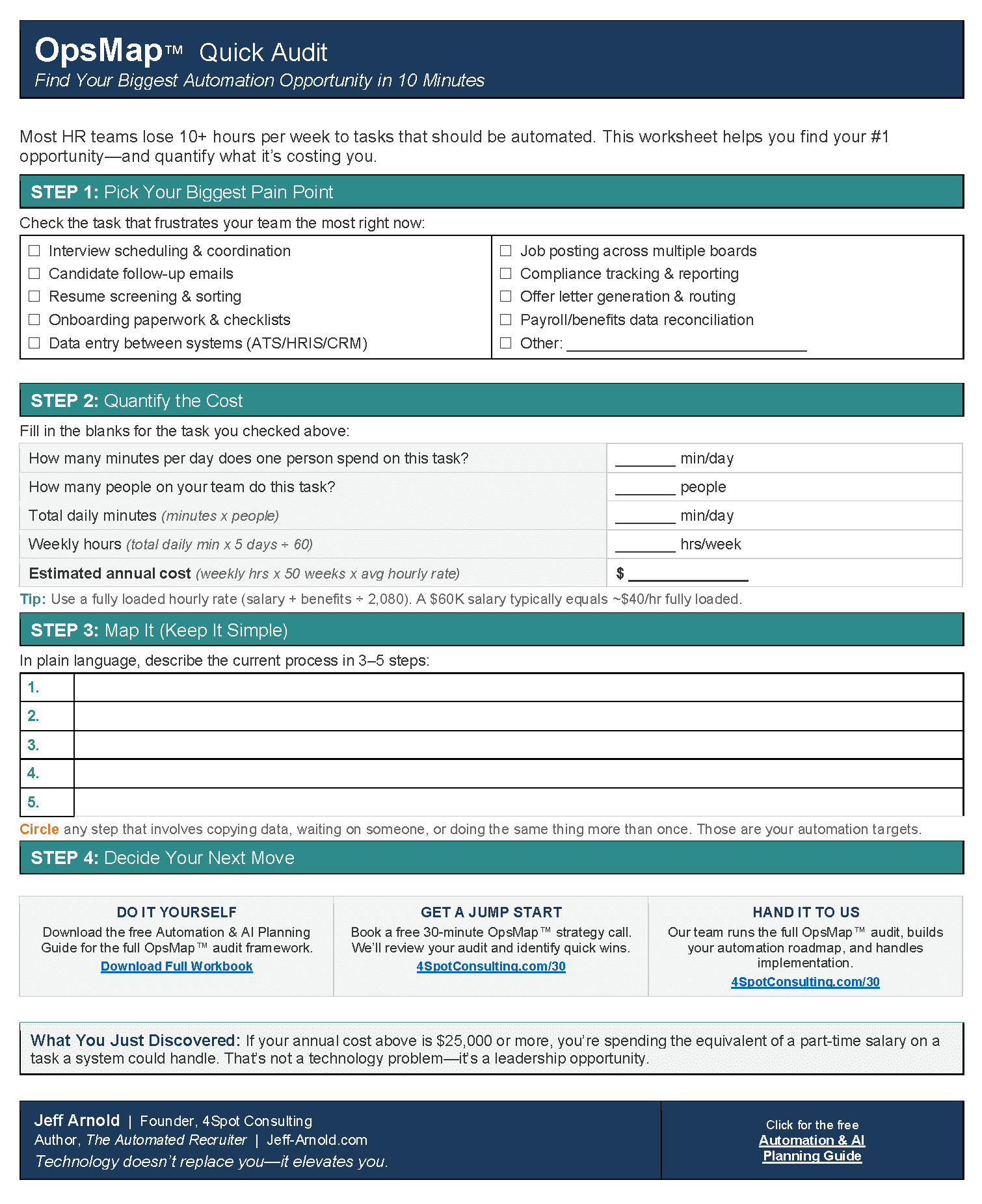
The integration of AI into HR and recruiting is no longer a futuristic concept; it is a present-day imperative for organizations seeking to remain competitive, efficient, and innovative. From streamlining talent acquisition to enhancing employee experience and ensuring compliance, AI offers transformative potential. At 4Spot Consulting, we believe that the true power of AI lies in its strategic application – understanding not just *what* AI can do, but *how* it can solve your specific business challenges, reduce operational costs, and free up your high-value employees to focus on what matters most. Our OpsMap™ strategic audit is designed precisely for this: to uncover inefficiencies and roadmap profitable AI and automation implementations that deliver tangible ROI. Embracing AI isn’t about replacing human judgment; it’s about augmenting it with data-driven insights, allowing HR and recruiting professionals to operate at a higher, more strategic level, ultimately saving you 25% of your day and driving sustainable growth.
If you would like to read more, we recommend this article: The Future of HR: How AI and Automation Are Reshaping Talent Management


RELATED POST