Unlocking Operational Efficiency: Beyond CRM – The Power of a Single Source of Truth
In today’s fast-paced business landscape, the pursuit of efficiency is relentless. Companies invest heavily in powerful Customer Relationship Management (CRM) systems, hoping to centralize customer data and streamline interactions. While CRMs are undoubtedly vital, many organizations discover that even with a robust CRM in place, they still struggle with data discrepancies, manual data entry, and fragmented information across various departments. The promise of a single, unified view often remains elusive, buried under a patchwork of disparate tools and processes. This isn’t a failure of the CRM itself, but rather a symptom of a larger challenge: the lack of a true Single Source of Truth (SSoT).
The Illusion of Centralization: Why Your Data is Still Fragmented
Many businesses operate under the assumption that their CRM or ERP system serves as their ultimate data hub. However, the reality for most growing B2B companies is far more complex. Sales teams might live in the CRM, HR uses an applicant tracking system (ATS), accounting relies on dedicated financial software, marketing leverages automation platforms, and project management unfolds in another set of tools. Each system, while excellent at its specific function, often creates its own isolated data set. Information is manually copied, spreadsheets proliferate, and critical insights become trapped in silos.
This fragmentation leads to a cascade of problems: human error during data transfer, outdated information, missed opportunities due to incomplete customer profiles, and an inability to gain a holistic view of operations. Decision-makers find themselves sifting through conflicting reports, losing valuable time and making choices based on partial data. The cost isn’t just in lost productivity; it’s in slowed scalability, compromised customer experiences, and a constant drag on innovation.
What is a Single Source of Truth (SSoT)?
A Single Source of Truth isn’t necessarily a single piece of software. Instead, it’s a strategic approach to data management where all critical business information originates from, or is synchronized to, one authoritative location for each specific data point. It ensures that when someone needs information about a customer, a project, or an employee, they access the most current, accurate, and complete version of that data, regardless of the system they are using to view it.
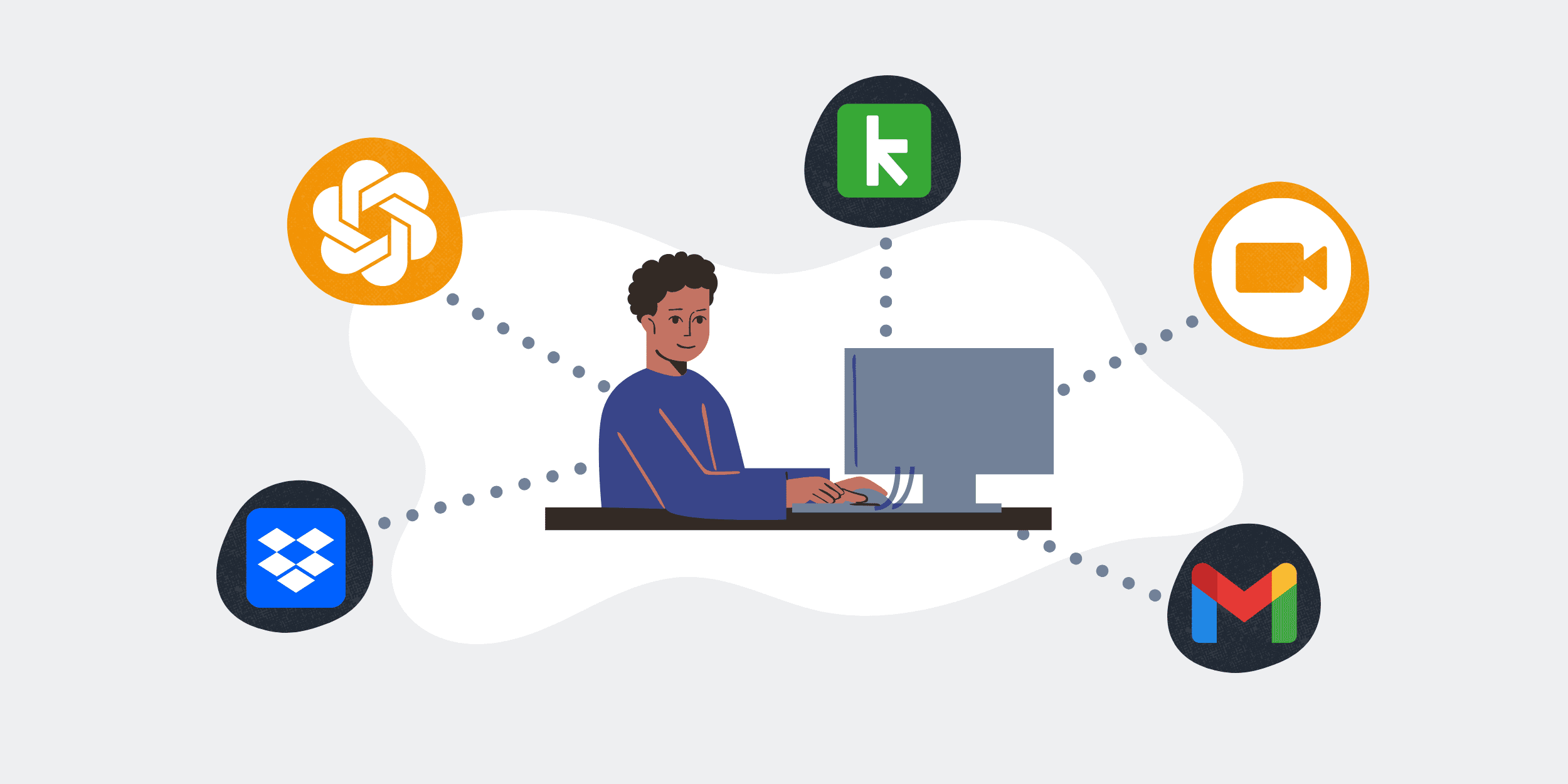
Imagine a world where a sales rep updates a client’s contact information in the CRM, and that change automatically propagates to the marketing automation platform, the accounting system for invoicing, and the project management tool for service delivery. This eliminates manual updates, reduces errors, and frees up high-value employees from low-value, repetitive tasks.
The Limitations of CRM as a Sole SSoT
While a CRM is central to customer data, it’s typically not designed to be the authoritative source for *all* business data. It may not natively hold detailed HR records, complex financial transactions, granular project timelines, or intricate supply chain information. Attempting to force a CRM to be the SSoT for everything often leads to over-customization, system bloat, and a decrease in its core functionality. A true SSoT strategy recognizes the specialized strengths of each system and orchestrates them to work in harmony, rather than trying to make one tool do everything.
Building Your SSoT with Strategic Automation
Achieving a true Single Source of Truth requires more than just buying new software; it demands a strategic re-evaluation of how data flows through your organization. This is where intelligent automation and AI integration become indispensable. By leveraging platforms like Make.com, businesses can build robust integrations that connect disparate systems, ensuring data consistency and real-time synchronization across the entire operational landscape.
This isn’t about replacing your existing tools but augmenting them. It’s about creating intelligent bridges that allow data to move seamlessly and accurately between your CRM, ATS, accounting software, project management tools, and any other critical system. This approach not only ensures data integrity but also unlocks new levels of automation, transforming manual processes into self-executing workflows.
The 4Spot Consulting Approach: From OpsMap to OpsMesh
At 4Spot Consulting, we specialize in helping high-growth B2B companies eliminate human error, reduce operational costs, and increase scalability by creating these intelligent data ecosystems. Our journey with clients often begins with an OpsMap™—a strategic audit designed to uncover hidden inefficiencies and surface opportunities for automation and data unification.
From there, our OpsBuild™ framework focuses on implementing the strategic automations necessary to weave together a cohesive OpsMesh™—our overarching automation strategy framework. We don’t just build connections; we architect a system where your data flows intelligently, creating the SSoT that truly empowers your business. This means your HR and recruiting data can inform your CRM, your CRM data can trigger accounting workflows, and everything is backed up and organized into a truly single source of truth.
Real-World Impact and Future-Proofing Your Operations
The benefits of establishing a Single Source of Truth through strategic automation are tangible and transformative. Businesses can expect a significant reduction in manual errors, freeing up valuable employee time (often 25% or more of their day), and a dramatic increase in data accuracy. This leads to faster decision-making, improved customer satisfaction, and a solid foundation for scalable growth.
For example, we helped an HR tech client save over 150 hours per month by automating their resume intake and parsing process using Make.com and AI enrichment, then syncing to Keap CRM. This isn’t just efficiency; it’s about transforming operations to run smarter, not harder. In an increasingly AI-driven economy, having a clean, consistent, and centrally managed data set isn’t a luxury—it’s a prerequisite for leveraging advanced analytics and artificial intelligence to their fullest potential.
If you would like to read more, we recommend this article: The Future is Automated: How to Thrive in the AI-Driven Economy