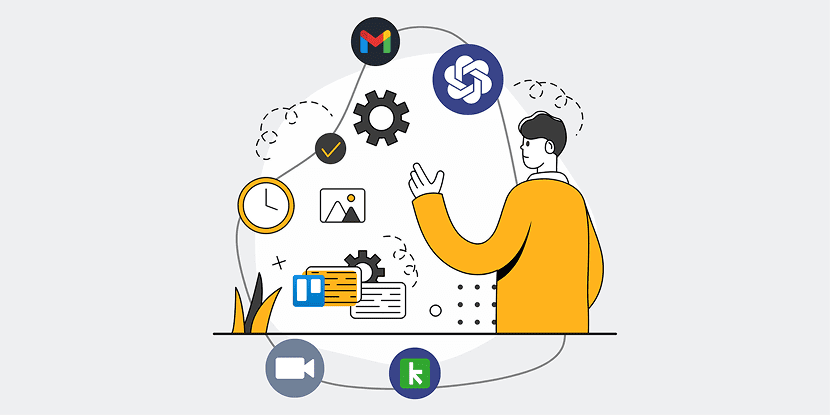
Post: AI-Powered Onboarding: Unleashing Unprecedented Efficiency
Beyond Checklists: How AI Automates Onboarding for Unprecedented Efficiency
The first few weeks define an employee’s journey with your organization. While traditional onboarding focuses on paperwork and orientation, modern businesses face a higher bar: integrating new hires swiftly and effectively into the company culture and workflow, all while grappling with the administrative burden. The challenge isn’t just about handing over a laptop; it’s about minimizing the time to productivity, ensuring compliance, and creating an experience that reinforces your employer brand from day one. In today’s competitive talent landscape, a clunky or incomplete onboarding process isn’t just inefficient—it’s a critical vulnerability that can lead to early attrition and significant hidden costs.
For high-growth B2B companies, particularly those scaling rapidly, the manual intricacies of onboarding can quickly become a bottleneck. HR teams find themselves buried under repetitive tasks: collecting documents, setting up access, scheduling training, and coordinating across multiple departments. This isn’t just time-consuming; it’s prone to human error, leading to delays, frustration for new hires, and compliance risks. The promise of technology to streamline these processes has always been there, but the real game-changer now arriving is the intelligent application of AI, moving beyond simple automation to truly transformative operational efficiency.
The Hidden Costs of Manual Onboarding
Consider the typical onboarding scenario. A new hire joins, and immediately, a flurry of manual tasks begins. HR initiates paperwork, IT provisions equipment and accounts, managers assign initial training modules, and finance sets up payroll. Each step often involves different systems, email threads, and manual data entry. What happens when a step is missed? A new employee might wait days for software access, delaying their ability to contribute. A critical compliance form might be overlooked, exposing the company to risk. These aren’t minor inconveniences; they directly impact an organization’s bottom line.
Beyond the direct time costs, there are significant indirect consequences. A disjointed onboarding experience can create a negative first impression, impacting employee morale and engagement from the outset. Early disengagement directly correlates with higher turnover rates, which for a single employee can cost anywhere from 50% to 200% of their annual salary to replace. This figure encompasses recruitment fees, lost productivity during the vacancy, and the time spent training a new replacement. For companies striving for agility and scalability, these inefficiencies are not just undesirable; they are an existential threat to growth.
From Checklists to Intelligent Orchestration: The AI Advantage
Traditional automation has certainly helped, moving some paper-based processes online. But AI elevates this to an entirely new level, transforming a static checklist into a dynamic, intelligent orchestration. AI-powered onboarding doesn’t just automate tasks; it anticipates needs, personalizes experiences, and learns from every interaction to continuously optimize the process. Imagine an onboarding system that, upon a new hire’s acceptance, automatically triggers a sequence of events tailored to their role and department.
For instance, an AI-driven platform can parse the job description and candidate profile to pre-fill forms, automatically assign relevant training modules, and even suggest initial team introductions or mentorship pairings. It can identify dependencies and proactively notify stakeholders if a task is lagging, ensuring no step is missed. This goes beyond simple workflow automation; it’s about creating a responsive, adaptive system that ensures consistency, compliance, and a superior experience for every new team member, regardless of their role or location.
Real-World Impact: Streamlining Across Departments
The benefits of AI-powered onboarding extend far beyond the HR department. IT teams can see a dramatic reduction in manual provisioning requests, with AI automating account creation and software license assignment based on role and permissions. Finance departments benefit from accurate and timely payroll setup, reducing errors and ensuring compliance. Managers gain back valuable time previously spent on administrative tasks, allowing them to focus on mentoring and strategic integration of new hires.
Consider the example of an HR tech client we assisted. They were drowning in manual resume intake and parsing. By leveraging Make.com and AI enrichment, we automated their entire resume processing, syncing validated data directly into their Keap CRM. This wasn’t just about saving time; it was about ensuring data accuracy, reducing human error, and freeing up their high-value recruiters to focus on engagement, not data entry. The result? Over 150 hours saved per month and a significantly more efficient and compliant talent acquisition funnel. The principles are entirely transferable to the onboarding phase: data capture, validation, system integration, and proactive communication—all intelligently managed.
Building a Robust AI Onboarding Framework with OpsMesh™
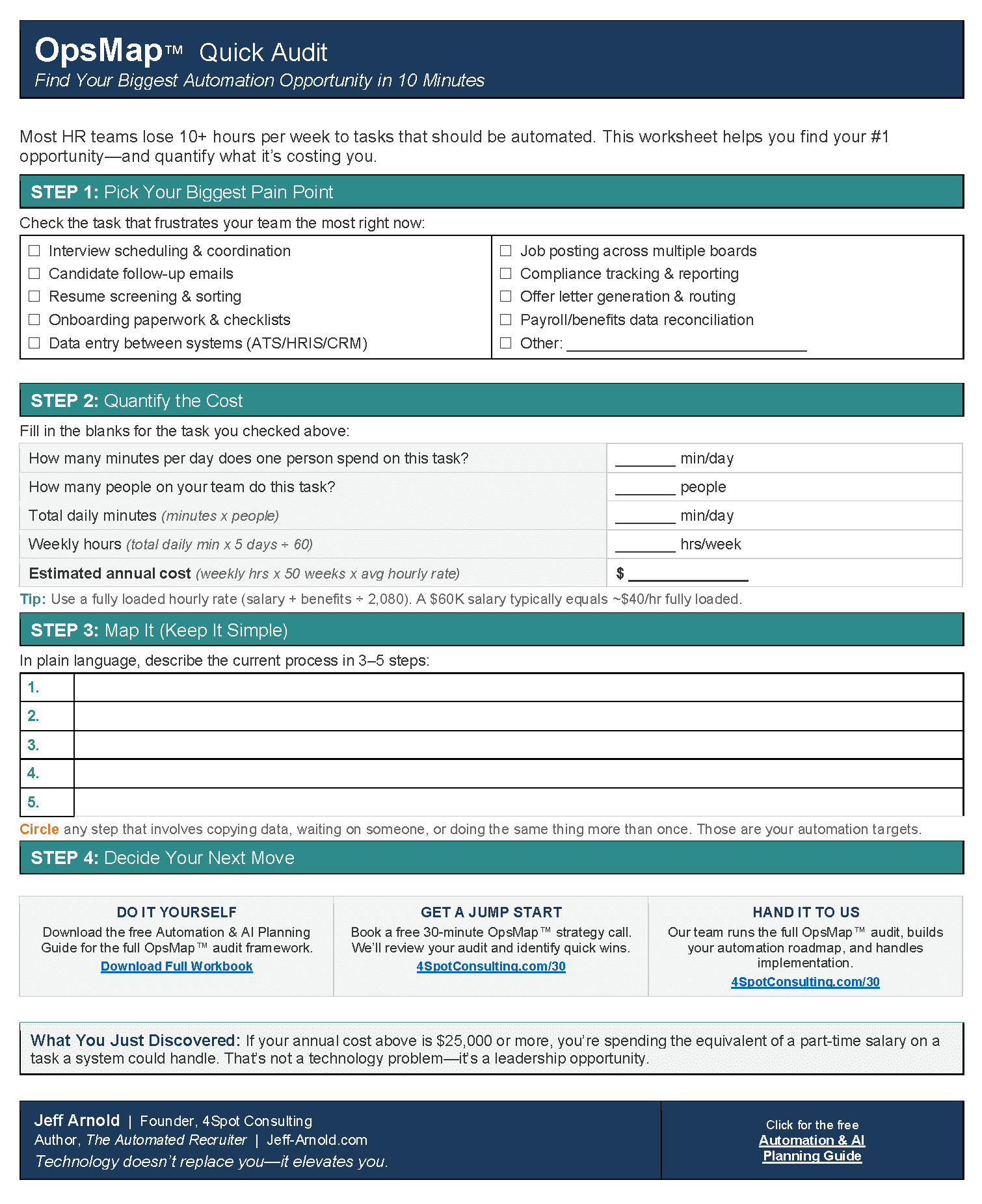
Implementing such a sophisticated system requires a strategic approach, not just throwing technology at the problem. This is where 4Spot Consulting’s OpsMesh™ framework becomes invaluable. We don’t just build; we strategize, audit, and integrate. Our OpsMap™ diagnostic helps identify the exact points of friction in your current onboarding process, uncovering inefficiencies and surfacing opportunities where AI and automation can deliver the greatest ROI.
From there, our OpsBuild™ phase focuses on implementing custom solutions using preferred tools like Make.com, integrating your CRM (Keap or HighLevel), document management (PandaDoc), and other essential systems. The goal is to create a “single source of truth” for employee data, eliminating silos and ensuring seamless information flow. Finally, OpsCare™ provides ongoing support and optimization, ensuring your AI-powered onboarding system remains efficient and adaptive to your evolving business needs. This strategic, end-to-end approach guarantees that your investment in AI automation translates into tangible benefits: reduced operational costs, increased scalability, and a superior employee experience that drives retention and productivity.
The future of onboarding isn’t about more checklists; it’s about smarter, AI-driven processes that empower your team and elevate your business. By embracing intelligent automation, you can transform a necessary administrative function into a strategic advantage, saving you valuable time and securing your most critical asset: your people.
If you would like to read more, we recommend this article: The Future of Business Operations: Unlocking Efficiency with AI Automation

RELATED POST