Beyond the Basics: Tailoring CRM for Peak Performance with Advanced Integrations
In today’s fast-paced business environment, a Customer Relationship Management (CRM) system is often lauded as the cornerstone of customer engagement and sales efficiency. Yet, for many organizations, their CRM remains a powerful tool operating far below its true potential, often serving merely as an expensive Rolodex rather than the integrated nerve center it could be. Business leaders invest heavily, only to find themselves grappling with data silos, manual workarounds, and a persistent feeling that their system could, and should, be doing more. This disconnect between expectation and reality is a critical bottleneck, hindering growth and draining valuable resources.
The CRM Plateau: Why Off-the-Shelf Isn’t Enough
The promise of out-of-the-box CRM solutions is compelling: streamlined sales, improved customer service, and better data insights. However, the reality quickly sets in when unique business processes clash with generic software functionalities. What begins as a quest for efficiency often devolves into a series of compromises, forcing teams to adapt their workflows to the software rather than the other way around. This leads to a CRM plateau, where the initial benefits taper off, and the system fails to evolve with the business. Employees find themselves duplicating efforts, manually transferring data between disparate platforms, or resorting to spreadsheets to fill the gaps, inadvertently introducing human error and inefficiency. The intended “single source of truth” fragments into multiple, often conflicting, versions.
True operational excellence doesn’t emerge from simply adopting a CRM; it comes from deeply embedding that CRM into the unique operational fabric of your business. It’s about ensuring every customer touchpoint, every piece of sales intelligence, and every service interaction flows seamlessly, intelligently, and automatically throughout your entire ecosystem. When a CRM isn’t just a database but a central hub intelligently connected to every other critical business system, it transforms from a static record-keeper into a dynamic engine of growth and efficiency.
Unlocking Latent Value: The Power of Strategic Integrations
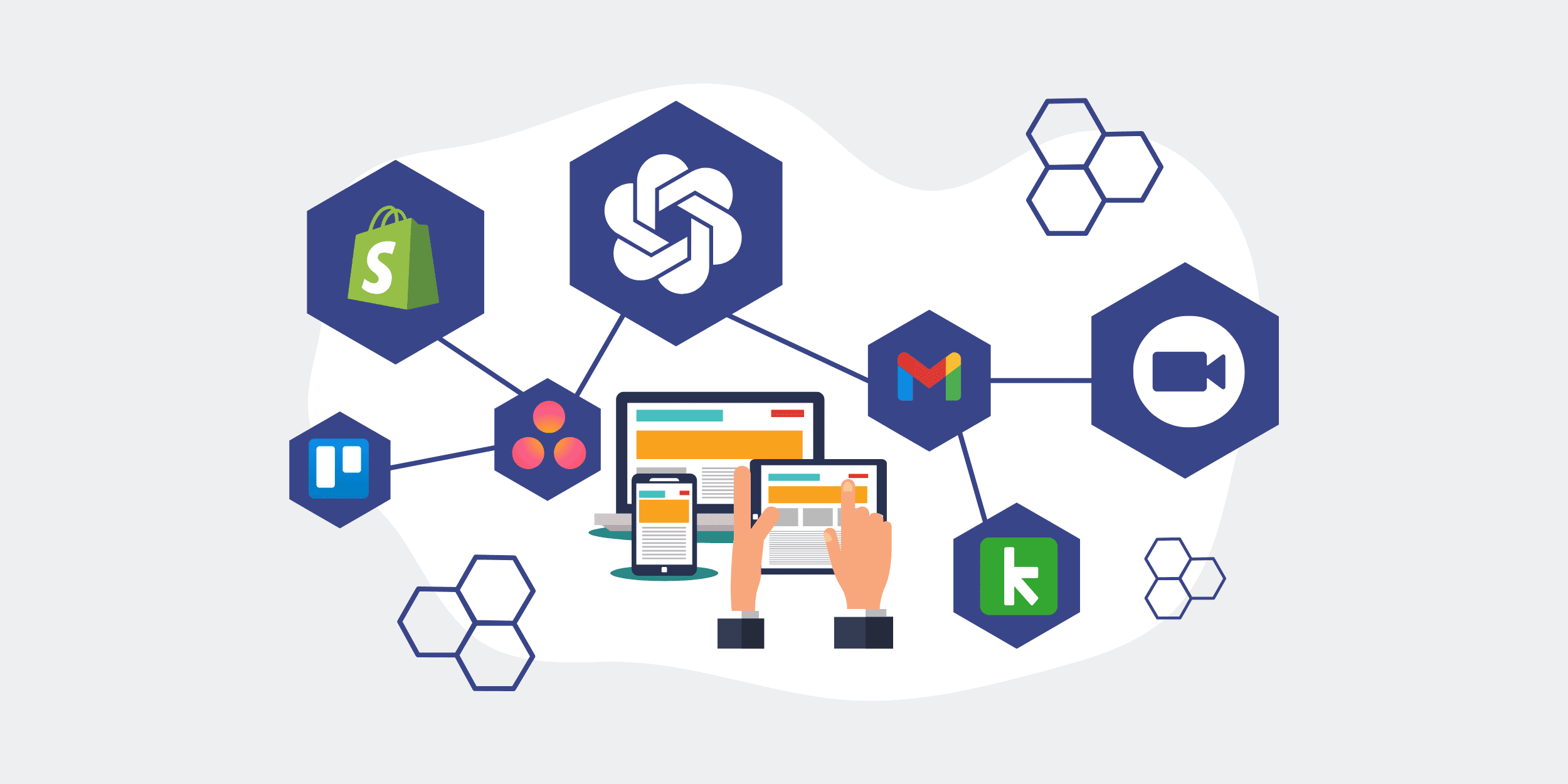
The path beyond the CRM plateau lies in strategic, custom integrations. This isn’t about haphazardly linking a few tools; it’s about a thoughtful, architected approach to connecting your CRM with the dozens of other SaaS systems that power your daily operations.
From Data Silos to a Single Source of Truth
One of the most profound benefits of advanced CRM integration is the elimination of data silos. Imagine a world where your marketing automation platform, sales engagement tool, accounting software, and even your HR system all feed into and draw from your CRM in real-time. This interconnectedness creates an undeniable single source of truth. No more manually exporting lead lists, no more double-entering customer details into invoicing software, and no more guessing whether a customer’s support ticket has been resolved before a sales call. This unified data landscape drastically reduces human error, frees up countless hours of administrative work, and provides a comprehensive, up-to-the-minute view of every customer relationship. For business leaders, this means clearer insights, more accurate forecasting, and ultimately, better decision-making.
Automating the Operational Flow
Beyond mere data consolidation, strategic integrations unlock powerful workflow automation. Consider how a new lead entering your CRM could automatically trigger a personalized email sequence, create a task for a sales representative, and even pre-populate a proposal in PandaDoc. Or, how a closed-won deal could automatically initiate the client onboarding process, update project management software, and notify the finance department. These aren’t just minor conveniences; they are systemic improvements that redefine efficiency. By leveraging platforms like Make.com, 4Spot Consulting helps businesses orchestrate these complex, multi-system workflows, ensuring that critical processes run flawlessly in the background, without manual intervention. This approach drastically reduces the burden of low-value, repetitive tasks, allowing high-value employees to dedicate their expertise to strategic initiatives and customer engagement, rather than data entry.
The 4Spot Consulting Approach: Building Your Integrated Ecosystem
At 4Spot Consulting, we understand that simply acquiring more software isn’t the answer; it’s about how those systems interact and perform together. Our approach begins not with technology, but with your business objectives and the specific pain points hindering your growth. We don’t just connect tools; we strategize to build an integrated ecosystem that functions as a cohesive whole.
Our overarching automation strategy framework, OpsMesh™, ensures that every integration serves a clear purpose within your broader operational landscape. We initiate this with an OpsMap™ diagnostic—a meticulous audit designed to uncover hidden inefficiencies and surface precise opportunities for profitable CRM integrations. This isn’t a superficial review; it’s a deep dive into your existing workflows, data flows, and technological stack, identifying where the greatest returns on automation investment lie.
Following the OpsMap™, our OpsBuild™ phase brings these strategic blueprints to life. With expertise in connecting dozens of SaaS systems, including robust CRM platforms like Keap and HighLevel, via powerful low-code automation tools like Make.com, we implement bespoke solutions. We integrate AI where it adds tangible value, ensuring that your CRM doesn’t just manage relationships but intelligently supports them, from lead nurturing to post-sale support. Our focus is always on outcomes, delivering systems that are not only technologically sound but also directly contribute to reduced operational costs, increased scalability, and eliminated human error.
Realizing Tangible Outcomes: Beyond Just Software
The true measure of a successful CRM integration strategy isn’t just about slick technology; it’s about the tangible business outcomes it delivers. Companies that move beyond basic CRM usage to embrace strategic integrations experience improved data accuracy, faster sales cycles, and significantly enhanced customer experiences. They see a substantial reduction in operational costs, often freeing up entire FTEs worth of administrative time that can be redirected to growth-oriented activities. Moreover, their systems become inherently more scalable, capable of handling increased volume without proportionate increases in manual labor.
This holistic approach transforms your CRM from a passive record-keeping tool into an active, intelligent participant in your business’s success. It empowers your high-value employees to focus on what they do best: innovating, strategizing, and building stronger customer relationships. By eliminating the friction of disconnected systems, we enable businesses to operate with unparalleled agility and precision, truly saving them 25% of their day and unlocking exponential growth. The journey from a basic CRM to an integrated, high-performing operational hub is a strategic imperative for any business looking to thrive in the modern economy.
If you would like to read more, we recommend this article: The OpsMesh™ Advantage: A Holistic Approach to Business Automation