Post: Seamless AI Integration: Scaling Recruitment with Your Existing HR Systems
Integrating AI with Legacy HR Systems: Overcoming Operational Bottlenecks for Scalable Recruitment
For decades, HR departments have relied on established, often monolithic, human resource information systems (HRIS). These systems, while foundational, frequently present significant operational bottlenecks, especially when ambitious business leaders eye the transformative potential of artificial intelligence. The challenge isn’t whether AI can enhance recruitment or talent management, but how to strategically integrate these cutting-edge capabilities without ripping out the very fabric of your existing HR infrastructure. At 4Spot Consulting, we understand that businesses operating at $5M+ ARR need solutions that build on their investments, not dismantle them.
The allure of AI in HR is undeniable: intelligent resume parsing, automated candidate screening, predictive analytics for talent retention, and highly personalized candidate experiences. Yet, many organizations find themselves stuck at the starting line, intimidated by the perceived complexity of connecting their mature, often custom-built HR systems with agile, API-driven AI tools. This isn’t just a technical hurdle; it’s a strategic roadblock that stifles innovation, prolongs time-to-hire, and drains valuable employee time on repetitive, low-value tasks.
The Hidden Costs of Disconnected HR Technologies
Think about the journey of a single candidate application. It might start in a modern applicant tracking system (ATS) or a job board, but then requires manual data entry into the core HRIS. Perhaps an external assessment tool is used, generating data that again needs to be manually transferred. Each hand-off, each data entry point, introduces a risk of human error, slows down the process, and demands precious hours from highly skilled HR professionals. These are not just inefficiencies; they are tangible costs that impact your bottom line and your ability to attract top talent.
Moreover, a fragmented technology stack means that HR leaders lack a single source of truth for their talent data. Critical insights are siloed, making it difficult to make data-driven decisions about workforce planning, diversity initiatives, or skill gap analyses. The promise of AI to unlock these insights remains unfulfilled when data isn’t clean, consolidated, and accessible across systems. This leads to a reactive HR function rather than a proactive, strategic business partner.
Bridging the Gap: A Strategic Automation Approach
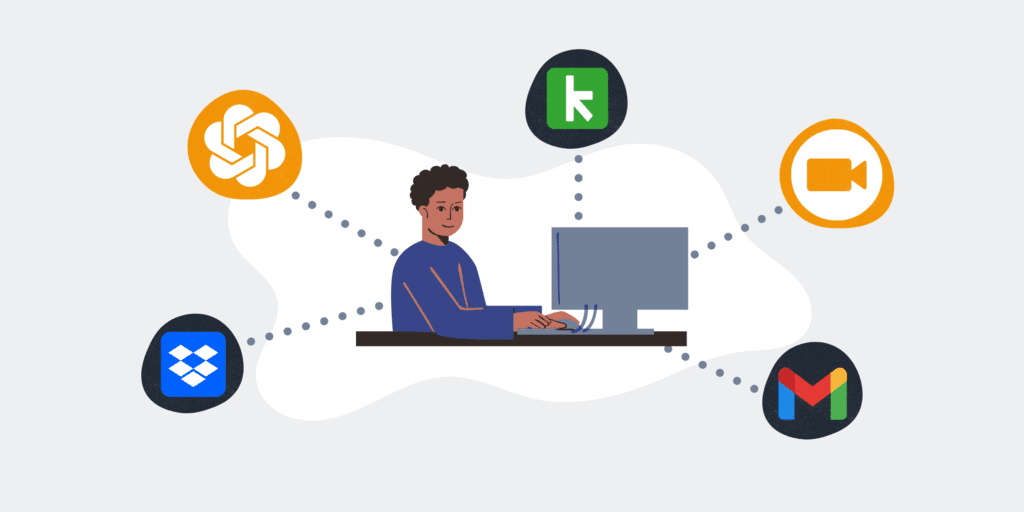
At 4Spot Consulting, our philosophy is to eliminate human error, reduce operational costs, and increase scalability through intelligent automation and AI integration. We don’t advocate for throwing out your legacy systems. Instead, we specialize in building bridges – connecting disparate systems, including older HR platforms, with modern AI tools using powerful low-code automation platforms like Make.com. This strategic-first approach, encapsulated by our OpsMesh™ framework, ensures that every integration is tied to clear ROI and tangible business outcomes.
Our process begins with an OpsMap™ diagnostic. This is not just a technical audit; it’s a deep dive into your current HR and recruiting workflows to uncover every inefficiency and identify high-impact automation opportunities. We analyze where AI can provide the most leverage – perhaps in automating initial candidate outreach, enriching candidate profiles with public data, or even streamlining the onboarding process by auto-populating new hire forms based on data from your existing HRIS.
Realizing Efficiency: AI in Action for HR
Consider the resume intake process. Manually reviewing and parsing hundreds of resumes is a significant time sink. We recently partnered with an HR tech client facing this exact challenge. Their existing system was robust but lacked the agility to handle the volume and nuances of modern recruitment. Through our OpsBuild™ service, we implemented an automation solution using Make.com and AI enrichment tools. This system automatically ingested resumes, parsed key information, extracted relevant skills and experiences, and then seamlessly synced this enriched data into their Keap CRM. The result? Our client saved over 150 hours per month, dramatically improving their response times and allowing their HR team to focus on high-value candidate engagement rather than data entry. As their leader put it, “We went from drowning in manual work to having a system that just works.”
This isn’t just about saving time; it’s about transforming the HR function into a strategic enabler of business growth. By automating the mundane and leveraging AI for insights, HR leaders can shift from transactional tasks to strategic initiatives like talent development, employee experience enhancement, and predictive staffing. Our ongoing OpsCare™ ensures these systems continue to evolve with your business needs, providing continuous optimization and support.
Integrating AI with legacy HR systems doesn’t have to be a daunting overhaul. With a strategic approach and the right expertise, it’s a powerful pathway to unlocking significant efficiencies, reducing operational costs, and building a more scalable, resilient recruitment and talent management function. We specialize in demonstrating how these integrations directly impact your productivity, often saving businesses 25% of their day by eliminating low-value work from high-value employees.
If you would like to read more, we recommend this article: Leveraging AI for Business Scalability: Beyond the Hype




RELATED POST