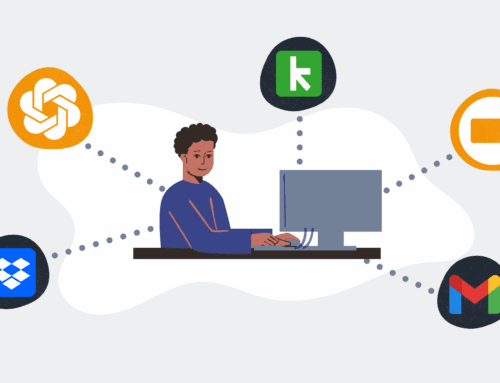
The Silent Killer: How Disconnected Data Silos Are Costing Your Business Millions
Every high-growth B2B company chases efficiency, aiming to streamline operations and maximize output. Yet, an insidious enemy often lurks beneath the surface, quietly draining resources, fostering human error, and stunting scalability: disconnected data silos. It’s a problem far more prevalent than many leaders realize, a silent killer eroding profit margins and productivity, not with a bang, but with a slow, relentless bleed.
The Pervasive Problem of Fragmented Information
Imagine your business as a complex machine. Each department – HR, sales, marketing, operations – is a critical gear. But what happens when the information flowing between these gears is inconsistent, incomplete, or entirely absent? Your machine grinds, stutters, and eventually falters. Data silos manifest as incompatible CRM systems, standalone recruiting platforms, unintegrated project management tools, and a myriad of spreadsheets that don’t speak to one another. This fragmentation forces employees to manually reconcile data, double-enter information, or worse, make critical decisions based on outdated or partial insights.
The cost of this manual reconciliation isn’t just in wasted time, although that’s significant. It’s also in the inevitable human errors that creep into the system, leading to incorrect invoices, mismanaged client expectations, compliance risks, and a perpetually frustrated workforce. For businesses operating at scale, even minor inconsistencies can ripple through an organization, impacting everything from lead conversion rates to employee retention.
Beyond Basic Inefficiency: The Hidden Financial Drain
The financial impact of data silos extends far beyond the observable hourly wage spent on manual data entry. Consider the opportunities lost. A sales team might miss crucial upsell opportunities because customer interaction data from support isn’t readily available. An HR department might overspend on recruitment because past candidate data isn’t easily searchable and leveraged. Operational teams might suffer from supply chain disruptions due to poor inventory data visibility.
These hidden costs accumulate rapidly. Analyst reports frequently cite that organizations can lose millions annually due to poor data quality and fragmented information systems. For a B2B company generating $5M+ ARR, these inefficiencies aren’t just an annoyance; they’re a direct threat to sustained growth and competitive advantage. It hinders your ability to scale effectively, makes it challenging to implement new technologies, and ultimately bottlenecks innovation.
Breaking Down Walls with Strategic Automation
At 4Spot Consulting, we understand that addressing data silos isn’t just about implementing new software; it’s about a strategic overhaul of how information flows through your organization. This is where our OpsMesh framework comes into play. It’s not about throwing more tech at the problem, but about intelligently connecting your existing systems and introducing powerful automation where it yields the highest ROI. We start with an OpsMap™ diagnostic, a deep dive into your current processes to uncover where these silos exist and precisely how they’re impacting your business.
Our approach leverages robust low-code platforms like Make.com, integrating disparate applications such as Keap, PandaDoc, Unipile, and specialized HR/recruiting tools. We build intelligent workflows that act as digital bridges, ensuring that data entered into one system automatically updates relevant fields in others. This seamless integration eliminates manual touchpoints, drastically reduces errors, and frees up your high-value employees to focus on strategic work.
Unifying Your Digital Ecosystem: The Single Source of Truth
The ultimate goal is to establish a “Single Source of Truth” (SSOT) – a centralized, reliable repository for all critical business data. Imagine a world where your sales, marketing, HR, and operations teams all access the same, real-time customer and employee information. This SSOT empowers faster, more accurate decision-making, streamlines onboarding processes, enhances customer experience, and provides a clear, unified view of your entire business landscape.
Implementing an SSOT isn’t just about data synchronization; it’s about enabling AI-powered operations. With clean, connected data, you can leverage AI to automate complex tasks, personalize customer interactions, predict market trends, and even optimize your recruiting pipelines. This shift from reactive, siloed data management to proactive, integrated intelligence is a game-changer for scalability and competitive edge.
Real-World Impact: From Silos to Seamless Operations
We recently partnered with an HR tech client grappling with massive manual effort in their resume intake and parsing process. Their candidate data was scattered across emails, various spreadsheets, and an outdated ATS, leading to significant delays and missed opportunities. Through our OpsBuild phase, we designed and implemented an automated workflow using Make.com and AI enrichment tools. Candidate resumes are now automatically parsed, critical information extracted, and instantly synced to their Keap CRM, creating a unified candidate profile.
The results were transformative: the client saved over 150 hours per month, eliminating manual data entry and significantly accelerating their time-to-hire. They went from drowning in manual work to having a system that just works, allowing their recruiters to focus on engaging top talent rather than administrative tasks. This is just one example of how breaking down data silos translates directly into tangible business outcomes, driving production increases and substantial cost savings.
Reclaiming Your Time and Resources
The silent killer of disconnected data silos doesn’t have to define your operational efficiency. By embracing strategic automation and AI, you can transform your fragmented systems into a cohesive, high-performing digital ecosystem. The journey begins with identifying those hidden inefficiencies and understanding their true cost.
Ready to uncover automation opportunities that could save you 25% of your day and eliminate the drain of data silos? Book your OpsMap™ call today. Let us help you architect a future where your data works for you, not against you.
If you would like to read more, we recommend this article: Comprehensive Guide to Business Automation