Post: The Silent Saboteur: Integrate Your Data to Fuel Business Growth
The Silent Saboteur: How Disconnected Data Systems Cripple Business Growth
In today’s fast-paced business landscape, the pursuit of efficiency and scalability is relentless. Companies invest heavily in cutting-edge software, powerful CRMs, and sophisticated HR platforms, all designed to streamline operations and enhance productivity. Yet, many leaders find themselves consistently battling hidden inefficiencies, struggling to gain a unified view of their data, and ultimately, unable to unlock their full growth potential. The culprit often isn’t a lack of tools, but rather the silent saboteur lurking within their infrastructure: disconnected data systems.
Imagine your business as a complex organism. Each department – sales, marketing, HR, operations – functions as a vital organ. For the organism to thrive, these organs must communicate seamlessly, sharing information and insights in real-time. Now, envision these organs trying to communicate through a patchwork of fragmented systems, disparate databases, and manual data transfers. This is the reality for countless organizations where essential data points are siloed, duplicated, or lost entirely in the digital chasm between incompatible platforms. The result? Stalled decision-making, increased operational costs, frustrating human error, and a significant drag on your ability to scale effectively.
The Hidden Costs of Data Fragmentation
The impact of disconnected systems extends far beyond mere inconvenience. For HR and recruiting leaders, it means a disjointed candidate experience, prolonged time-to-hire, and a struggle to track critical talent metrics from application to onboarding. Data entered into an Applicant Tracking System (ATS) might need to be manually re-entered into an HRIS, leading to errors, compliance risks, and wasted hours for high-value employees.
For operations and sales teams, it translates to incomplete customer profiles, missed sales opportunities, and a lack of consistent communication. How can you provide a personalized customer experience if your CRM doesn’t speak to your marketing automation platform, or if sales data isn’t integrated with your service desk? The answer is, you can’t – not efficiently, anyway. This fragmentation creates a reactive rather than proactive business environment, where efforts are spent correcting past mistakes instead of strategically building for the future.
The Erosion of Trust and Productivity
Beyond the direct financial costs, there’s a subtle but significant erosion of trust and productivity. Employees tasked with manual data reconciliation often feel undervalued, their expertise diverted from strategic initiatives to menial tasks. This breeds frustration, lowers morale, and can contribute to higher employee turnover – an especially painful outcome in today’s competitive talent market. When data integrity is compromised due to manual entry, leaders lose confidence in their reports, making it difficult to make informed, data-driven decisions that impact the bottom line.
Furthermore, relying on disparate systems makes it nearly impossible to establish a true “single source of truth.” Without this foundational element, strategic planning becomes guesswork, and the potential for costly missteps increases exponentially. Your business needs a unified data ecosystem where information flows freely and accurately, empowering every department to perform at its peak.
Building a Unified Data Ecosystem with 4Spot Consulting
At 4Spot Consulting, we understand these challenges intimately. We recognize that the solution isn’t to simply add more software, but to intelligently integrate your existing tools and processes into a cohesive, automated system. Our approach, rooted in our proprietary OpsMesh™ framework, is designed to eliminate data silos, reduce human error, and give you back an invaluable resource: time.
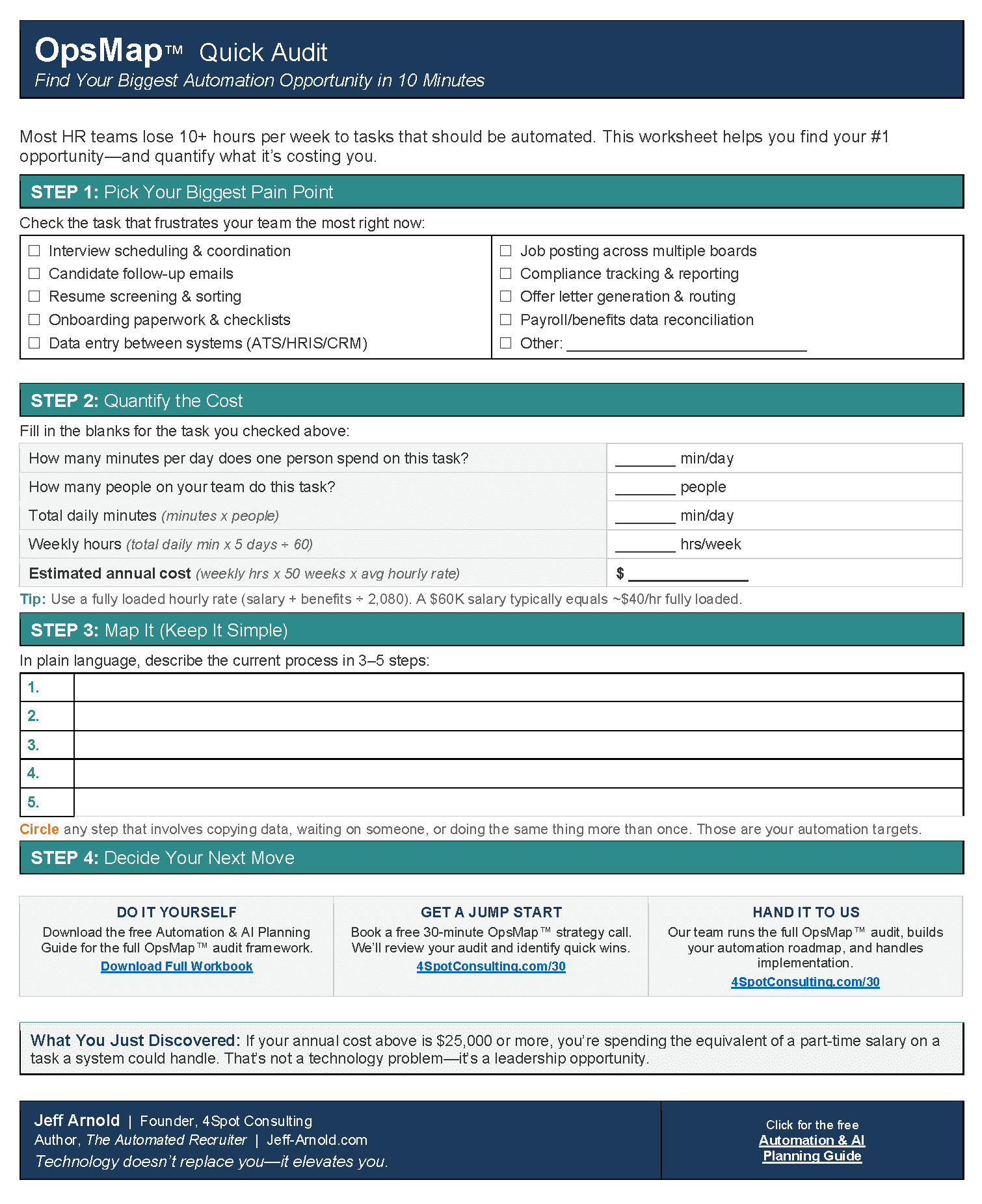
We begin with an OpsMap™ – a strategic audit where we dive deep into your current workflows, identifying inefficiencies, pinpointing data bottlenecks, and uncovering opportunities for significant automation. This isn’t about guesswork; it’s about a meticulous, hands-on assessment to understand precisely how your data moves (or doesn’t move) through your organization. We look for those low-value, high-frequency tasks that are draining your high-value employees’ time and attention.
From Audit to Action: OpsBuild™ in Practice
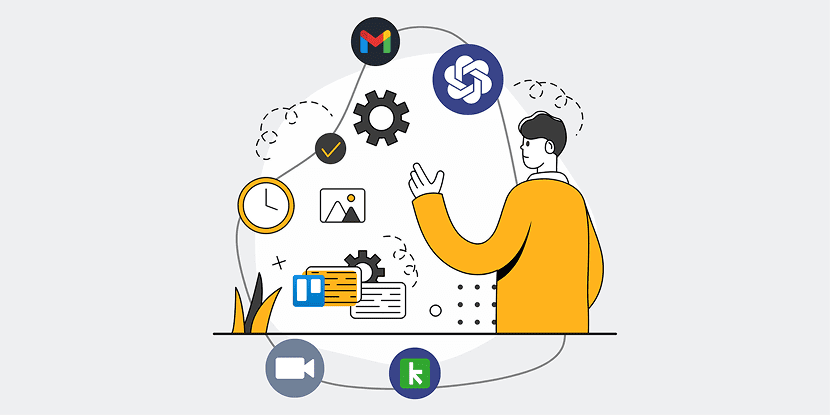
Following the OpsMap™, we move into OpsBuild™. This is where we implement tailored automation and AI solutions, often leveraging powerful integration platforms like Make.com, to connect your disparate systems. Imagine your HR tech stack – ATS, HRIS, payroll, benefits platform – all communicating seamlessly, automatically updating employee records, triggering onboarding tasks, and ensuring data consistency across the board. This is the kind of transformative efficiency we deliver.
For one HR tech client, we helped them save over 150 hours per month by automating their resume intake and parsing process using Make.com and AI enrichment, then syncing directly to their Keap CRM. This wasn’t just about saving time; it was about ensuring that every candidate received prompt attention, every piece of data was accurate, and the recruiting team could focus on strategic engagement rather than manual data entry. As our client put it, “We went from drowning in manual work to having a system that just works.” This kind of outcome isn’t an anomaly; it’s our standard.
Beyond Implementation: OpsCare™ for Sustained Success
Our commitment doesn’t end with implementation. Through OpsCare™, we provide ongoing support, optimization, and iteration to ensure your automation infrastructure evolves with your business needs. Technology and business processes are never static, and neither should your automation strategy be. We are your long-term partner in maintaining a robust, efficient, and scalable operational backbone.
The silent saboteur of disconnected data doesn’t have to cripple your growth. By strategically integrating your systems and leveraging the power of automation and AI, you can transform your operations from a source of frustration into a powerful engine for scalability and profitability. It’s time to stop re-entering data and start re-imagining what your business can achieve.
If you would like to read more, we recommend this article: The Power of Seamless Integration: Unlocking Efficiency with a Single Source of Truth
RELATED POST