Post: The Growth Drain: How Operational Automation Fixes Unmanaged B2B Data
The Unseen Cost: How Unmanaged Operational Data Drains Business Productivity
Every business leader understands the value of data. It’s the lifeblood of decision-making, market understanding, and strategic growth. Yet, often lurking beneath the surface of well-intentioned data collection is a silent drain on productivity: unmanaged operational data. This isn’t just about messy spreadsheets; it’s about fragmented information, disparate systems that don’t communicate, and the constant manual effort required to piece together a coherent picture. For high-growth B2B companies generating $5M+ ARR, this hidden inefficiency doesn’t just slow things down—it actively erodes profit and stifles scalability.
Consider the daily reality: an HR department sifting through countless resumes manually, trying to sync candidate data across an ATS and a CRM. Or a sales team struggling to find the latest client interaction history because it’s scattered across email, a legacy database, and a CRM that’s only partially updated. These aren’t minor inconveniences; they are systemic failures that compound, costing hours, dollars, and ultimately, opportunities. The true cost isn’t just the time spent by high-value employees on low-value tasks; it’s the cost of missed deadlines, duplicate efforts, and decisions made on incomplete information.
The Fragmentation Epidemic: When Systems Don’t Talk
In the pursuit of specialized functionality, businesses often adopt a myriad of SaaS tools, each excellent at its specific job. However, without a strategic approach to integration, these tools become isolated islands of data. Your CRM holds customer details, your accounting software manages invoices, your HR system tracks employees, and your project management tool organizes tasks. The moment information needs to flow between these systems, manual intervention becomes the default. This not only introduces human error but also creates significant bottlenecks, especially as transaction volumes increase.
This “fragmentation epidemic” makes it impossible to establish a “single source of truth.” Without a unified view of your operations, it becomes challenging to accurately assess performance, predict future trends, or even onboard a new employee without a multi-day administrative scavenger hunt. The time spent reconciling data, chasing approvals, or simply re-entering information that already exists elsewhere is time taken away from strategic initiatives, client engagement, and innovation.
From Data Silos to Strategic Insight: Building a Connected Ecosystem
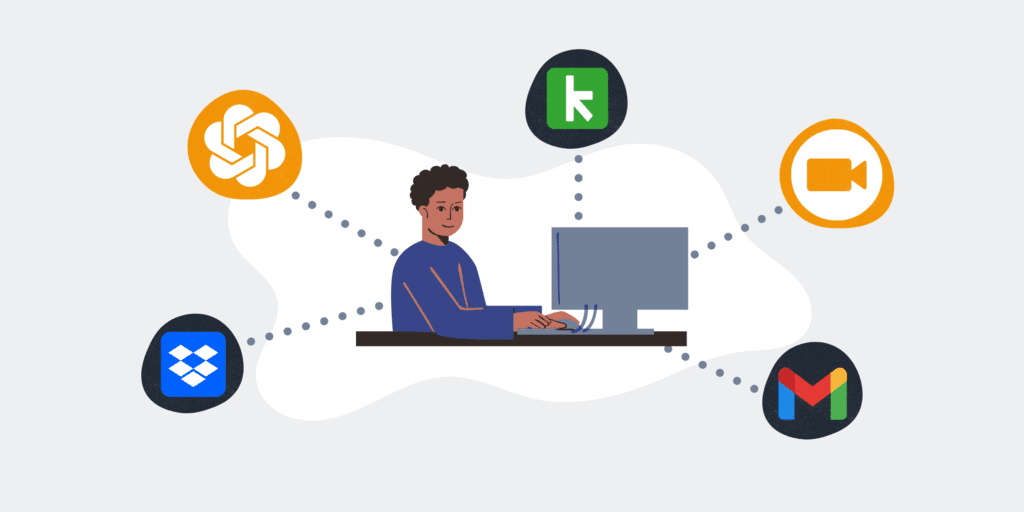
The solution isn’t to reduce the number of tools, but to connect them intelligently. Imagine a world where a new client signed in PandaDoc automatically triggers a new project in your project management system, updates their status in your CRM, and even initiates the invoicing process. This is the power of operational automation and AI integration. It transforms disparate data points into a seamless flow of information, allowing your systems to “talk” to each other without constant human oversight.
At 4Spot Consulting, our OpsMesh framework is designed precisely for this. We don’t just build automations; we architect a connected ecosystem where data flows freely, accurately, and securely. By leveraging tools like Make.com, we create robust integrations that eliminate manual data entry, reduce human error, and ensure that every department operates from the same, most up-to-date information. This strategic approach liberates your team from the drudgery of administrative tasks, allowing them to focus on what truly drives your business forward.
Reclaiming Time and Driving Growth Through Intelligent Automation
The impact of effectively managing operational data extends far beyond mere efficiency. It’s about unlocking scalability. When your processes are automated, your business can handle increased demand without proportionally increasing your headcount. Imagine an HR firm that saved over 150 hours per month by automating resume intake and parsing, syncing enriched data directly to their CRM. This wasn’t just about saving time; it was about speeding up time-to-hire, improving candidate experience, and ultimately, enhancing their competitive edge.
Our approach at 4Spot Consulting begins with the OpsMap™—a strategic audit designed to pinpoint exactly where these data fragmentation points and manual bottlenecks exist within your specific operations. We identify the “low-value work” currently being performed by your “high-value employees” and design tailored automation solutions that deliver clear ROI. This isn’t about implementing tech for tech’s sake; it’s about driving tangible business outcomes, whether that’s a 240% production increase or saving millions in operational costs.
In today’s fast-paced B2B landscape, the ability to manage, leverage, and automate your operational data is no longer a luxury—it’s a necessity for survival and growth. By transforming unmanaged data into a well-oiled information pipeline, you empower your team, fortify your decision-making, and ensure your business is truly ready for scalable growth.
Ready to uncover automation opportunities that could save you 25% of your day? Book your OpsMap™ call today.
If you would like to read more, we recommend this article: Mastering the OpsMesh: Your Blueprint for Business Automation Success



RELATED POST