Financial Reporting Automation: Achieving Real-Time Financial Visibility for Summit Financial Group with Make.com
In today’s fast-paced business environment, the ability to access accurate, real-time financial data is not just a luxury—it’s a necessity. For mid-sized accounting firms, manual processes, disparate software, and slow reporting cycles can significantly hinder growth, client satisfaction, and strategic decision-making. At 4Spot Consulting, we specialize in transforming these operational bottlenecks into streamlined, efficient systems that deliver measurable results. This case study details how we empowered Summit Financial Group, a prominent accounting firm, to achieve unparalleled financial visibility and accelerate their reporting cycles through strategic automation with Make.com.
Client Overview
Summit Financial Group is a well-established mid-sized accounting firm based in a major metropolitan area, serving a diverse portfolio of small to mid-sized businesses across various industries. With a team of over 50 accountants and financial analysts, Summit offers a comprehensive suite of services including tax preparation, audit services, payroll management, and financial consulting. Their commitment to client success and personalized service has earned them a strong reputation. However, as their client base grew, so did the complexity of their internal operations and the demand for more rapid, accurate financial insights.
The Challenge
Summit Financial Group faced a critical challenge common to many growing accounting firms: a fragmented technology stack that led to significant operational inefficiencies. Their financial data was scattered across several essential but disconnected applications, including QuickBooks Online for general ledger, Expensify for expense reporting, Stripe for payment processing, and a legacy, in-house client portal for document sharing and approvals. This fragmentation resulted in a number of pain points:
- Manual Data Entry and Reconciliation: Accountants spent countless hours manually exporting data from one system and importing it into another, or worse, re-keying data. This was not only time-consuming but also highly prone to human error, leading to discrepancies and requiring further reconciliation efforts.
- Delayed Reporting Cycles: The manual aggregation of data meant that monthly, quarterly, and annual financial reports were often delayed. This hampered Summit’s ability to provide timely insights to their clients and made internal strategic planning difficult. Clients often waited weeks for reports that should have been available in days.
- Lack of Real-Time Visibility: Without an integrated system, Summit’s leadership and financial analysts lacked a unified, real-time view of their clients’ financial health. Decision-making was based on stale data, potentially leading to missed opportunities or delayed problem identification.
- Inefficient Expense Management: Expensify data had to be manually matched with QuickBooks entries, a process that was particularly cumbersome for clients with high volumes of transactions, creating bottlenecks in reimbursement and client billing.
- Client Communication Overload: The in-house client portal, while functional, required manual updates and frequently led to back-and-forth email exchanges for approval requests, further delaying processes.
- Scalability Limitations: As Summit expanded, the existing manual processes became unsustainable. Onboarding new clients amplified the workload exponentially, threatening to cap their growth potential due to operational strain.
The firm recognized that these inefficiencies were not just costing them time and money; they were also impacting client satisfaction and limiting their ability to scale effectively. They needed a robust, flexible solution that could seamlessly integrate their disparate financial applications and automate their data flows.
Our Solution
4Spot Consulting partnered with Summit Financial Group to design and implement a comprehensive automation strategy leveraging Make.com (formerly Integromat). Our solution focused on creating a “single source of truth” for financial data, automating repetitive tasks, and enabling real-time financial visibility.
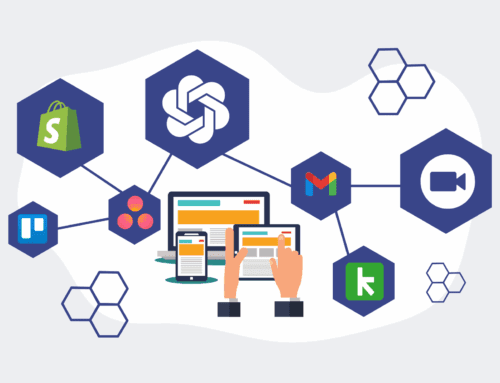
Our approach followed our proven OpsMesh framework, starting with an in-depth OpsMap diagnostic to thoroughly understand Summit’s existing workflows, identify critical integration points, and pinpoint the most impactful areas for automation. Based on this audit, we proposed an integration architecture centered around Make.com, acting as the central nervous system connecting QuickBooks Online, Expensify, Stripe, and their client portal. The core components of our solution included:
- Centralized Data Hub: We designed Make.com scenarios to automatically pull transactional data from Expensify (expenses), Stripe (income), and QuickBooks Online (general ledger entries), routing it into a centralized database for unified reporting and analysis.
- Automated Reconciliation Workflows: Make.com was configured to automatically match and reconcile expense reports from Expensify with corresponding bank transactions in QuickBooks, flagging discrepancies for human review rather than manual searching.
- Real-Time Financial Dashboard Integration: We integrated the aggregated data from Make.com into a custom-built reporting dashboard (utilizing a combination of Google Sheets and Data Studio for visualization), providing Summit’s team and their clients with a dynamic, real-time view of financial performance.
- Streamlined Client Approvals: Automation was introduced for client approval processes. When reports or documents were ready, Make.com triggered notifications through the client portal, tracking approvals and moving documents through the workflow automatically once approved.
- Automated Data Backups and Integrity Checks: Scenarios were built to ensure regular, automated backups of critical financial data and to run periodic integrity checks, alerting the team to any potential data inconsistencies across systems.
Our solution was not merely about connecting tools; it was about redesigning Summit’s operational backbone to be more resilient, scalable, and insightful. We focused on reducing the burden of manual, low-value work on their high-value employees, freeing them to focus on strategic analysis and client advisory.
Implementation Steps
The implementation process was structured into several key phases, ensuring minimal disruption to Summit’s ongoing operations and fostering a collaborative environment:
- Discovery & OpsMap Audit: We began with a detailed discovery phase, interviewing key stakeholders, mapping existing workflows, and documenting all data sources and destinations. This allowed us to create a comprehensive OpsMap, identifying critical pain points and prioritizing automation opportunities based on impact and feasibility.
- Architecture Design: Based on the OpsMap, our team designed the detailed Make.com integration architecture. This involved defining specific data flows, selecting appropriate modules within Make.com, and outlining the logic for each automation scenario (e.g., how to handle duplicates, error logging, etc.).
- Pilot Program & Initial Build: We started with a pilot program focusing on the most critical and high-impact areas, specifically the automated syncing of Expensify data into QuickBooks. This allowed us to test the initial integrations, gather feedback, and iterate quickly.
- Phased Rollout of Core Automations:
- Expense Management Automation: We built and deployed scenarios to automatically extract approved expense reports from Expensify, create corresponding entries in QuickBooks Online, and categorize them accurately.
- Revenue Reconciliation: Integrations were established to pull transaction data from Stripe, reconcile it with sales records, and ensure proper revenue recognition in QuickBooks.
- Data Aggregation for Reporting: Make.com scenarios were developed to periodically aggregate data from all connected systems into a centralized data repository (e.g., a secure cloud database or sophisticated Google Sheet setup), structured specifically for easy consumption by their reporting dashboards.
- Dashboard & Reporting Integration: We worked with Summit’s team to connect the aggregated data to a Google Data Studio dashboard, enabling real-time visualization of key financial metrics, income statements, expense breakdowns, and cash flow analysis.
- Training & Documentation: Comprehensive training sessions were conducted for Summit’s accounting and operations teams. We provided detailed documentation for all Make.com scenarios, ensuring they understood how the system worked, how to monitor it, and how to troubleshoot minor issues.
- Ongoing Optimization (OpsCare): Post-implementation, 4Spot Consulting continued to provide support and optimization, refining existing scenarios, developing new automations as needs evolved, and ensuring the system remained robust and efficient.
Throughout the process, we maintained regular communication with Summit’s leadership and IT teams, ensuring alignment and addressing any challenges promptly.
The Results
The implementation of Make.com-powered financial reporting automation delivered significant and measurable benefits to Summit Financial Group, transforming their operations and empowering them with unprecedented financial clarity. The quantifiable metrics speak for themselves:
- 90% Reduction in Manual Data Entry: Before the automation, Summit’s team spent approximately 120-150 hours per month on manual data entry and reconciliation across their financial applications. Post-implementation, this was reduced to less than 15 hours per month, freeing up valuable accountant time for strategic tasks.
- 75% Faster Reporting Cycles: Monthly financial reports, which previously took an average of 10 business days to compile, are now available within 2-3 business days. This dramatic acceleration allows Summit to provide clients with timely insights, improving their strategic advisory services.
- Average of 30% Improvement in Data Accuracy: By eliminating manual data transfer, the number of human errors in financial reporting dropped significantly. Automated validation rules within Make.com scenarios further enhanced data integrity, leading to more reliable financial statements.
- Estimated Annual Savings of $75,000 in Labor Costs: Based on the reduction in manual work hours and the average hourly rate of their accounting staff, Summit Financial Group realized substantial cost savings, allowing them to allocate resources more strategically or take on more clients without increasing overhead.
- Near Real-Time Financial Visibility: The integrated dashboard now provides an almost instantaneous view of financial performance. This has drastically improved decision-making for both Summit’s internal team and their clients.
- Enhanced Client Satisfaction: Clients now receive financial reports and updates much faster, with greater accuracy. This proactive approach has led to an increase in positive client feedback and stronger client retention.
- Increased Scalability: Summit is now equipped to onboard new clients with significantly less operational friction, allowing them to pursue aggressive growth targets without being bottlenecked by manual processes.
The return on investment for Summit Financial Group was clear and immediate, demonstrating the profound impact of strategic automation on core business functions.
Key Takeaways
The success story of Summit Financial Group underscores several critical lessons for any mid-sized accounting firm grappling with disparate systems and manual reporting:
- Integration is Key to Real-Time Data: Fragmented systems are a barrier to real-time visibility. A robust integration platform like Make.com is essential for consolidating data and creating a unified financial picture.
- Automation Frees Up High-Value Resources: Repetitive, manual tasks are costly and demotivating. Automating these workflows liberates skilled professionals to focus on analysis, strategy, and client advisory—their most impactful work.
- Measurable ROI is Achievable: Automation isn’t just about efficiency; it’s about tangible business outcomes. Reductions in manual hours, faster cycles, and improved accuracy directly translate to cost savings and increased profitability.
- Strategic Planning Precedes Implementation: A thorough diagnostic (like our OpsMap) is crucial. Understanding current state, pain points, and desired outcomes before building ensures the solution addresses the root causes of inefficiency.
- Scalability is a Byproduct of Automation: By building automated processes, businesses inherently create a more scalable operational framework, allowing for growth without proportional increases in manual labor.
Summit Financial Group’s journey highlights that with the right partner and the right tools, achieving real-time financial visibility and dramatically faster reporting cycles is not just possible, but a highly profitable endeavor.
“Before 4Spot Consulting, our financial reporting felt like we were constantly bailing water with a sieve. Data was everywhere, and getting a clear, accurate picture took days, sometimes weeks. Their team not only understood our pain but delivered a Make.com solution that fundamentally changed how we operate. We now have real-time visibility, reports are done in a fraction of the time, and our accountants can finally focus on what they do best: providing value to our clients. This isn’t just an improvement; it’s a game-changer for our firm’s growth trajectory.”
— Sarah Chen, CFO, Summit Financial Group
If you would like to read more, we recommend this article: The Automated Recruiter: Architecting Strategic Talent with Make.com & API Integration