Beyond Bureaucracy: How AI and Automation are Redefining HR Operations for Strategic Advantage
In today’s fast-paced business landscape, the efficiency of an organization often dictates its competitive edge. While many departments have embraced digital transformation, Human Resources (HR) often lags, burdened by manual processes that are not just time-consuming but also prone to error. The costs associated with these traditional HR workflows extend far beyond mere operational inefficiency; they impact talent acquisition, employee experience, and ultimately, the strategic agility of the entire enterprise. For business leaders, the question is no longer if HR needs automation, but how to implement it strategically to unlock its full potential.
The Invisible Drain: Unpacking the True Cost of Manual HR Processes
Consider the daily reality within many HR departments: mountains of resumes requiring manual review, endless email chains for onboarding, repetitive data entry across disparate systems, and the constant back-and-forth for performance management or payroll queries. Each of these tasks, while seemingly minor in isolation, collectively forms a significant drain on valuable resources. High-value HR professionals, whose expertise should be focused on strategic talent development, culture building, and workforce planning, instead find themselves mired in administrative minutiae.
This administrative burden manifests in several critical ways. First, there’s the direct financial cost of lost productivity. Every hour spent on manual data entry or document processing is an hour not spent on initiatives that drive business growth or employee engagement. Second, the potential for human error in these repetitive tasks is immense, leading to compliance risks, payroll discrepancies, and a frustrating experience for employees. Third, and perhaps most critically in a competitive talent market, slow and inconsistent HR processes can severely damage the candidate experience, causing top talent to disengage or accept offers elsewhere. The long hiring cycles and disjointed onboarding experiences typical of manual systems directly undermine a company’s ability to attract and retain the best.
Shifting from Transactional to Transformative: The AI and Automation Imperative
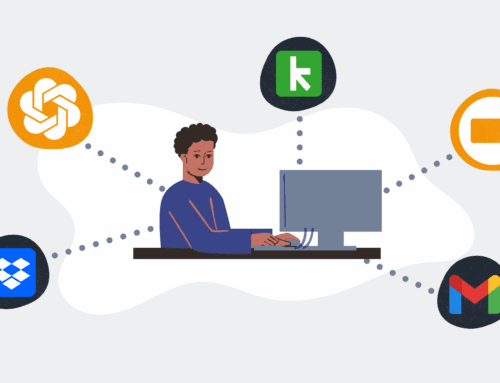
The solution isn’t merely about digitizing existing paper processes; it’s about fundamentally rethinking HR operations through the lens of automation and AI. This is where 4Spot Consulting’s OpsMesh framework comes into play, providing a strategic blueprint for integrating sophisticated tools like Make.com, Keap, and specialized AI services to create a seamless, error-free HR ecosystem. We empower HR leaders to move beyond transactional tasks and embrace a truly transformative role within their organizations.
Imagine a recruitment process where AI-powered tools pre-screen resumes, identifying the most qualified candidates based on predefined criteria, freeing up recruiters to focus on interviews and relationship building. Or an onboarding sequence that automatically triggers welcome emails, provides access to necessary systems, sends policy documents for digital signature via PandaDoc, and schedules initial training sessions – all without a single manual intervention from HR staff. This isn’t futuristic speculation; it’s the current reality for businesses leveraging intelligent automation.
Building a Robust HR Automation Infrastructure
At 4Spot Consulting, our OpsMap™ diagnostic is the first step, revealing the specific bottlenecks and opportunities for automation within your unique HR landscape. We don’t implement technology for technology’s sake; every solution is tied to tangible ROI and business outcomes. For instance, automating the initial stages of the hiring funnel not only reduces time-to-hire but also ensures consistency and fairness in candidate evaluation, enhancing employer brand and reducing bias. Integrating AI for advanced data analysis can even predict attrition risks or identify skills gaps before they become critical issues.
Our OpsBuild phase then brings these strategies to life, connecting disparate systems into a cohesive “single source of truth.” For an HR Tech client, we faced a challenge of overwhelming manual resume intake. By implementing Make.com workflows coupled with AI enrichment, we automated the parsing of resumes and direct syncing to their Keap CRM. This transformation allowed them to save over 150 hours per month, drastically reducing manual work and enabling their team to focus on meaningful candidate engagement rather than data entry. As they put it, “We went from drowning in manual work to having a system that just works.” This is not just about saving time; it’s about empowering HR to become a strategic partner in growth, driving efficiency and optimizing the employee lifecycle from hire to retire.
The Path Forward: Strategic HR for the Modern Enterprise
The era of manual, reactive HR is drawing to a close. Forward-thinking organizations recognize that automation and AI are not threats to HR professionals but powerful allies that elevate their role. By delegating repetitive, low-value tasks to intelligent systems, HR teams can dedicate their expertise to strategic initiatives: fostering a thriving company culture, developing talent pipelines, ensuring compliance, and contributing directly to the bottom line. This shift frees up high-value employees to focus on high-value work, ultimately boosting overall organizational productivity and innovation.
The time to invest in strategic HR automation is now. It’s an investment that pays dividends in reduced operational costs, enhanced employee satisfaction, superior talent acquisition, and a more agile, resilient business. Ready to uncover automation opportunities that could save you 25% of your day and transform your HR operations? Book your OpsMap™ call today.
If you would like to read more, we recommend this article: The Strategic Imperative: Why Businesses Need a Single Source of Truth for Data