How to Automate Candidate Screening & Shortlisting: A Step-by-Step Guide
The manual candidate screening process is a notorious bottleneck for HR and recruitment teams, consuming valuable time that could be spent on strategic initiatives or direct candidate engagement. In today’s competitive talent landscape, relying on traditional methods means falling behind. This guide provides a practical, step-by-step approach to leveraging automation and AI to revolutionize your candidate screening process, helping you identify top talent faster, reduce human error, and free up your team for higher-value activities. By implementing these strategies, you can significantly enhance your operational efficiency and candidate experience.
Step 1: Define Your Ideal Candidate Profile and Screening Criteria
Before you can automate, you must clearly understand what you’re looking for. Begin by meticulously defining the ideal candidate profile for each role. This involves identifying essential skills, experience levels, educational backgrounds, certifications, and even soft skills or cultural fit indicators that can be reasonably quantified or identified through text analysis. Translate these attributes into specific, objective screening criteria. For instance, instead of “good communication skills,” consider “references ‘teamwork’ or ‘collaboration’ in past role descriptions.” The more precise and measurable your criteria, the more effective your automation will be. This foundational step ensures that your automated system is built on a solid understanding of what truly constitutes a qualified candidate for your organization.
Step 2: Select Your Automation and AI Tools
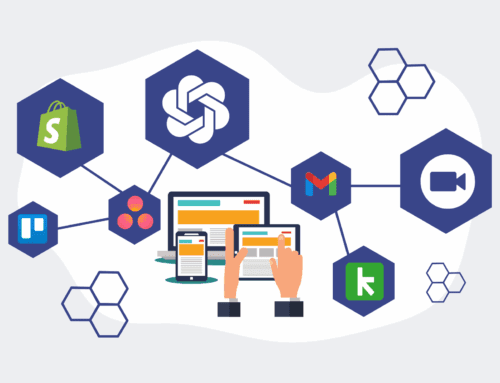
With your criteria established, the next crucial step is selecting the right technology stack. For robust workflow automation, platforms like Make.com are invaluable, serving as the central nervous system connecting various applications. For the AI component, consider tools that offer natural language processing (NLP) capabilities, resume parsing, and sentiment analysis. These AI tools will be integrated via Make.com to extract specific data points from resumes and cover letters, identify keywords related to your screening criteria, and even analyze language for tone or red flags. Choosing tools that seamlessly integrate and offer scalability is key to building an efficient, future-proof screening system that can grow with your business needs.
Step 3: Construct the Initial Intake Workflow
The core of your automation begins with candidate intake. Design a workflow using Make.com (or a similar integration platform) that automatically pulls new candidate applications from their source – whether that’s an email inbox, an applicant tracking system (ATS) via a webhook, or a dedicated form submission. This workflow should immediately parse the incoming resume and cover letter. Make.com can extract fields like name, contact information, work history, education, and keywords. This initial parsing step transforms unstructured document data into structured, actionable information, preparing it for the next phase of AI-driven assessment. This ensures no application is missed and all data is consistently captured from the outset.
Step 4: Implement AI for Smart Candidate Assessment
This is where AI truly shines. Integrate AI services into your Make.com workflow to apply your defined screening criteria. After the initial parsing, send the extracted text data (or even the full document) to an AI tool. This tool can perform keyword matching against your essential skills list, score candidates based on the presence and frequency of specific terms, and even identify gaps. Advanced AI can conduct sentiment analysis on cover letters to gauge candidate enthusiasm or cultural alignment indicators. Furthermore, AI can compare job descriptions against candidate profiles to calculate a “fit score,” automatically highlighting the most promising applicants who meet a pre-set threshold. This significantly narrows the pool, presenting your team with only the most relevant candidates.
Step 5: Integrate with CRM/ATS for Seamless Data Management
Once candidates have been screened and shortlisted by AI, it’s critical to integrate this information back into your primary systems, such as your CRM (like Keap) or ATS. Your Make.com workflow should automatically update candidate records with their AI-generated scores, screening notes, and a clear status (e.g., “AI Shortlisted,” “Requires Review,” “Not a Fit”). For shortlisted candidates, their full profile and assessment data can be pushed directly into your ATS for review by recruiters. This integration ensures a single source of truth for all candidate data, preventing data silos, reducing manual data entry, and providing recruiters with comprehensive insights at a glance, streamlining their decision-making process.
Step 6: Automate Notifications and Continuous Optimization
The final step in your automated screening process involves setting up automated notifications and a mechanism for continuous improvement. For candidates who pass the AI screening, your Make.com workflow can automatically trigger internal notifications to hiring managers or recruiters, prompting them to review the shortlisted profiles. For high-potential candidates, you could even automate initial outreach emails or interview scheduling links. Crucially, the system isn’t static. Regularly review the performance of your AI screening criteria, track conversion rates from shortlisted to hired, and refine your definitions in Step 1 based on real-world outcomes. This iterative optimization ensures your automation becomes increasingly accurate and effective over time.
If you would like to read more, we recommend this article: [TITLE]