AI Recruiting Automation: Intelligent Workflows with Make.com

2026-04-15T23:39:50-08:00AI in Recruiting & Talent Acquisition, HR Automation|

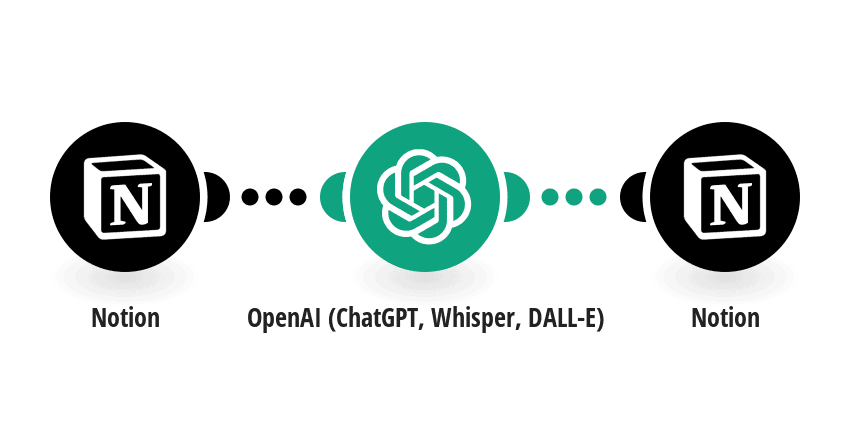
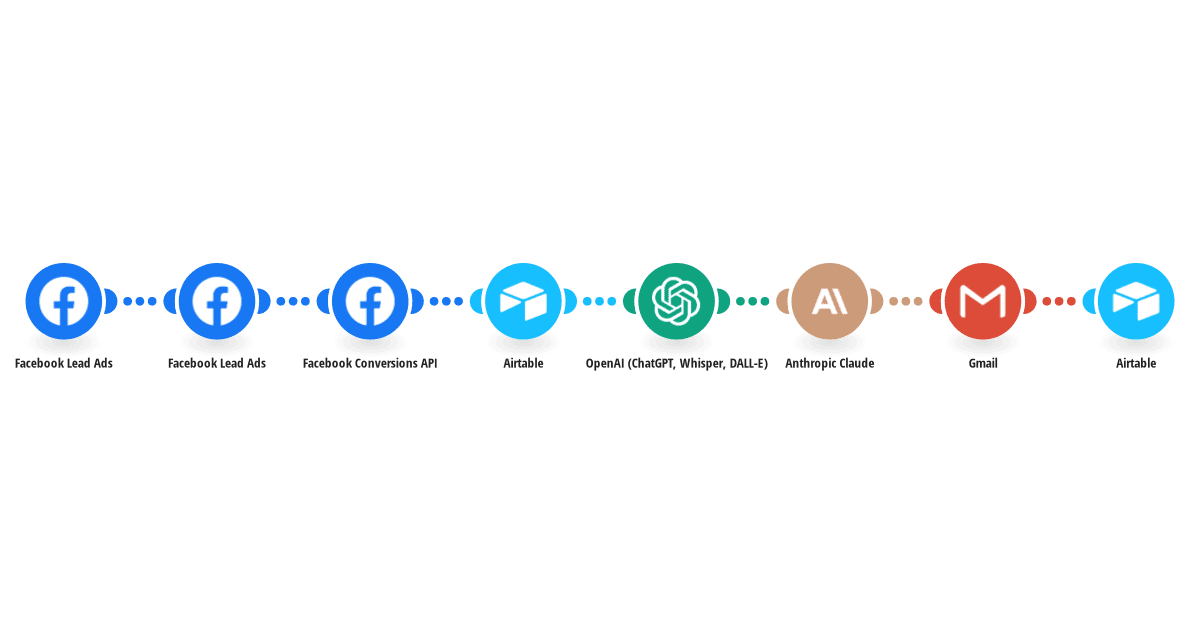
AI recruiting automation works when you treat AI as a precision layer on top of structured workflows — not a replacement for them. Build your Make.com™ scenarios first to handle routing, scheduling, and data movement, then drop AI exactly where human-like judgment is needed: resume triage, candidate scoring, and offer personalization. That sequence cuts time-to-hire without sacrificing quality.

Why HR Audit Logs Are Essential for Compliance Defense

2026-04-15T23:34:56-08:00AI in Recruiting & Talent Acquisition, HR Automation|

HR audit logs are not a back-office formality — they are your primary legal shield. Every automated decision, data access, and record change must be logged with a timestamp, actor identity, and outcome if you want to survive a regulatory audit, discrimination claim, or data-breach inquiry. Organizations that treat audit logs as a compliance afterthought lose the cases that properly logged teams never face.

What Is a Keap Campaign? The HR and Recruiting Definition

2026-04-15T23:31:09-08:00AI in Recruiting & Talent Acquisition, HR Automation|

A Keap campaign is a trigger-based automation sequence that moves contacts — candidates, new hires, or employees — through predefined communication and task workflows without manual effort. In HR, campaigns govern every lifecycle stage from application acknowledgment to onboarding to retention. They are the operational engine that converts a static CRM database into a live talent pipeline.

How to Establish Data Sovereignty for Employee Records: A Step-by-Step HR Compliance Guide

2026-04-15T23:32:31-08:00AI in Recruiting & Talent Acquisition, HR Automation|

Data sovereignty for HR means knowing exactly where every byte of employee data lives, who processes it, and which laws govern it — before a regulator asks. Map your data flows, audit every vendor's sub-processors, enforce residency contractually, and build cross-border transfer mechanisms into your architecture. Ignorance of data location is not a defense under GDPR, CCPA, or any comparable framework.

What Is Employee Survey Automation? AI-Powered HR Feedback Analysis

2026-04-15T23:19:30-08:00AI in Recruiting & Talent Acquisition, HR Automation|

Employee survey automation is the practice of routing raw survey responses through a workflow orchestrator directly into AI analysis engines — eliminating manual data transfer, accelerating insight generation, and surfacing sentiment, themes, and risk signals that manual review misses at scale. Structure handles the routing; AI handles the judgment. Human HR leaders act on the output.

Keap HR Automation: Fix Background Checks & Compliance

2026-04-16T15:07:45-08:00AI in Recruiting & Talent Acquisition, HR Automation|

Manual background check tracking and compliance renewal management collapse under volume. Sarah's 12-person HR team automated every stage — consent collection, vendor handoff, result routing, and license renewal alerts — inside their existing Keap™ CRM. The result: zero missed compliance deadlines, 60% reduction in manual coordination time, and a fully auditable trail that satisfied their state regulator on first review.

HR Bot Analytics vs. Basic Monitoring (2026): Which Drives Real Optimization?

2026-04-15T23:36:53-08:00AI in Recruiting & Talent Acquisition, HR Automation|

Basic HR bot monitoring tracks surface outcomes — success/fail counts, ticket volume — and stops there. Deep execution-history analytics decodes every micro-step: latency, retry loops, silent integration failures, and bias signals. For teams running more than a handful of automated workflows, deep analytics is not optional; it is the control layer that turns HR automation from a liability into a competitive advantage.

Strategic Talent Management Metrics for Executives

2026-04-15T11:32:36-08:00AI in Recruiting & Talent Acquisition, HR Automation|

Executives need four metric categories — performance, engagement, development, and acquisition — but not all carry equal strategic weight. Performance and retention metrics tied directly to revenue belong on the executive dashboard. Engagement and development metrics belong one layer down unless they predict turnover or leadership gaps. Map every metric to a business outcome or remove it.

What Is Hyper-Personalized Recruitment Automation? A Practical Definition

2026-04-15T23:03:22-08:00AI in Recruiting & Talent Acquisition, HR Automation|

Hyper-personalized recruitment automation is the practice of delivering contextually relevant, candidate-specific communications triggered by real CRM data and behavioral signals — not mail-merge name swaps. It requires structured candidate segmentation in a CRM like Keap, deterministic workflow logic in an automation platform, and discipline about which touchpoints actually benefit from personalization.

Manual vs. Automated Candidate Assessment Scoring (2026): Which Delivers Better Hiring Outcomes?

2026-04-15T23:41:14-08:00AI in Recruiting & Talent Acquisition, HR Automation|

Automated candidate assessment scoring outperforms manual review on every operational dimension that matters: consistency, throughput, bias reduction, and time-to-decision. Manual scoring still owns final judgment calls, but only after automation has structured and ranked the field. Hybrid teams that automate the scoring layer and reserve human attention for the top tier cut time-to-hire without sacrificing quality of hire.

Effective HR Data Security Training: Beyond Compliance

2026-04-15T23:34:11-08:00AI in Recruiting & Talent Acquisition, HR Automation|

HR data security training is a structured, role-specific program that equips HR professionals to identify threats, handle sensitive employee data correctly, and respond to incidents — not just satisfy annual compliance checkboxes. Organizations that treat it as a continuous culture initiative rather than a one-time module consistently reduce breach frequency and shrink the human error window that attackers exploit most.

How to Automate HR Reports with Advanced Data Export Using Make.com Filters

2026-04-15T23:45:30-08:00AI in Recruiting & Talent Acquisition, HR Automation|

Standard HRIS reports fail when you need multi-condition exports — employees hired in a date range, in a specific department, holding a certification, within a salary band. Build those exports in Make.com™ using stacked AND/OR filter logic, and your automation platform delivers a clean, precise dataset every time without manual post-processing.

How to Automate E-Commerce Order Fulfillment: A Step-by-Step Workflow Guide

2026-04-16T15:09:31-08:00HR Automation Case Studies|

Automating e-commerce order fulfillment means connecting your storefront, shipping carriers, inventory system, and accounting platform so every order flows without manual handoffs. Build the automation spine first — trigger on new order, branch by shipping method, update inventory, generate labels, notify the customer — and fulfillment time drops by 60–80% within the first month.

How to Future-Proof Your HR Tech Stack: Integrate Make.com™ and Adaptable AI

2026-04-15T23:10:26-08:00AI in Recruiting & Talent Acquisition, HR Automation|

A future-proof HR tech stack is not about buying more software — it is about connecting what you have, automating the repetitive spine, and inserting AI only at judgment points where rules fail. Build integration layers first with Make.com™, automate deterministic workflows second, and deploy AI third. Structure before intelligence, always.

HR Analytics: Drive Agility, Build Organizational Resilience

2026-04-15T11:32:22-08:00AI in Recruiting & Talent Acquisition, HR Automation|

Organizations that use HR analytics proactively — not reactively — absorb disruptions faster and recover stronger. Build automated data pipelines first, then layer in predictive models for workforce planning, retention risk, and skill-gap forecasting. The result is an HR function that prevents crises instead of reporting on them.

Job Board Integration Options for Keap (2026): Which Approach Is Best for Recruiters?

2026-04-15T23:02:04-08:00AI in Recruiting & Talent Acquisition, HR Automation|

For recruiters managing more than a handful of weekly applicants, Make.com™ is the only job-board-to-Keap integration approach that scales. Manual entry destroys hours and breeds costly data errors. Keap-native automation handles follow-up but cannot ingest structured applicant data from external boards. Make.com™ bridges both gaps with zero-code, multi-board workflows that feed clean records directly into Keap the moment a candidate applies.

On-Premise vs. Cloud HR Audit Logs (2026): Which Is Better for Remote Compliance?

2026-04-15T23:37:01-08:00AI in Recruiting & Talent Acquisition, HR Automation|

Cloud-native audit log infrastructure wins for distributed HR teams on every dimension that matters to regulators: tamper-evident storage, geo-redundant retention, and real-time access monitoring without the hardware overhead. On-premise systems retain a narrow edge only for organizations with sovereign data mandates or air-gapped security requirements. For everyone else, cloud is the compliance default.

60% Less Hiring Time with Automated Data Transformation: How Sarah Reclaimed Her Recruiting Pipeline

2026-04-15T23:46:09-08:00AI in Recruiting & Talent Acquisition, HR Automation|

Recruitment productivity breaks at the data layer — fragmented candidate records, inconsistent ATS field formats, and manual copy-paste errors — not at the sourcing layer. Sarah, an HR director in regional healthcare, reclaimed 6 hours per week and cut hiring time 60% by automating candidate data transformation workflows. The lesson: fix the data pipeline first, then scale your hiring volume.

What Is ATS Security? Protecting Applicant Tracking Systems from Cyber Threats

2026-04-15T23:34:04-08:00AI in Recruiting & Talent Acquisition, HR Automation|

ATS security is the layered framework of access controls, encryption protocols, vendor governance, and incident response practices that protect applicant tracking systems from data breaches and unauthorized access. Because ATS platforms store dense concentrations of candidate PII, they rank among the most targeted HR systems. A defensible ATS security posture treats structural controls — not reactive patches — as the baseline.

What Is Email Deliverability? A Recruiter’s Guide to Keap, Spam Traps, and Inbox Placement

2026-04-15T23:31:03-08:00AI in Recruiting & Talent Acquisition, HR Automation|

Email deliverability is the measurable ability of a sender's messages to reach a recipient's inbox rather than a spam folder or bounce. For recruiters using Keap™, deliverability is the operational foundation beneath every campaign: broken list hygiene, recycled spam traps, and low engagement signals destroy sender reputation faster than any content issue. Fix the infrastructure first.

60% Faster Hiring with Recruiting Funnel Automation: How Sarah Reclaimed Her Week

2026-04-15T23:40:59-08:00AI in Recruiting & Talent Acquisition, HR Automation|

Recruiting funnel automation works when every handoff between funnel stages is treated as a workflow problem, not a communication problem. Sarah, an HR Director in regional healthcare, cut time-to-hire 60% and reclaimed 6 hours per week by automating screening triage, interview scheduling, feedback collection, and offer dispatch — with zero added headcount.

What Is a Custom AI Workflow? HR Automation Defined for Make.com Users

2026-04-15T23:18:42-08:00AI in Recruiting & Talent Acquisition, HR Automation|

A custom AI workflow is a purpose-built automation sequence that pairs deterministic process logic with targeted AI inference to solve one specific operational problem — not HR in general. Generic templates fail because they cannot encode your compliance rules, approval chains, or candidate criteria. Make.com™ is the orchestration layer that connects your HRIS, ATS, and AI models into a workflow that matches your exact structure.

Build Custom Keap Reporting Dashboards with Make.com

2026-04-15T22:58:32-08:00AI in Recruiting & Talent Acquisition, HR Automation|

Stop relying on native Keap reports. We show you how to leverage Make.com to pull critical data, enabling you to build custom dashboards that analyze KPIs, ROI, and customer value for proactive business growth.

Keap vs. Standalone Automation (2026): Which Delivers Better ROI for HR Teams?

2026-04-15T23:30:41-08:00AI in Recruiting & Talent Acquisition, HR Automation|

For HR teams running end-to-end recruiting workflows, Keap™ outperforms point-solution automation on total ROI because it consolidates CRM, pipeline management, and sequences in one system — eliminating the integration debt that drains time-to-hire metrics. Generic automation platforms win on raw flexibility; Keap™ wins on HR-specific outcomes when properly configured.

How to Automate Job Offer Letters with Make Data Mapping: A Step-by-Step Guide

2026-04-15T23:45:35-08:00AI in Recruiting & Talent Acquisition, HR Automation|

Automating offer letters with Make's data mapping eliminates manual transcription, removes typo risk, and delivers a personalized letter minutes after a candidate clears final review. Connect your ATS or data source, map candidate fields to a document template, add conditional logic for compensation variables, and trigger e-signature — all without touching a keyboard for each hire.

HR Analytics Roadmap: Build a 4-Phase Strategy for Growth

2026-04-15T11:32:27-08:00AI in Recruiting & Talent Acquisition, HR Automation|

Most organizations stall at Phase 1 — collecting data — while competitors advance to predictive and prescriptive analytics that drive real decisions. The four-phase HR analytics roadmap progresses from descriptive reporting through diagnostic insight, predictive modeling, and finally prescriptive action. Match your investment to the phase your infrastructure can actually support, not the phase your ambition demands.

HR Decisions: Balancing Transparency and Employee Privacy

2026-04-15T23:33:59-08:00AI in Recruiting & Talent Acquisition, HR Automation|

Balancing transparency and employee privacy in HR means being open about processes, criteria, and outcomes — never about individuals' protected data. The boundary is structural, not situational: HR discloses how decisions are made, not what private records drove them. Organizations that embed this distinction into policy, access controls, and communication frameworks reduce legal exposure and build measurable workforce trust.

Strategic HR Transformation with Make.com™: How TalentEdge Reclaimed 12 Recruiter Hours Per Week

2026-04-15T23:41:04-08:00AI in Recruiting & Talent Acquisition, HR Automation|

HR transformation stalls when teams paper over broken processes with headcount. TalentEdge eliminated $312,000 in annual manual-labor costs and achieved 207% ROI in 12 months by replacing fragmented HR admin with structured Make.com™ automation — before adding a single AI feature. The lesson: automate the workflow first, then layer intelligence on top.

How to Debug HR Automation: A Step-by-Step Diagnostic Playbook

2026-04-15T23:35:31-08:00AI in Recruiting & Talent Acquisition, HR Automation|

Debugging HR automation requires a structured, sequential process: capture full execution logs first, isolate the failure layer, recreate the scenario in a safe environment, correct the root cause, and build monitoring to prevent recurrence. Skipping to a fix without tracing the root cause costs more time than the original error and introduces downstream compliance risk.

Make.com AI Workflow Errors vs. Configuration Gaps in HR: Which Is Breaking Your Scenario?

2026-04-15T23:16:30-08:00AI in Recruiting & Talent Acquisition, HR Automation|

Make.com™ AI workflow failures in HR split into two categories: true runtime errors (API limits, auth failures, timeouts) and configuration gaps (bad data mapping, broken logic, prompt design flaws). Runtime errors are visible and loud. Configuration gaps are silent and expensive. Diagnosing which type you have determines the fix — and skipping that diagnosis is why most HR teams spend weeks chasing the wrong problem.

Go to Top