Beyond the Spreadsheet: Automating Data Synchronization for the Modern Enterprise
In today’s fast-paced business environment, data is hailed as the new oil. Yet, for countless organizations, this invaluable resource remains trapped in disparate silos—scattered across spreadsheets, CRM systems, HR platforms, and a myriad of specialized applications. The result isn’t just inefficiency; it’s a fundamental impediment to growth, agility, and accurate decision-making. At 4Spot Consulting, we observe this challenge daily: high-value employees wrestling with low-value, repetitive tasks of data entry and reconciliation, leading to human error, operational costs, and missed opportunities.
The promise of digital transformation often rings hollow when critical business data isn’t flowing seamlessly. Consider the common scenario: a new client signs up, their information is entered into the CRM. Simultaneously, an invoice needs to be generated in an accounting system, their project details logged in a project management tool, and perhaps even a welcome sequence triggered in a marketing automation platform. If these touchpoints aren’t connected, each step represents a manual data transfer, an opportunity for error, and a drain on employee time that could be better spent on strategic initiatives. This isn’t just about saving a few minutes; it’s about freeing up a significant portion of your team’s day, potentially 25% or more, allowing them to focus on what truly drives your business forward.
The Hidden Costs of Disconnected Data
The tangible costs of manual data synchronization are often clear: increased payroll hours for repetitive tasks, slower service delivery, and the occasional critical error that requires extensive damage control. However, the intangible costs are equally, if not more, damaging. Fragmented data leads to a lack of a “single source of truth.” When sales, marketing, and operations teams are working with different versions of client information or project statuses, internal friction mounts, customer experience suffers, and strategic planning becomes a guessing game. Decisions are made on incomplete or outdated information, impacting everything from inventory management to recruitment strategies. This operational inefficiency is a silent killer of scalability, preventing companies from seizing growth opportunities simply because their internal systems cannot keep pace.
Furthermore, the reliance on manual processes introduces significant security and compliance risks. Data privacy regulations are becoming increasingly stringent, and managing sensitive information across disconnected systems amplifies the challenge of maintaining compliance. Audit trails become fractured, and the risk of data breaches increases with every manual transfer. For HR and recruiting, this can mean sensitive candidate data being mishandled or vital employee records being out of sync, leading to compliance headaches and potential legal repercussions.
Building a Unified Data Ecosystem Through Automation
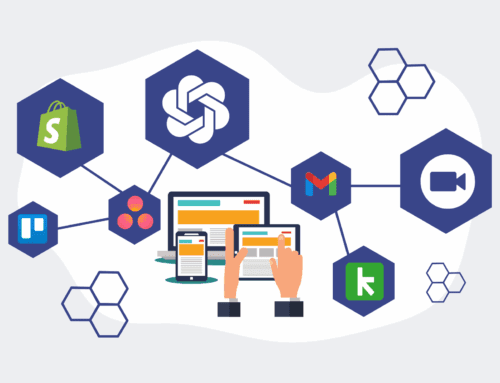
The solution isn’t to buy more software; it’s to make your existing software work together intelligently. This is where automation and AI-powered operations come into play. By leveraging platforms like Make.com, 4Spot Consulting helps B2B companies bridge the gaps between their critical business applications. We design custom workflows that automate the transfer, transformation, and synchronization of data across systems, creating a truly unified data ecosystem. Imagine a world where a new lead in your CRM automatically triggers a personalized onboarding sequence, creates a new client folder, and notifies the relevant sales representative—all without a single manual click. This isn’t a futuristic vision; it’s a standard implementation for us.
Our approach starts with the OpsMap™—a strategic audit designed to uncover these very inefficiencies and identify the most impactful automation opportunities within your unique operational landscape. We look beyond the surface, delving into your day-to-day workflows to pinpoint where manual effort is hindering progress and where automation can deliver the greatest ROI. Whether it’s automating resume intake for HR firms, ensuring seamless CRM data backups for Keap and HighLevel users, or creating intelligent document workflows, our focus is always on eliminating low-value work from high-value employees.
Implementing Intelligent Data Flows for Scalability
The beauty of intelligent data synchronization lies in its ability to empower scalability. When your operational backbone is automated, your business can grow without proportionally increasing your operational overhead. New clients can be onboarded faster, marketing campaigns can be executed with greater precision, and financial reporting becomes more accurate and timely. This allows your team to shift their focus from reactive problem-solving to proactive strategy and innovation.
For example, we recently helped an HR tech client save over 150 hours per month by automating their resume intake and parsing process using Make.com and AI enrichment, then syncing directly to Keap CRM. This transformation not only reduced manual effort but also significantly improved the speed and accuracy of candidate processing, allowing their recruiters to focus on engagement rather than data entry. This is the essence of what 4Spot Consulting delivers: tangible outcomes that free up time, reduce errors, and accelerate growth. Our OpsBuild™ service meticulously implements these tailored automation and AI systems, followed by OpsCare™ to ensure ongoing optimization and support, guaranteeing your infrastructure evolves with your business needs.
If you’re still relying on manual data transfers, spreadsheets as a primary database, or struggling with fragmented information, it’s time to re-evaluate your operational strategy. The modern enterprise thrives on interconnectedness, and automation is the key to unlocking that potential. Don’t let your data remain a liability; transform it into your greatest asset for efficiency and growth.
If you would like to read more, we recommend this article: The OpsMesh Framework: Unlocking Strategic Business Automation