The Illusion of a Single Source of Truth: Why Data Silos Still Plague Modern Businesses
Every growing business aspires to a “single source of truth” – a unified repository where all critical information resides, readily accessible and consistently accurate. It’s a vision of seamless operations, informed decision-making, and effortless scalability. Yet, for many high-growth B2B companies generating over $5M ARR, this ideal remains an elusive dream. Despite significant investments in CRM, HRIS, and project management tools, the reality often looks more like a fragmented landscape of disconnected systems, where vital data remains trapped in silos, hindering progress rather than accelerating it.
The Persistent Problem of Fragmented Data
The proliferation of specialized SaaS tools, while offering focused capabilities, inadvertently creates data fragmentation. An HR team might use one system for applicant tracking, another for payroll, and a third for employee onboarding. Sales uses a CRM, marketing employs automation platforms, and operations relies on project management suites. Each system excels at its primary function, but the data rarely communicates seamlessly across these platforms without significant manual intervention or complex, brittle integrations.
Beyond Basic Integration: The Deeper Implications
This isn’t just about the inconvenience of logging into multiple systems. The deeper implication is the erosion of efficiency and an increase in human error. High-value employees, who should be focused on strategic initiatives and revenue generation, often find themselves performing low-value, repetitive tasks: manually transferring data, cross-referencing information, or trying to reconcile conflicting reports from disparate sources. This operational drag isn’t just a time-waster; it’s a direct drain on profitability and a significant bottleneck to scalability. When decisions are made based on incomplete or outdated information, the ripple effects can be costly, impacting everything from recruitment quality to client satisfaction.
Unmasking the True Cost of Disconnected Systems
The financial and operational costs of data silos are often underestimated. Imagine a recruiting firm where resume data, interview notes, and client requirements live in separate systems. The time spent manually aggregating this information, checking for discrepancies, or re-entering details is enormous. This translates directly to slower hiring cycles, missed talent opportunities, and frustrated recruiters. For a business scaling rapidly, these inefficiencies compound, making it harder to onboard new staff, maintain service levels, and adapt to market demands. The lack of a single source of truth means leadership struggles to gain a holistic view of the business, making strategic forecasting and resource allocation a constant challenge.
The Myth of ‘Good Enough’ Data Management
Many organizations operate under the assumption that their current setup is “good enough.” They’ve implemented workarounds, hired more staff to handle manual data entry, or simply accepted that a certain level of inefficiency is inherent to growth. This complacency is a dangerous myth. In today’s competitive landscape, businesses that fail to optimize their data flow are not just treading water; they’re actively falling behind. The potential for automation and AI to transform operations is immense, but it cannot be fully realized when the foundational data infrastructure is fragmented and unreliable. A strategic-first approach is essential—one that plans before it builds, ensuring every integration serves a clear business outcome.
Building a Genuine OpsMesh: 4Spot Consulting’s Approach to Data Harmony
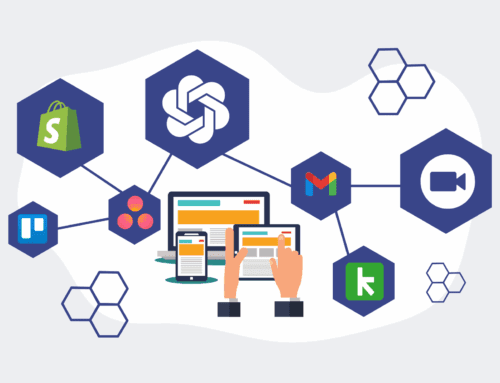
At 4Spot Consulting, we understand that achieving a true single source of truth isn’t just about connecting software; it’s about strategically orchestrating your entire operational ecosystem. Our proprietary OpsMesh framework is designed to bridge these gaps, creating a robust, interconnected web of your essential business systems. We start with an OpsMap™ diagnostic – a strategic audit that uncovers hidden inefficiencies and identifies automation opportunities specific to your business. This isn’t theoretical; it’s a hands-on process that maps out how data flows (or doesn’t flow) across your HR, recruiting, CRM, and operational platforms.
From Disarray to Decisive Action: Real-World Impact
Through our OpsBuild phase, we implement intelligent automation and AI systems, often leveraging tools like Make.com, Keap, and Unipile, to create seamless data pathways. This transforms disparate systems into a cohesive whole, ensuring that data entered in one place automatically updates across relevant platforms. For instance, we helped an HR tech client save over 150 hours per month by automating their resume intake and parsing process, then syncing the enriched data directly to Keap CRM. This kind of integration eliminates manual busywork, reduces human error, and empowers teams to focus on high-value tasks. Our track record includes helping clients achieve 240% production increases and saving over $1M annually by strategically connecting dozens of SaaS systems.
Reclaiming Your Time and Data Integrity
The vision of a single source of truth is not an unattainable ideal; it’s a strategic imperative for businesses ready to scale without being bogged down by operational inefficiencies. By meticulously mapping out your data landscape and implementing intelligent automation solutions, 4Spot Consulting helps you achieve true data harmony. This not only saves you significant time – often 25% of your day – but also provides the reliable, real-time insights you need to make confident, growth-driving decisions. Your high-value employees are freed from low-value work, operational costs are reduced, and your business gains the agility it needs to thrive.
Ready to uncover automation opportunities that could save you 25% of your day? Book your OpsMap™ call today.
If you would like to read more, we recommend this article: Building an OpsMesh: Your Foundation for True Business Automation