The Silent Killer: How Data Silos Undermine Business Scalability and What to Do About Them
In today’s fast-paced business landscape, the efficiency of your operations often dictates the pace of your growth. Yet, many organizations grapple with an insidious problem that silently erodes productivity, stunts scalability, and ultimately impacts profitability: data silos. These isolated pockets of information, residing in disparate systems and departments, act as invisible barriers, preventing a holistic view of your business and stifling your ability to make informed, agile decisions.
Imagine a scenario where your sales team relies on one CRM, your HR department uses a separate applicant tracking system, and your finance team operates with a completely different accounting software. Each system, while functional in its own right, often fails to communicate effectively with the others. This fragmentation creates a labyrinth of manual data transfers, reconciliation efforts, and inevitable human error, costing high-value employees countless hours on low-value work.
The Pervasive Threat of Disconnected Information
Data silos aren’t just an inconvenience; they are a fundamental bottleneck to operational excellence. They emerge for various reasons: departmental specialization, the adoption of new technologies without proper integration planning, or simply the organic growth of a company acquiring new tools over time. Regardless of their origin, their impact is consistently detrimental. Essential data points, crucial for understanding customer journeys, employee performance, or supply chain dynamics, remain locked away, inaccessible to those who need them most.
This lack of a unified data perspective leads to a cascade of problems. Strategic decisions are made on incomplete or outdated information, leading to missed opportunities or misguided initiatives. Customer service suffers when representatives lack a 360-degree view of interactions and purchase history. And perhaps most critically for scaling businesses, the inability to automate cross-functional workflows becomes a significant drag on growth, preventing teams from achieving their full potential.
Impact on Operational Efficiency and Employee Morale
The daily toll of data silos is profound. Employees spend a significant portion of their day manually extracting, re-entering, and verifying data across multiple systems. This isn’t just inefficient; it’s soul-crushing. High-value employees, whose expertise should be focused on strategic initiatives and complex problem-solving, are instead bogged down by repetitive, administrative tasks. This directly contradicts 4Spot Consulting’s core mission: to eliminate low-value work from high-value employees and reduce operational costs.
Moreover, the absence of a single source of truth for critical information breeds confusion and mistrust. Different departments may operate with conflicting figures, leading to internal disputes and a breakdown in collaborative efforts. This environment is ripe for human error, which can have significant financial and reputational consequences, further underscoring the urgency of addressing data fragmentation.
From Fragmentation to a Unified Vision: The Path to a Single Source of Truth
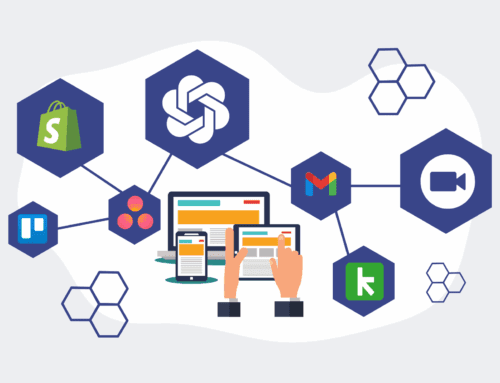
The solution to overcoming data silos lies in a strategic approach to automation and AI-powered integration. At 4Spot Consulting, we believe in transforming fragmented operations into a cohesive, intelligent ecosystem where data flows freely and accurately across all systems. Our approach isn’t about simply connecting tools; it’s about building an OpsMesh, an overarching automation strategy framework that ensures every system works in harmony to support your business objectives.
We begin with an OpsMap™—a strategic audit designed to uncover hidden inefficiencies and surface lucrative automation opportunities within your existing infrastructure. This diagnostic phase identifies exactly where your data silos exist and how they impact your business, laying the groundwork for a tailored solution. Following this, our OpsBuild™ phase implements robust automation and AI systems, leveraging powerful platforms like Make.com to connect dozens of SaaS applications, from CRMs like Keap and HighLevel to HR platforms and specialized industry tools.
Building Your OpsMesh: A Strategic Framework for Data Integration
The goal is to establish a “Single Source of Truth”—a centralized, accurate, and accessible data repository that feeds all your critical business functions. By integrating systems, automating data transfers, and applying AI for data enrichment and validation, we eliminate the manual bottlenecks that cause errors and consume valuable time. This strategic integration not only reduces operational costs but also significantly enhances scalability, allowing your business to grow without being limited by its internal systems.
For example, imagine a sales process where every lead from a marketing campaign is automatically entered into your CRM, enriched with public data, assigned to the correct salesperson, and triggers a personalized outreach sequence—all without manual intervention. Or consider an HR process where applicant data from various sources is automatically parsed, categorized by AI, and synced to your talent management system, saving hundreds of hours a month.
Real-World Impact: Unleashing Productivity and Profitability
The benefits of a unified data strategy are tangible and immediate. Businesses gain faster access to critical insights, enabling more responsive and data-driven decision-making. Customer experiences are enhanced through personalized interactions and proactive support, while internal team collaboration flourishes with shared, accurate information. This shift empowers your organization to be more agile, innovative, and competitive.
We’ve seen firsthand the transformative power of breaking down data silos. For an HR tech client, we helped them save over 150 hours per month by automating their resume intake and parsing process using Make.com and AI enrichment, then syncing the data seamlessly to their Keap CRM. This wasn’t just about saving time; it was about redirecting human potential to more strategic tasks, reducing human error, and creating a scalable system that supports rapid growth. This outcome exemplifies our strategic-first approach, where every solution is tied directly to ROI and measurable business outcomes, not just ‘tech for tech’s sake’.
Don’t Let Data Silos Strangle Your Growth
The era of fragmented data hindering business potential is over. By embracing a strategic approach to automation and AI integration, companies can unlock unprecedented levels of efficiency, accuracy, and scalability. It’s about building a resilient, intelligent operational backbone that can support your ambitions and propel you towards sustainable growth. Don’t let invisible barriers continue to hold your business back.
Ready to uncover automation opportunities that could save you 25% of your day and eliminate the silent killer of data silos? Book your OpsMap™ call today to chart a clear path to operational excellence.
If you would like to read more, we recommend this article: The Future of Business: Integrating AI and Automation for Unprecedented Efficiency