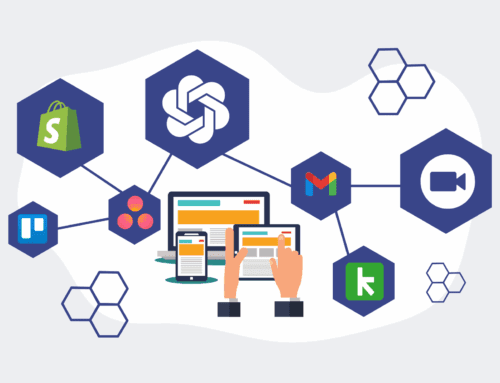
Mastering Data Synchronization: The Unseen Force Driving B2B Scalability and Profitability
In today’s fast-paced B2B landscape, data is often hailed as the new oil. Yet, many organizations find themselves awash in information, struggling to extract genuine value. The culprit? Disconnected systems, data silos, and a reliance on manual processes that act as silent saboteurs of efficiency and growth. At 4Spot Consulting, we regularly encounter businesses that are drowning in data from their CRM, HRIS, marketing platforms, and operational tools, but starving for the unified intelligence that drives strategic decision-making. This isn’t merely an IT problem; it’s a fundamental operational challenge that impacts everything from employee productivity to customer satisfaction and, ultimately, profitability.
The Hidden Costs of Disconnected Data in B2B Operations
The immediate pain points of fragmented data are often overlooked until they reach a critical mass. Think about the recruitment director who manually transfers candidate data from an ATS to a CRM, or the sales leader whose team wastes hours reconciling disparate customer records before a critical presentation. These aren’t isolated incidents; they’re symptoms of a systemic issue that incurs significant hidden costs. Human error becomes rampant, leading to incorrect invoices, missed follow-ups, and compliance headaches. Time, your most valuable asset, is squandered on repetitive, low-value data entry and reconciliation tasks. Our experience shows that these inefficiencies can quietly consume 25% or more of an employee’s day, diverting high-value talent from strategic initiatives to clerical chores. This operational drag isn’t just inefficient; it’s an active impediment to scalability and competitive advantage.
Beyond Basic Integrations: Why True Synchronization Matters
Many businesses attempt to mitigate this by implementing point-to-point integrations. While a step in the right direction, true data synchronization goes far beyond simple data transfer. It’s about establishing a dynamic, intelligent flow where information is consistently updated, validated, and accessible across all critical systems, creating a “Single Source of Truth.” This means your CRM (be it Keap, HighLevel, or another system) isn’t just a repository of customer interactions; it’s a living, breathing ecosystem reflecting real-time data from sales, marketing, support, and even product usage. For HR and recruiting, it ensures that candidate pipelines, employee records, and performance data are harmonized, eliminating duplication and ensuring consistent insights. Without this continuous synchronization, even the most advanced systems become isolated islands, unable to contribute to a cohesive organizational strategy.
The Fragility of Manual Bridges and Ad-Hoc Solutions
Relying on manual data exports, CSV imports, or ad-hoc scripts might seem like a quick fix, but these “bridges” are inherently fragile. They break with system updates, require constant maintenance, and are prone to human oversight. As a business scales, the complexity grows exponentially, making these stopgap measures unsustainable. What starts as a simple workaround quickly devolves into a labyrinth of fragmented data, where the risk of security breaches, data loss, and compliance failures rises dramatically. Instead of enabling growth, these manual efforts become the very bottlenecks they were designed to bypass, stifling innovation and draining resources.
4Spot Consulting’s Approach: Forging a Unified Data Ecosystem with OpsMesh
At 4Spot Consulting, we believe that robust data synchronization is not a luxury, but a strategic imperative. Our OpsMesh framework is specifically designed to address these complex data challenges, transforming disparate systems into a cohesive, automated operational network. We start with a strategic-first approach, understanding your unique business processes and identifying critical data points before any technical implementation begins. Our expertise lies in connecting dozens of SaaS systems using powerful low-code automation platforms like Make.com, ensuring that data flows seamlessly and intelligently across your organization. This isn’t about mere connectivity; it’s about engineering a data architecture that serves your business goals, reduces human error, and empowers your team with accurate, real-time information.
From OpsMap to OpsCare: A Holistic Synchronization Journey
Our journey with clients typically begins with the OpsMap™—a strategic audit where we meticulously uncover inefficiencies, pinpoint data silos, and roadmap profitable automation opportunities. This diagnostic phase is crucial for designing a synchronization strategy that aligns with your operational objectives. Following the OpsMap, our OpsBuild phase brings these solutions to life, implementing robust automation and AI systems that not only connect your data but also enrich it. For instance, we might leverage AI to parse and extract key information from unstructured documents before syncing it to your CRM, ensuring richer, more actionable data. Finally, our OpsCare services provide ongoing support, optimization, and iteration, ensuring your automation infrastructure remains agile, secure, and continuously aligned with your evolving business needs. We don’t just build systems; we nurture them, ensuring sustained performance and ROI.
The Tangible ROI: What Seamless Data Synchronization Delivers
The benefits of a well-orchestrated data synchronization strategy are profound and far-reaching. Businesses gain a significant competitive edge through improved decision-making, fueled by accurate and timely insights. Operational costs are dramatically reduced as manual tasks are eliminated, allowing high-value employees to focus on strategic initiatives. We’ve seen clients achieve production increases of 240% and annual cost savings exceeding $1 million by simply optimizing their data flows. Customer and employee experiences are enhanced, as consistent, up-to-date information leads to smoother interactions and personalized engagements. Most importantly, a unified data ecosystem provides the scalability necessary for high-growth B2B companies, enabling them to expand without the inherent friction and bottlenecks of legacy systems. This isn’t just about saving time; it’s about unlocking growth and achieving true operational excellence.
If you would like to read more, we recommend this article: The Complete Guide to Operational Automation