Mastering Data Integrity: The Unseen Costs of Manual Entry and AI-Powered Solutions
In the quest for operational efficiency, many businesses grapple with a silent saboteur: manual data entry. While seemingly innocuous, the reliance on human hands to transcribe, input, and manage critical information across disparate systems introduces a host of hidden costs that can erode profitability, stifle growth, and compromise decision-making. At 4Spot Consulting, we understand that these aren’t just minor inconveniences; they are systemic vulnerabilities demanding strategic intervention. For high-growth B2B companies, particularly within HR, recruiting, and legal sectors, the integrity of data is paramount, and its manual handling presents a significant risk to scalability and accuracy.
The True Price Tag of Human Error
Consider the cumulative effect of a simple typo. In an HR context, an incorrect digit in a salary figure or a misplaced character in an employee ID can cascade through payroll, benefits, and compliance systems, leading to costly rectifications, potential legal liabilities, and a breakdown of trust. For recruiting firms, inaccurate candidate data can lead to missed opportunities, poor placements, and damage to client relationships. Legal practices, where precision is not just a virtue but a mandate, face dire consequences from errors in case files or contract details. These aren’t isolated incidents; they are endemic to any process heavily reliant on manual input, inevitably leading to:
Time Drain and Productivity Loss
The most immediate and obvious cost is time. High-value employees, whose expertise should be directed towards strategic initiatives, often spend an inordinate amount of their day on repetitive data entry tasks. This isn’t just about the hours spent; it’s about the opportunity cost of what they’re *not* doing. Every minute dedicated to copying and pasting information from one spreadsheet to another is a minute not spent innovating, strategizing, or engaging with clients.
Elevated Operational Costs
Beyond salaries, manual data entry contributes to higher operational overheads through rework, quality control efforts, and the inevitable “firefighting” to correct mistakes. The infrastructure required to manage paper trails, physical archives, or even unoptimized digital storage solutions adds to this burden. Our experience at 4Spot Consulting shows that a significant portion of a business’s operational budget can be directly or indirectly attributed to the inefficiencies born from manual data processes.
Compromised Data Accuracy and Strategic Blind Spots
Perhaps the most insidious cost is the degradation of data accuracy. Even the most diligent employees are prone to fatigue and distraction, leading to errors that propagate through business intelligence systems. When data is unreliable, leadership is left with strategic blind spots. How can you make informed decisions about hiring trends, market opportunities, or operational bottlenecks if the underlying information is flawed? This directly impacts a company’s ability to forecast, adapt, and compete effectively.
How Automation and AI Transform Data Management
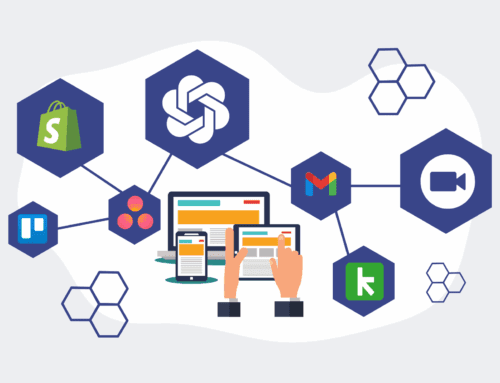
The solution isn’t to simply demand more vigilance from your team; it’s to eliminate the conditions that foster human error in the first place. This is where strategic automation and AI integration, a core offering of 4Spot Consulting, become indispensable. Our approach, guided by the OpsMesh™ framework, focuses on building a “single source of truth” by intelligently connecting disparate systems.
Automating the Intake and Processing Workflow
Imagine a recruiting firm where resume intake, parsing, and candidate data entry into the CRM (like Keap or HighLevel) are entirely automated. Using tools like Make.com, we can orchestrate complex workflows that automatically extract relevant information from documents, enrich it with AI, and accurately populate your databases. This eliminates manual transcription, drastically reduces errors, and frees up recruiters to focus on what they do best: connecting with talent.
AI for Validation and Enrichment
AI doesn’t just automate; it enhances. Beyond simple data transfer, AI can be leveraged for data validation, identifying inconsistencies, flagging missing information, and even enriching existing records with additional relevant details. For legal firms, this could mean automatically cross-referencing case details or ensuring all necessary fields are completed before a document is finalized. This level of intelligent processing elevates data integrity beyond what manual review could ever achieve.
Creating a Single Source of Truth
The cornerstone of efficient operations is a unified, accurate data repository. Our OpsMap™ diagnostic identifies where your data silos exist and how they contribute to inefficiencies. We then implement solutions through OpsBuild™ to create seamless integrations, ensuring that whether it’s HR records, CRM data, or operational metrics, every department is working from the same, reliable dataset. This not only minimizes errors but also provides a holistic view of your business, empowering agile decision-making.
Reclaiming Productivity and Driving Growth
By moving beyond manual data entry, businesses can realize significant gains: reducing human error by up to 80%, saving hundreds of hours weekly, and ultimately cutting operational costs. This isn’t just about saving money; it’s about reallocating human potential to tasks that truly drive innovation and growth. It allows high-value employees to engage in high-value work, elevating job satisfaction and fostering a culture of strategic thinking.
At 4Spot Consulting, our strategic-first approach ensures that every automation solution is tied directly to measurable ROI and specific business outcomes. We don’t just build; we optimize, iterate, and provide ongoing support through OpsCare™ to ensure your automation infrastructure evolves with your business. The journey to operational excellence begins by acknowledging the unseen costs and embracing the transformative power of intelligent automation.
If you would like to read more, we recommend this article: Optimizing Operations with the OpsMesh™ Framework