Beyond the Spreadsheet: How AI-Powered Data Organization Drives Business Clarity
For many businesses, the journey from raw data to actionable insight often feels like navigating a labyrinth constructed of mismatched spreadsheets, siloed databases, and a mountain of manually entered information. This chaotic landscape isn’t just an inconvenience; it’s a silent drain on productivity, a breeding ground for human error, and a significant barrier to scalable growth. Business leaders, particularly those at the helm of high-growth B2B companies, understand that the true value of their data remains locked away, inaccessible and unoptimized.
Imagine your sales team spending hours sifting through contact lists instead of closing deals, or your HR department manually cross-referencing applicant data when they could be onboarding top talent. This isn’t just about inefficiency; it’s about high-value employees performing low-value work, directly impacting your bottom line and hindering strategic decision-making. The traditional methods of data organization, while once sufficient, are no longer equipped to handle the velocity, volume, and variety of information critical to modern business operations.
The Hidden Costs of Disorganized Data
The ramifications of poor data organization extend far beyond simple frustration. Data silos, where critical information is isolated within different departments or systems, prevent a holistic view of your business. This fragmentation leads to missed opportunities, duplicated efforts, and an inability to accurately measure performance across the board. Without a single source of truth, making informed strategic decisions becomes a gamble rather than a calculated move. Furthermore, the risk of data loss or security breaches increases when data management practices are inconsistent and fragmented.
Consider the cumulative effect: countless hours dedicated to manual data entry, validation, and reconciliation. These are hours not spent innovating, building customer relationships, or devising growth strategies. This operational drag directly impacts scalability, making it difficult for companies to grow without exponentially increasing their headcount and operational costs. For businesses striving for $5M+ ARR, these inefficiencies aren’t just speed bumps; they’re roadblocks that prevent the agility required to stay competitive.
AI and Automation: Reshaping Data Management
The emergence of AI and advanced automation offers a powerful antidote to data chaos. Rather than mere tools, they represent a paradigm shift in how businesses can collect, process, organize, and utilize their information. AI-powered systems can ingest vast amounts of data from disparate sources, identify patterns, cleanse inconsistencies, and categorize information with a speed and accuracy simply unattainable by human effort. This capability transforms raw data into structured, intelligent assets ready for analysis.
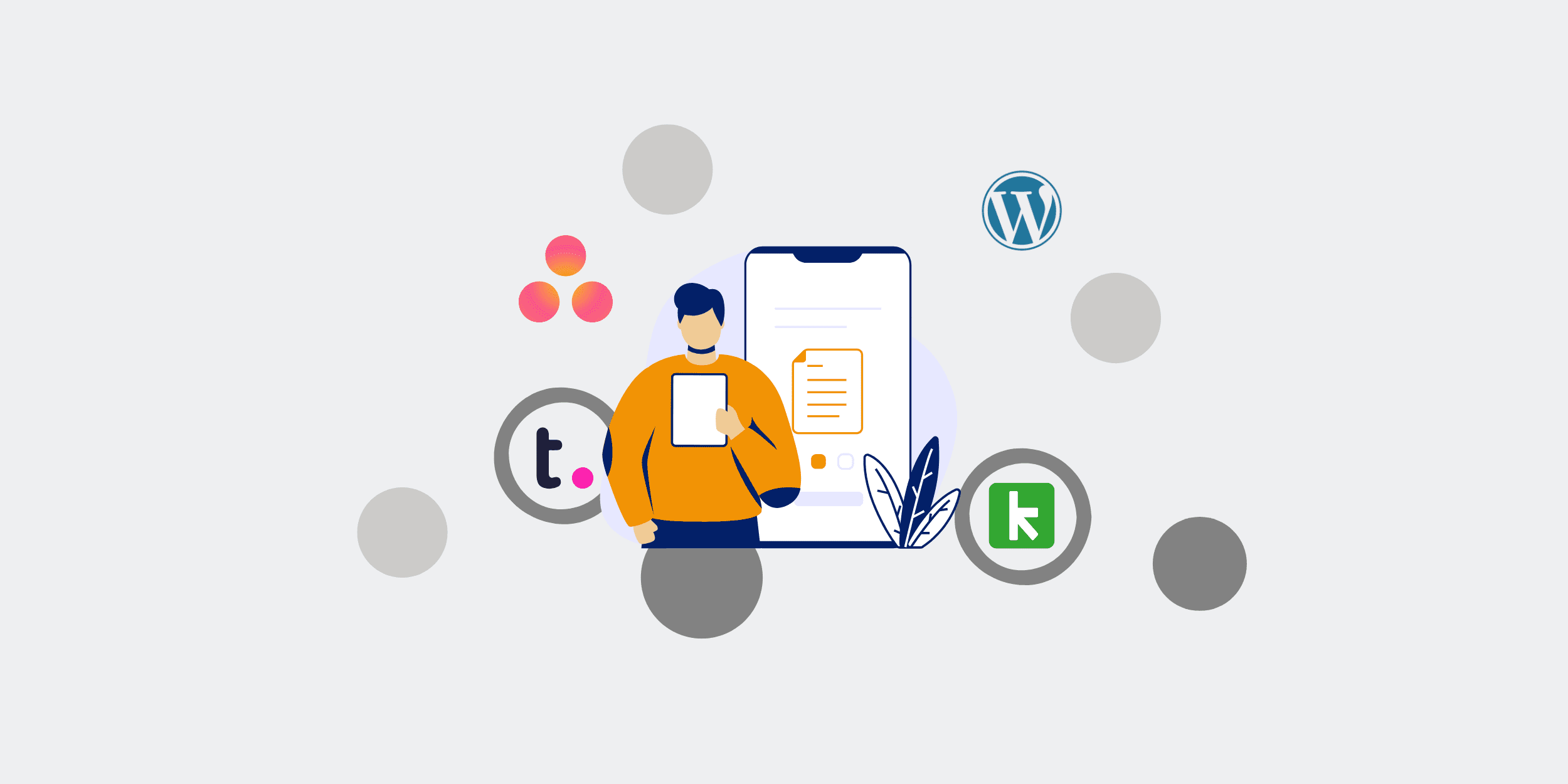
Automation platforms, like Make.com, then take this intelligent data and orchestrate its flow across your entire tech stack. Imagine documents being automatically parsed, key information extracted, and then seamlessly updated in your CRM, project management tools, and reporting dashboards, all without human intervention. This interconnectedness eliminates data silos, ensures real-time accuracy, and establishes the elusive “single source of truth” that every scaling business desperately needs.
Building Your Single Source of Truth with 4Spot Consulting
At 4Spot Consulting, we understand that implementing AI and automation isn’t just about deploying technology; it’s about strategically re-engineering your operational backbone. Our OpsMesh framework is designed precisely for this — to weave together your various systems into a cohesive, intelligent network where data flows freely and accurately. We begin with an OpsMap™, a strategic audit that meticulously uncovers inefficiencies, identifies data bottlenecks, and maps out the most impactful automation opportunities within your business.
Our approach is not about “tech for tech’s sake.” Every solution we implement, through our OpsBuild phase, is tied directly to measurable ROI and specific business outcomes. For instance, we helped an HR tech client save over 150 hours per month by automating their resume intake and parsing process using Make.com and AI enrichment, then syncing this vital data directly into their Keap CRM. This transformation wasn’t just about saving time; it was about enabling their high-value recruiters to focus on strategic talent acquisition rather than tedious data management. As their team noted, “We went from drowning in manual work to having a system that just works.”
From Chaos to Clarity: The Path Forward
Achieving true business clarity in today’s data-rich environment requires a proactive, strategic approach to data organization. By integrating AI and automation, you can transform your disparate data points into a powerful, unified asset. This not only eliminates human error and reduces operational costs but also unlocks unparalleled scalability and empowers faster, more intelligent decision-making across your entire organization.
Don’t let disorganized data hold your business back any longer. Our expertise in low-code automation and AI integration for operations, HR, and recruiting allows us to craft tailored solutions that deliver tangible results. We enable you to reduce the low-value work for your high-value employees, freeing them to focus on what truly drives your business forward.
If you would like to read more, we recommend this article: The Strategic Imperative of Business Automation: Unlocking Peak Efficiency