Building a Resilient HR Tech Stack: How Make.com and Zapier Fit In
In today’s dynamic business landscape, the ability of an organization to adapt and thrive hinges significantly on its operational agility. For HR departments, often considered the backbone of any company’s human capital, this means moving beyond siloed systems and manual processes to embrace a truly resilient HR tech stack. A resilient stack isn’t just about having the latest software; it’s about seamless integration, efficient data flow, and the power to automate repetitive tasks, freeing up HR professionals for more strategic work. Here at 4Spot Consulting, we frequently guide businesses in constructing such systems, and invariably, platforms like Make.com and Zapier emerge as pivotal tools in achieving this.
The Imperative for HR Tech Resilience
HR operations are complex. From talent acquisition and onboarding to payroll, performance management, and offboarding, each stage generates vast amounts of data and demands precise, timely execution. Historically, HR teams have grappled with disparate systems—one for applicant tracking (ATS), another for human resources information systems (HRIS), a third for learning management (LMS), and so on. This fragmentation creates data inconsistencies, duplication of effort, and bottlenecks that can severely impact efficiency, candidate experience, and employee satisfaction. The cost of these inefficiencies, both in time and potential errors, is substantial.
A resilient HR tech stack fundamentally addresses these challenges. It’s designed to be robust against changes, flexible enough to integrate new tools, and efficient in its day-to-day operations. This resilience isn’t an accidental outcome; it’s a strategic build, and central to this build are integration and automation platforms that act as the connective tissue between otherwise isolated systems.
Make.com and Zapier: The Architects of Connectivity
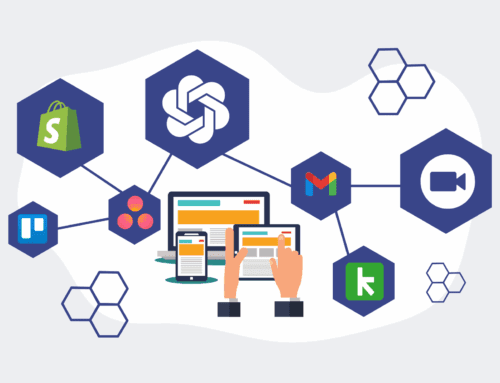
Enter Make.com (formerly Integromat) and Zapier. These low-code automation platforms are not standalone HR solutions; rather, they are the vital orchestrators that enable your existing HR tools to communicate and collaborate. They bridge the gaps between your ATS, HRIS, payroll system, CRM, communication platforms, and even custom spreadsheets, transforming a collection of disparate apps into a unified, intelligent ecosystem.
Automating the Talent Acquisition Journey
Consider the talent acquisition process. A resilient system would automatically push new applicant data from your ATS into your HRIS upon hire. It would trigger background checks, send welcome emails to new employees, create accounts in relevant company systems, and even notify IT of new hardware requests—all without human intervention after the initial setup. Make.com and Zapier excel here. For instance, a new hire record in your ATS could trigger a Zap (Zapier) or a scenario (Make.com) to:
- Create a new employee profile in your HRIS.
- Add the new hire to relevant Slack or Teams channels.
- Initiate a PandaDoc contract for signature.
- Send a personalized onboarding sequence via your CRM (e.g., Keap).
- Generate a task list for the hiring manager and HR team.
This level of automation not only saves countless hours but also significantly reduces the potential for human error, ensuring a consistent and positive experience for every new employee.
Streamlining Employee Lifecycle Management
Beyond initial hiring, these platforms fortify the entire employee lifecycle. Imagine automating routine requests, such as leave applications flowing from an HR portal directly to a manager for approval, then updating the HRIS and calendar. Or, linking performance review data from one system to a compensation review tool, ensuring all relevant information is accessible and actionable in real-time. Make.com’s visual builder, with its powerful routing and error handling capabilities, is particularly adept at managing complex multi-step workflows that require conditional logic and data manipulation across several applications.
Zapier, with its vast library of pre-built integrations and simpler ‘trigger-action’ logic, provides a rapid deployment option for less complex, but equally critical, integrations. The beauty of both platforms lies in their accessibility; HR professionals, with minimal technical training, can often build and maintain these automations, fostering a culture of self-sufficiency and continuous improvement within the department.
The 4Spot Consulting Approach: Strategic Integration for ROI
At 4Spot Consulting, our OpsMesh™ framework emphasizes a strategic-first approach to automation. We don’t just connect tools for the sake of it; we begin with an OpsMap™ diagnostic to uncover the true bottlenecks and identify automation opportunities that yield significant ROI. Implementing Make.com and Zapier within this framework means we strategically integrate them to achieve specific business outcomes: saving 25% of your day, reducing operational costs, eliminating human error, and increasing scalability. We’ve seen clients save over 150 hours per month by automating resume intake and parsing using Make.com and AI enrichment, syncing directly into their Keap CRM.
A resilient HR tech stack, powered by smart integration through platforms like Make.com and Zapier, isn’t a luxury—it’s a fundamental necessity for any organization looking to optimize its most valuable asset: its people. By automating the mundane, HR teams can focus on strategic initiatives, employee development, and fostering a workplace culture that drives business success. This is how you build an HR department that is not just reactive, but proactively supportive of your company’s growth and resilience.
If you would like to read more, we recommend this article: The Automated Recruiter’s 2025 Verdict: Make.com vs Zapier for Hyper-Automation