The Hidden Drain: Uncovering the True Cost of Manual CRM Data Management
In today’s fast-paced business environment, Customer Relationship Management (CRM) systems are the lifeblood of sales, marketing, and client success. Yet, for many high-growth B2B companies, the very tool designed to foster relationships often becomes a source of frustration, inefficiency, and hidden costs due to manual data management. It’s not just about data entry errors; it’s about the silent drain on resources, productivity, and ultimately, profitability. At 4Spot Consulting, we observe this challenge consistently across various industries, revealing that the cost of doing nothing far outweighs the investment in strategic automation.
The Illusion of Control: Why Manual CRM is a Money Pit
Leaders often believe that having a human touch ensures data accuracy. While diligence is commendable, the reality is that manual processes are inherently prone to human error, inconsistency, and significant time expenditure. Each piece of data manually entered, updated, or transferred represents a moment of vulnerability and a missed opportunity for your high-value employees to focus on strategic tasks.
The Overlooked Financial Leakage
Consider the cumulative effect: a sales team spending hours each week updating contact information, logging calls, or reconciling data across disparate systems. This isn’t just lost time; it’s lost revenue. Every hour spent on low-value data entry is an hour not spent nurturing leads, closing deals, or strategizing for growth. Our experience shows this can equate to hundreds of hours monthly across an organization, impacting operational costs directly and significantly. This ‘leakage’ often goes unnoticed in budget reviews because it’s baked into operational salaries rather than identified as a systemic inefficiency.
Compromised Data Integrity and Decision-Making
Manual CRM management inevitably leads to data silos and inconsistencies. A contact’s information might be updated in one system but not another. A deal stage might be inaccurately recorded, leading to flawed forecasting. Such discrepancies don’t just create administrative headaches; they actively sabotage your ability to make informed, data-driven decisions. Imagine critical business strategies built on faulty intelligence—the consequences can range from misallocated marketing spend to missed sales targets and a tarnished customer experience. Your single source of truth becomes fragmented, undermining the very purpose of a CRM.
Beyond Entry: The Broader Impact on Operations and Scalability
The ramifications of manual CRM data management extend far beyond basic data entry. They touch every aspect of your business operations and directly impede your ability to scale effectively.
Scalability Bottlenecks and Employee Burnout
As your company grows, so does the volume of data. Relying on manual processes creates an exponential challenge. What worked for a team of five becomes a nightmare for fifty. Hiring more people to manage increasing data loads is a reactive, unsustainable, and costly solution. It also leads to burnout among high-value employees who are bogged down by repetitive, tedious tasks instead of utilizing their expertise strategically. This leads to higher turnover, further contributing to operational costs and knowledge loss.
Missed Opportunities and Inefficient Customer Journeys
When CRM data isn’t synchronized or is poorly maintained, your customer journey suffers. Marketing automation triggers might fail, sales outreach could be mistimed, or customer support agents might lack a complete view of client interactions. This fragmentation leads to a disjointed customer experience, missed cross-sell or upsell opportunities, and a reduced customer lifetime value. In a competitive market, a seamless and personalized experience is a differentiator, and manual data management is its antithesis.
4Spot Consulting’s Strategic Approach: Automating Your CRM for ROI
At 4Spot Consulting, we don’t just implement tools; we implement strategic solutions designed to eliminate these hidden costs and transform your CRM into a true asset. Our approach begins with the OpsMap™—a strategic audit to uncover your specific inefficiencies and map out opportunities for automation and AI integration.
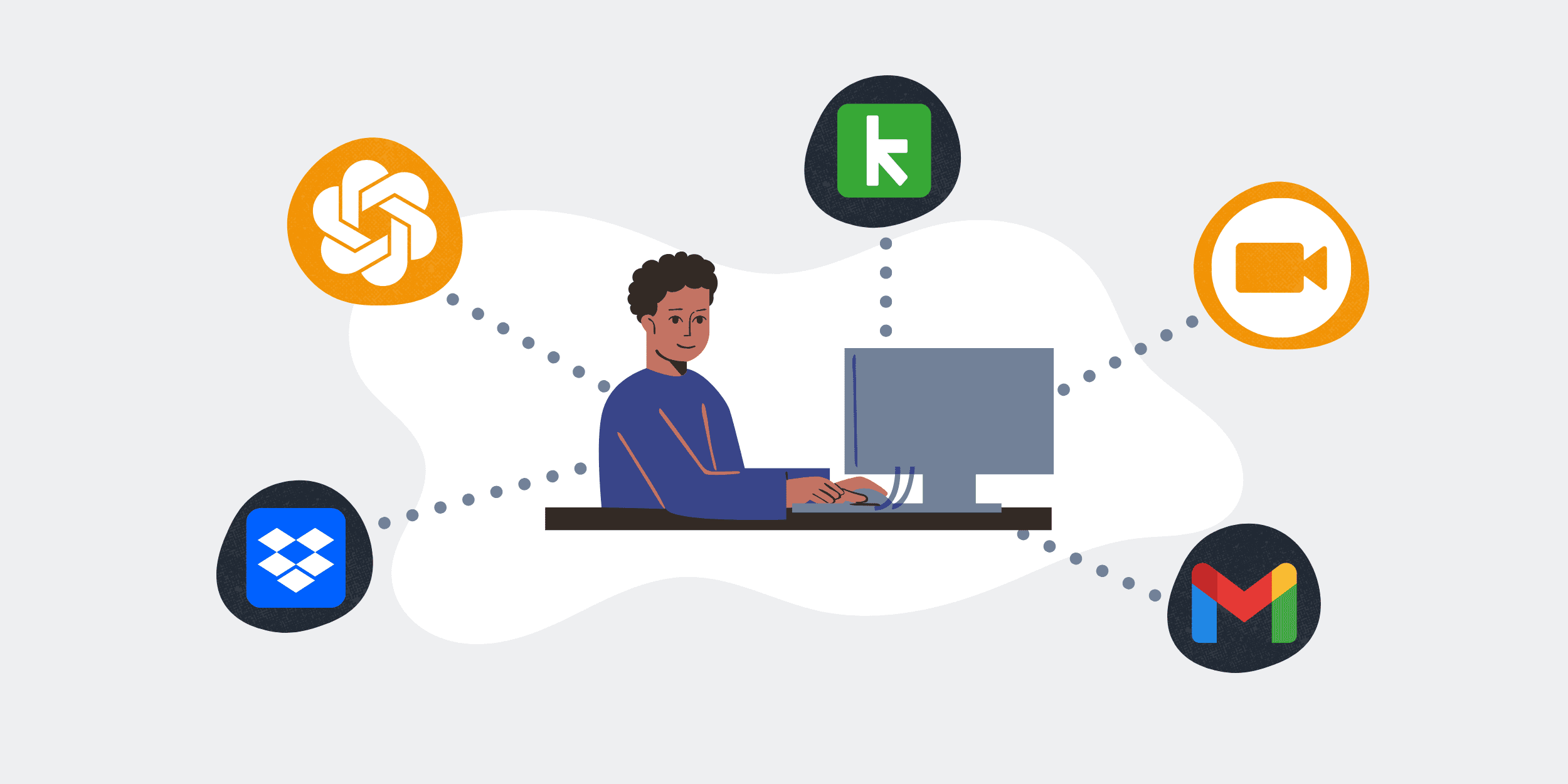
Through frameworks like OpsMesh, we design comprehensive automation strategies that connect disparate systems, ensuring your CRM serves as a single source of truth. We specialize in robust integrations using platforms like Make.com, ensuring data flows seamlessly between your CRM (like Keap or HighLevel), HR systems, marketing platforms, and other essential tools. This not only eliminates human error but also frees up your team to focus on high-impact activities. Imagine your sales team spending 25% more of their day selling, or your operations team proactively optimizing processes instead of firefighting data inconsistencies.
Our goal is to reduce low-value work for your high-value employees, driving measurable ROI and significantly enhancing your scalability. We’ve helped clients automate everything from lead intake and data parsing to complex contract management, resulting in substantial time savings and production increases. This isn’t about ‘tech for tech’s sake’; it’s about leveraging intelligent automation to achieve tangible business outcomes.
The true cost of manual CRM data management is far greater than the apparent salary expense; it’s the cost of lost opportunities, stunted growth, and inefficient operations. By strategically automating your CRM processes, you not only reclaim lost time and reduce errors but also empower your business to scale intelligently and profitably.
If you would like to read more, we recommend this article: The Strategic Imperative of Business Automation