Post: $312K Saved: How TalentEdge Measured HR/TA ROI with Keap Custom Reports

By Published On: December 25, 2025

$312K Saved: How TalentEdge Measured HR/TA ROI with Keap Custom Reports

Case Snapshot

Organization TalentEdge — 45-person recruiting firm
Team 12 active recruiters
Core Constraint No reliable HR/TA ROI data — reporting was anecdotal, fields were unstructured, and Keap dashboards showed incomplete records
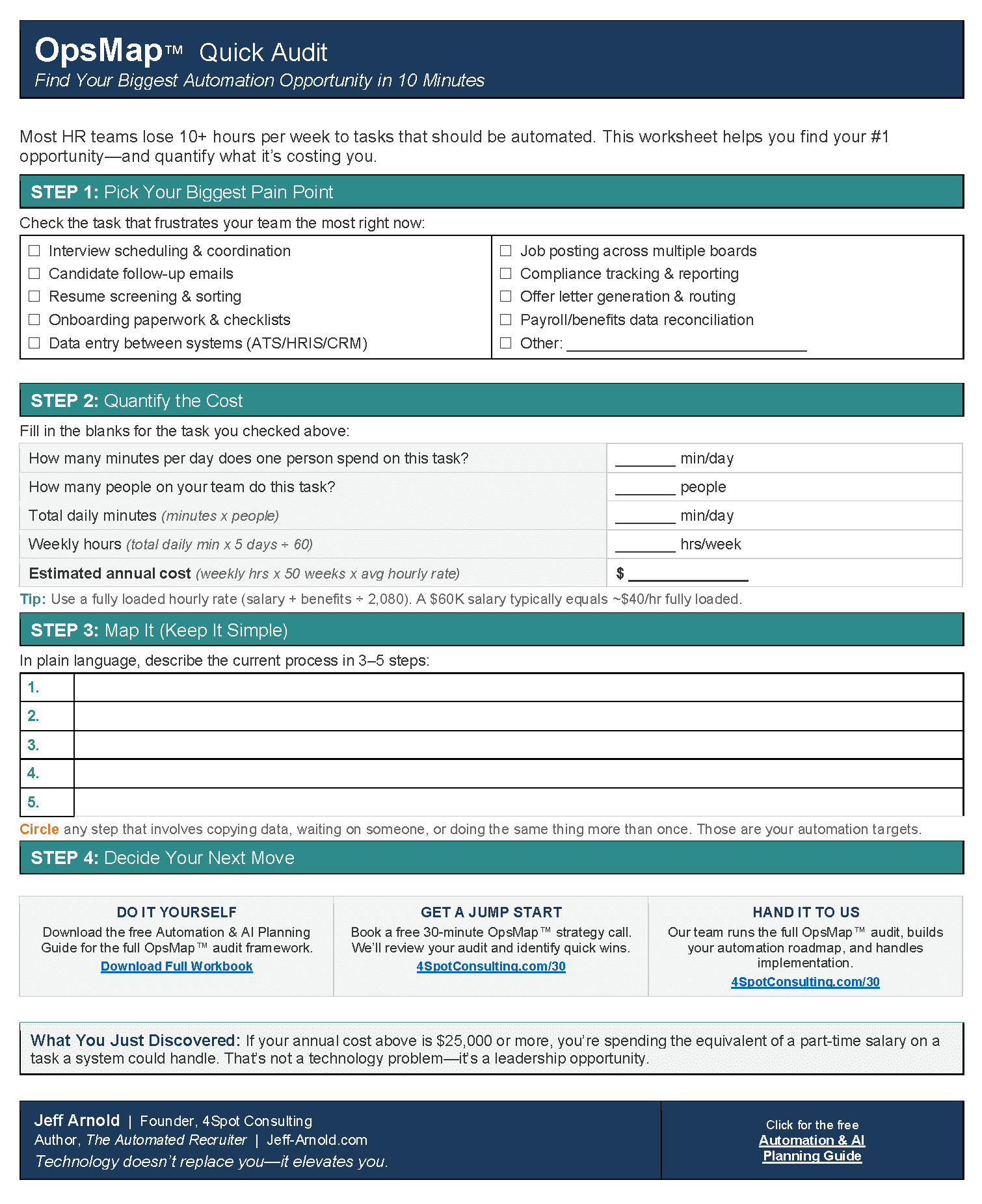
Approach OpsMap™ audit → field restructuring → automated data capture → phased dashboard build
Automation Opportunities Identified 9
Annual Savings $312,000
ROI 207% within 12 months
First Measurable Gains Within 30 days of deployment

Most recruiting firms that use Keap can tell you how many candidates are in their pipeline. Very few can tell you what each hire actually cost, which sourcing channel produced the most placements, or how long their average time-to-fill has trended over the last six months. That gap between operational activity and measurable ROI is exactly where TalentEdge found itself before engaging a structured OpsMap™ consulting process.

This case study documents the before-and-after: what TalentEdge’s Keap setup looked like before reporting was a priority, the specific architectural changes that made ROI measurement possible, and the business results those changes produced. For a broader look at the strategic framework behind this work, see our Keap consultant strategy for AI-powered HR and talent acquisition pillar.


Context and Baseline: What TalentEdge Had Before

TalentEdge was not a Keap beginner. The firm had used the platform for three years to manage candidate contacts, send outreach sequences, and log basic activity. The problem was that Keap had been adopted tactically rather than architecturally — each of the 12 recruiters had built their own tagging conventions, used free-text fields for categorical data like recruitment source and department, and tracked hire dates inconsistently or not at all.

The practical consequence: when leadership asked for a source-effectiveness report — which channel produced the most placements per quarter — no clean data existed. Filtering by ‘LinkedIn’ in Keap returned different counts than filtering by ‘Linked In’ or ‘LI’ because all three tags existed in the system and referred to the same channel. The data was present but fragmented into noise.

Asana’s Anatomy of Work research shows that knowledge workers lose an estimated 60% of their day to work about work — status updates, duplicated data entry, and searching for information that should be readily accessible. TalentEdge’s reporting problem was a structural version of the same issue: valuable data existed, but retrieving it cost more effort than the insight was worth, so teams stopped trying.

Baseline metrics before OpsMap™ engagement:

  • Average time-to-hire: unmeasured (estimated 38–52 days based on recruiter recollection)
  • Cost-per-hire: unknown — no field captured offer amounts or sourcing spend against individual placements
  • Source effectiveness: fragmented across 30+ tag variants for roughly six actual sourcing channels
  • Onboarding completion tracking: absent — no date field, no workflow trigger
  • Recruiter throughput: tracked informally in spreadsheets outside of Keap

Approach: OpsMap™ Before Any Build

The OpsMap™ process ran for two weeks before a single new field was created or a single workflow was modified. This sequencing is deliberate and non-negotiable: building automation on top of a broken data architecture produces faster noise, not better reporting.

The audit produced three outputs:

  1. A KPI alignment document. Leadership and the recruiting team agreed on five primary ROI metrics: time-to-hire by source, cost-per-hire by channel, offer acceptance rate, 90-day retention rate of new hires, and recruiter throughput (roles closed per recruiter per quarter). A sixth metric — automation time-savings by workflow — was added at the team’s request.
  2. A field and tag inventory. Every existing custom field and tag in Keap was catalogued, deduplicated, and mapped to the six agreed metrics. Fields that could not be traced to any metric were flagged for archival. Tags were consolidated: 30+ sourcing variants collapsed to a six-item dropdown picklist.
  3. Nine automation opportunities. Each opportunity was scoped with a specific Keap workflow design, an expected time-savings estimate, and a dollar value based on recruiter hourly cost. These nine opportunities became the $312,000 savings figure — traced to specific workflows, not general efficiency gains.

For a detailed framework on quantifying this type of automation value before deployment, see our HR and recruiting ROI measurement playbook.


Implementation: Four Structural Changes That Made Reporting Work

1. Field Architecture Rebuild

Free-text fields for categorical data were eliminated. Every field used for filtering or reporting was converted to a typed format:

  • Date fields: Application Received Date, Phone Screen Date, Offer Extended Date, Start Date, 90-Day Review Trigger Date, Onboarding Completion Date
  • Dropdown fields (locked picklists): Recruitment Source (6 options), Department (12 options), Hiring Manager (recruiter-linked), Offer Outcome (Accepted / Declined / Withdrawn)
  • Number fields: Days-to-Hire (calculated from Application Received to Start Date), Offer Amount

Fourteen custom fields total. Each was documented in an internal field dictionary shared with all 12 recruiters, with examples showing correct usage. This documentation step is consistently skipped by teams that build fast — and it is consistently the reason new fields degrade into the same inconsistency the old ones had.

2. Tag Standardization and Governance

Pipeline-stage tags were standardized into a linear sequence that every candidate contact moved through: Candidate — Applied, Candidate — Phone Screen, Candidate — Interviewed, Candidate — Offer Extended, Candidate — Hired, Candidate — Declined, Candidate — Withdrawn. Employee-phase tags followed: Employee — Onboarding, Employee — 90-Day Review, Employee — Active.

A governance rule was added to the team’s operating procedures: no recruiter creates a new tag without documenting it in the shared field dictionary. This rule costs nothing to enforce and prevents the tag sprawl that destroyed TalentEdge’s earlier reporting.

3. Automated Data Capture Workflows

Manual data entry is the single largest source of reporting error in Keap HR setups. Parseur’s Manual Data Entry Report places the fully-loaded annual cost of manual data entry at approximately $28,500 per employee who performs it regularly. McKinsey research confirms that automated workflows reduce process errors by up to 90% compared to manual entry. TalentEdge eliminated manual field population for six of its fourteen custom fields by triggering workflow automation at key events:

  • Candidate submits job application form → Application Received Date auto-populated; Recruitment Source set from form field value; Candidate — Applied tag applied
  • Recruiter applies Candidate — Hired tag → Hire Date auto-populated with today’s date; Days-to-Hire calculated field updated; onboarding sequence triggered
  • 90-Day Review Trigger Date reached → Employee — 90-Day Review tag applied; internal notification sent to hiring manager
  • Onboarding checklist completed (form submission) → Onboarding Completion Date auto-populated; Employee — Active tag applied

For roles sourced through an external ATS, an automation platform connected the two systems via webhook: when a candidate’s status changed in the ATS, the corresponding Keap contact record updated automatically, keeping Keap as the single reporting layer without requiring double entry.

This architecture is described in detail in our guide on how Keap consultants bridge HR tech for automation and growth.

4. Dashboard Build by Metric Layer

Keap’s reporting tools were used to build three dashboard views, each scoped to a different audience:

  • Recruiter view: Individual time-to-hire trend, personal source-effectiveness breakdown, offer acceptance rate, open pipeline count by stage
  • Manager view: Team throughput by recruiter, department-level time-to-fill, cost-per-hire by channel, 90-day retention rate of placed candidates
  • Leadership view: Aggregate ROI summary — total placements, total estimated cost-per-hire, automation time-savings by workflow (in hours and dollar value), and rolling 12-month trend lines for all six agreed KPIs

The leadership dashboard converted time-savings into dollar value using a fully-loaded recruiter hourly cost figure agreed on during the OpsMap™ engagement. This translation from hours to dollars is what transformed reporting from an HR deliverable into a business conversation.


Results: Before and After

Metric Before After (12 Months)
Time-to-hire visibility Estimated, not measured Tracked per recruiter, per channel, per department
Source-effectiveness data Fragmented across 30+ tag variants Clean 6-channel dropdown; filterable in all reports
Onboarding completion tracking Absent 100% automated; no manual entry required
Recruiter throughput tracking Spreadsheet outside Keap Live Keap dashboard, updated by workflow triggers
Annual cost savings (automation) $0 (no automation) $312,000
ROI on automation investment 207% within 12 months
Recruiter behavior change No data to inform channel choice Self-directed channel optimization within 30 days of dashboard access

The $312,000 figure breaks down across the nine automation opportunities identified in the OpsMap™ audit — not across a general “efficiency” claim. Each workflow had an estimated time-savings calculation tied to it before deployment, and actual savings were reconciled against those estimates at the 6-month and 12-month marks.


Lessons Learned: What We Would Do Differently

Start the Field Dictionary on Day One, Not After Go-Live

The field dictionary — the internal document defining every custom field and tag, its purpose, and correct usage — was created two weeks into the build phase rather than during the OpsMap™ audit. In that two-week gap, three recruiters who were shown the new fields populated them using their own conventions, creating a small batch of records that required manual correction. Governance documentation should be the first artifact produced, before any field is created in the platform.

Train on the Why, Not Just the How

Initial recruiter training covered what fields to populate and when. It did not cover why each field existed or how it connected to the dashboard metrics leadership would see. When that connection was made explicit in a 30-minute follow-up session — showing recruiters exactly which dashboard tile their field entry fed — data quality improved noticeably. Harvard Business Review research on behavior change in organizations consistently points to the same finding: people comply with processes more reliably when they understand the downstream consequence of their input.

Build the Leadership Dashboard Last, Not First

There was organizational pressure to show leadership a dashboard early. We resisted it, and that resistance was correct. A dashboard built on unclean data produces confidently wrong numbers, which is worse than no dashboard at all. The MarTech 1-10-100 rule applies directly here: it costs $1 to verify data at entry, $10 to correct it later, and $100 to act on bad data. TalentEdge’s leadership dashboard went live only after two full weeks of clean automated data had accumulated — ensuring that the first numbers leadership saw were accurate.


The Broader Implication: Keap as a Strategic Reporting Layer

SHRM and Forbes composite data place the cost of an unfilled position at approximately $4,129 per month. When a Keap dashboard shows real-time days-to-fill and open role count, leadership can calculate the carrying cost of open headcount as a live P&L line — not a quarterly HR report. That shift, from HR metric to business metric, is what separates teams that get budget for their automation programs from teams that don’t.

Forrester research on automation ROI consistently shows that organizations with structured measurement systems in place before deployment achieve significantly higher realized returns than those who measure retrospectively. TalentEdge’s 207% ROI was not accidental — it was the direct result of defining what success looked like before the first workflow was built.

For teams looking to replicate this outcome, the starting point is always the same: define the metric, trace it to a field, confirm the field is populated by automation rather than by hand, and build the report last. The sequence matters more than the technology. For strategic context on how this reporting layer fits into a broader automation architecture, see our guide on elevating HR to strategic partner with Keap automation.

Teams ready to find their own nine automation opportunities should start with an OpsMap™ audit — the same process that surfaced TalentEdge’s $312,000 in recoverable capacity. See how uncovering hidden HR savings with Keap automation consulting works in practice, and explore the role a structured consultant engagement plays in maximizing HR AI ROI with a Keap integration consultant.

Once reporting is in place, the next priority is retention — because measuring hiring ROI only matters if the people you hire stay. See our framework for boosting employee retention with Keap HR automation. And if you’re evaluating whether to bring in external expertise to run this process, start with the critical questions to ask before hiring a Keap HR consultant.