Beyond Automation: The Strategic Imperative of Workflow Orchestration in Modern Business
In today’s fast-paced business landscape, simply automating tasks isn’t enough to guarantee sustained growth and operational excellence. Many companies find themselves in a labyrinth of disconnected systems, where siloed automations create new bottlenecks or fail to deliver on their full potential. This fragmented approach, while seemingly efficient in isolated pockets, often leads to overlooked errors, increased operational costs, and a significant drain on valuable employee time. The true competitive advantage lies not just in automation, but in its strategic orchestration – a concept central to 4Spot Consulting’s OpsMesh™ Framework.
Imagine your business as a complex machine. Individual gears (automations) can spin perfectly, but if they’re not precisely aligned and synchronized with each other, the machine grinds to a halt or produces inconsistent results. This is the challenge many B2B companies face: they’ve adopted various SaaS tools and implemented point solutions, yet a holistic, interconnected operational flow remains elusive. High-value employees are still burdened with low-value, repetitive tasks, pulling them away from strategic initiatives that truly move the needle. This isn’t just an inefficiency; it’s a direct impediment to scalability and profitability.
The Hidden Costs of Disconnected Workflows
The absence of strategic workflow orchestration manifests in several critical areas. Human Resources departments, for instance, often struggle with disjointed applicant tracking systems, onboarding platforms, and payroll software. A new hire’s journey might involve manual data entry across three different systems, increasing the risk of errors and delaying their productivity. Similarly, sales and marketing teams might find their CRM, email marketing platform, and proposal generation tools operating in isolation, leading to missed follow-ups, inconsistent messaging, and a less-than-stellar customer experience. These gaps don’t just waste time; they erode trust, impact employee morale, and ultimately hit the bottom line.
Moreover, the reactive nature of fixing these disconnected processes means business leaders are constantly putting out fires instead of proactively designing resilient systems. Every new tool introduced, or every shift in business process, carries the risk of further fracturing an already fragile operational environment. Without an overarching strategy to connect these disparate parts, businesses are perpetually playing catch-up, unable to leverage their technology investments to their fullest potential. This is where 4Spot Consulting steps in, transforming operational chaos into a seamlessly integrated ecosystem.
Unlocking Potential with the OpsMesh™ Framework
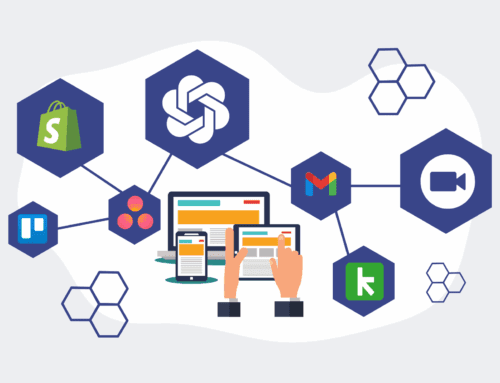
At 4Spot Consulting, we believe in a strategic-first approach to automation and AI, embodied by our proprietary OpsMesh™ Framework. This isn’t about simply automating individual tasks; it’s about architecting a comprehensive, interconnected web of systems and processes that work together intelligently and autonomously. The OpsMesh™ creates a “single source of truth” for your data, ensuring consistency, accuracy, and accessibility across all departments – from HR and recruiting to sales, marketing, and finance.
Our methodology begins with the OpsMap™, a strategic audit designed to meticulously uncover inefficiencies, pinpoint bottlenecks, and surface high-impact automation opportunities within your existing workflows. This diagnostic phase is crucial; it ensures that every automation we implement is tied directly to a clear business outcome and a measurable ROI, preventing “tech for tech’s sake” solutions. We then move to OpsBuild™, where our experts leverage tools like Make.com, Keap, and AI technologies to construct robust, error-proof systems. This could involve automating resume parsing and syncing to your CRM for HR firms, streamlining client onboarding for business services, or even creating AI-powered data enrichment pipelines.
The true power of the OpsMesh™ lies in its ability to connect dozens of SaaS applications, creating a continuous flow of information and action. This integration eliminates manual data transfer, reduces human error, and frees up your high-value employees from the drudgery of administrative tasks, allowing them to focus on innovation, strategy, and customer engagement. Our OpsCare™ service then provides ongoing support, optimization, and iteration, ensuring your automation infrastructure remains agile and continues to evolve with your business needs.
The Tangible Impact: From Hours Saved to Revenue Gained
The results of strategic workflow orchestration are not theoretical; they are tangible and transformative. For an HR tech client, implementing an OpsMesh™ solution for resume intake and parsing led to saving over 150 hours per month – a dramatic increase in operational capacity. This wasn’t just about speed; it was about accuracy, consistency, and allowing the HR team to focus on candidate quality and strategic talent acquisition, rather than manual data entry.
By connecting systems that were once isolated, businesses gain unprecedented visibility into their operations, enabling data-driven decision-making and fostering a culture of continuous improvement. This strategic approach to automation is about future-proofing your business, building resilience against market fluctuations, and creating a scalable foundation for sustained growth. It allows you to do more with less, increase production without proportionally increasing headcount, and ultimately save your team 25% of their day – time that can be reinvested into innovation, client relationships, and strategic expansion.
If you’re grappling with disjointed systems, manual bottlenecks, and the frustration of underutilized technology, it’s time to move beyond simple automation. Embrace the strategic imperative of workflow orchestration and discover how a truly interconnected business can elevate your operational efficiency and accelerate your path to unparalleled success.
If you would like to read more, we recommend this article: Mastering Workflow Orchestration: The OpsMesh™ Framework in Action