Beyond Paperwork: How AI and Automation Are Revolutionizing Employee Onboarding for Scale
The first 90 days of an employee’s journey are critical. They dictate engagement, productivity, and ultimately, retention. Yet, for countless organizations, onboarding remains a labyrinth of manual paperwork, disjointed systems, and repetitive tasks. This isn’t just inefficient; it’s a direct impediment to integrating new talent effectively and scaling your business operations. At 4Spot Consulting, we understand that thriving B2B companies, especially those with $5M+ ARR, cannot afford to have their high-value employees bogged down by low-value work, especially when it comes to the crucial first impression of onboarding.
The Unseen Costs of a Broken Onboarding Process
Traditional onboarding, often heavily reliant on human intervention and disparate software, is a drain on resources. Imagine HR teams spending hours chasing signatures, manually entering data across multiple platforms, or coordinating training schedules through endless email chains. This doesn’t just impact HR; it ripples across departments, affecting IT setup, team integration, and even payroll. The hidden costs are substantial:
- **Reduced Productivity:** New hires take longer to reach full productivity due to delayed access to tools, unclear expectations, and administrative hurdles.
- **Increased Errors:** Manual data entry is prone to mistakes, leading to payroll errors, compliance issues, and frustration for new employees.
- **High Attrition Rates:** A poor onboarding experience can lead to early dissatisfaction, with many new hires deciding to leave within their first six months, leading to costly re-recruitment efforts.
- **Stifled Scalability:** As your company grows, a manual onboarding process becomes an insurmountable bottleneck, making it impossible to scale hiring efficiently without proportionally increasing administrative overhead.
These challenges are not theoretical; they are daily realities for many organizations struggling to keep pace in a competitive talent market while simultaneously driving operational excellence.
Enter AI and Automation: Redefining the Onboarding Experience
The solution lies in strategically integrating AI and automation into every facet of the onboarding journey. This isn’t about replacing human interaction; it’s about amplifying it by removing the drudgery. Imagine a system where:
Automated Pre-Boarding: Setting the Stage for Success
Before a new hire’s first day, automation can trigger welcome emails, send out necessary forms for e-signatures, initiate background checks, and even provision IT accounts and equipment requests. AI can personalize communication based on role or department, ensuring new employees receive relevant information without manual curation. This ensures that on Day One, they arrive with everything they need, feeling valued and prepared.
Streamlined First-Day & Week Activities
On their first day, instead of a stack of papers, new hires might encounter a personalized digital portal guiding them through initial tasks. Automation can schedule introductory meetings with key team members, deliver role-specific training modules, and even prompt their manager with a checklist of integration activities. AI can analyze progress and suggest follow-up resources or check-ins, ensuring a smooth transition into the team and company culture.
Integrated Data Flow: The Single Source of Truth
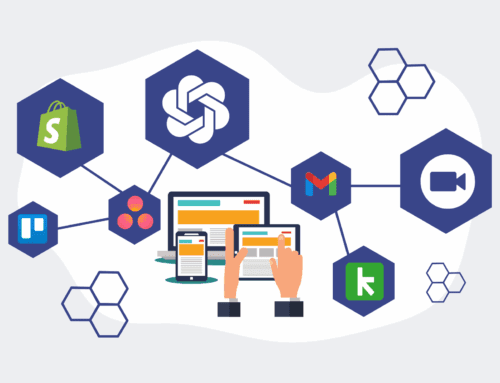
One of the biggest headaches in onboarding is data dispersion. Automation, particularly through platforms like Make.com, can act as the central nervous system, connecting your ATS, HRIS, payroll, CRM (like Keap or HighLevel), and learning management systems. When a new employee’s data is entered once, it automatically populates across all relevant platforms, eliminating manual re-entry and ensuring data integrity. This creates the “single source of truth” that is essential for operational clarity and compliance.
4Spot Consulting’s Approach: From Chaos to Seamless Integration
At 4Spot Consulting, we specialize in transforming these complex, manual processes into elegant, automated workflows. Our OpsMesh framework is designed precisely for scenarios like onboarding. We don’t just recommend tools; we build strategic solutions tailored to your unique business needs.
The OpsMap™: Your Onboarding Blueprint
Our process begins with an OpsMap™ diagnostic. This strategic audit dives deep into your current onboarding workflows, uncovering every inefficiency, bottleneck, and opportunity for automation. We identify where human error is most prevalent and where AI can provide the most leverage, helping you understand the true ROI of a modernized system.
OpsBuild: Implementing Your Automated Advantage
Following the OpsMap™, our OpsBuild phase brings your customized automation plan to life. Using low-code platforms like Make.com, we connect your disparate systems – from applicant tracking to payroll – creating a seamless, end-to-end onboarding experience. We ensure that data flows effortlessly, tasks are automatically assigned, and compliance checkpoints are met without manual oversight.
Tangible Results: Beyond Efficiency Gains
Consider the HR firm we assisted, where resume intake and parsing alone consumed over 150 hours per month. By implementing AI enrichment and Make.com integrations with their Keap CRM, we didn’t just save time; we freed up their HR professionals to focus on strategic talent development and employee engagement, not administrative tasks. The same principles apply to onboarding: time saved, errors reduced, and a vastly improved experience for every new hire, ultimately impacting your bottom line and scalability.
The shift to an AI and automation-driven onboarding process isn’t just about catching up; it’s about gaining a competitive edge. It allows your business to scale efficiently, attract and retain top talent, and empower your teams to focus on what truly drives growth. It’s about saving you 25% of your day, not just for your existing team, but for every new member joining your journey.
If you would like to read more, we recommend this article: The Strategic Imperative of Automation: Transforming Business Operations for Sustainable Growth