A Glossary of Key Terms in Webhooks and Automation for HR & Recruiting
In the rapidly evolving landscape of HR and recruiting, leveraging automation and integration is no longer a luxury but a strategic imperative. Understanding the foundational concepts that power these systems, particularly webhooks, is crucial for professionals looking to streamline processes, enhance candidate experiences, and optimize operational efficiency. This glossary provides clear, authoritative definitions of key terms related to webhooks and automation, tailored specifically for HR and recruiting leaders, helping you navigate the technical jargon and apply these concepts to real-world business challenges.
Webhook
A webhook is an automated message sent from an application when a specific event occurs. It’s essentially a “user-defined HTTP callback” that allows applications to communicate with each other in real-time. Unlike traditional APIs where you have to constantly poll for new data, webhooks proactively “push” data to a specified URL as soon as an event happens. For HR and recruiting, this means instant notifications for new job applications, candidate status changes, or document submissions. For example, a webhook could notify your ATS or CRM the moment a candidate completes a pre-screening assessment, triggering the next step in your automated hiring workflow without any manual intervention, dramatically speeding up the recruitment cycle.
API (Application Programming Interface)
An API (Application Programming Interface) is a set of rules and protocols that allows different software applications to communicate and interact with each other. It defines how software components should interact. Think of it as a menu in a restaurant: it tells you what you can order (the requests you can make) and what kind of dishes you’ll receive (the responses you’ll get). In HR, APIs enable various systems – like an ATS, HRIS, payroll software, or background check service – to exchange data seamlessly. For instance, an API can pull candidate data from your ATS into a new employee profile in your HRIS once an offer is accepted, eliminating duplicate data entry and reducing errors.
Payload
In the context of webhooks and APIs, a payload refers to the actual data being transmitted during a request. When an event triggers a webhook, the payload is the bundle of information about that event that is sent from the source application to the receiving application. This data is typically formatted as JSON or XML. For HR and recruiting, a payload might contain details about a new job applicant (name, contact info, resume link), a candidate’s progress update (moved to interview stage), or a submitted offer letter. Understanding the structure of these payloads is vital for accurately processing and mapping data within your automation workflows.
Endpoint
An endpoint is a specific URL where an API or webhook can be accessed by another application. It’s the destination where data is sent or retrieved. For webhooks, the endpoint is the unique URL provided by the receiving application where the source application should send its event notifications. For example, if you’re setting up a webhook to send new application alerts to your automation platform (like Make.com), the unique URL provided by Make.com for that specific automation scenario would be the endpoint. Proper configuration of endpoints is critical to ensure that data flows to the correct destination within your integrated HR ecosystem.
HTTP Request
HTTP (Hypertext Transfer Protocol) requests are the foundation of data communication on the web, including how webhooks and APIs operate. When one application wants to interact with another, it sends an HTTP request. Common types relevant to automation include GET (to retrieve data, e.g., fetching a candidate’s profile), POST (to send new data, e.g., submitting a new job application), PUT (to update existing data, e.g., modifying a candidate’s status), and DELETE (to remove data). In HR automation, a POST request might be used by a career page to send a new applicant’s details to an ATS via a webhook, while a GET request could retrieve a list of open requisitions.
JSON (JavaScript Object Notation)
JSON is a lightweight, human-readable data-interchange format that is widely used for transmitting data between a server and web application, especially with APIs and webhooks. It organizes data into key-value pairs and ordered lists, making it easy for both humans to read and machines to parse. Most modern webhooks send their payloads in JSON format. For HR professionals, while direct interaction with JSON might not be daily, understanding its role is important for troubleshooting integrations or for configuring data mapping in automation platforms. For instance, a candidate’s entire profile, including name, email, skills, and experience, might arrive as a single JSON object in a webhook payload.
CRM (Customer Relationship Management)
A CRM (Customer Relationship Management) system, while traditionally associated with sales and marketing, is increasingly vital for managing candidate relationships in recruiting. It helps HR and recruiting teams track interactions, manage pipelines, and nurture relationships with potential candidates, treating them much like customers. Integrating your ATS with a CRM via webhooks or APIs can provide a holistic view of talent, ensuring that every touchpoint, from initial outreach to post-hire engagement, is recorded and leveraged. For example, a webhook could trigger an update in the CRM when a candidate moves from “interview” to “offer extended” in the ATS, prompting the CRM to initiate a follow-up sequence.
ATS (Applicant Tracking System)
An ATS (Applicant Tracking System) is a software application designed to help recruiters and employers manage the recruitment process. It handles tasks like posting job openings, collecting applications, screening resumes, and tracking candidate progress through various stages. Integrating an ATS with other systems using webhooks and APIs unlocks significant automation potential. For instance, a webhook from your career site can instantly push new applicant data into the ATS, eliminating manual data entry. Conversely, updates within the ATS (e.g., a candidate rejection) could trigger a webhook to send an automated, personalized email via a communication platform, enhancing the candidate experience.
Automation Platform
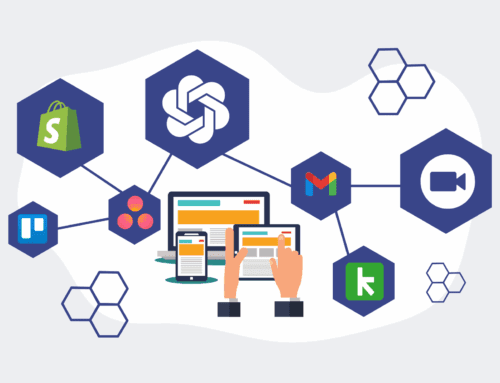
An automation platform (e.g., Make.com, Zapier, Integromat) is a software tool that allows users to connect different applications and automate workflows without writing code. These platforms act as central hubs, listening for “triggers” (often via webhooks) from one application and performing “actions” in another based on predefined rules. In HR and recruiting, an automation platform can connect your ATS, CRM, email marketing tool, and assessment platforms. For example, when a new resume is submitted (trigger via webhook), the platform can automatically parse the resume, add the candidate to your CRM, and send an initial welcome email, all in a single, seamless flow.
Trigger
In automation, a trigger is a specific event that initiates a workflow or automation sequence. It’s the “if this happens” part of an “if this, then that” statement. Webhooks are a common mechanism for triggering automations; for instance, a new job application submitted on your website could be the trigger. Other triggers might include a candidate’s status changing in an ATS, an email being received, or a calendar event occurring. Identifying effective triggers is the first step in designing impactful HR automation, ensuring that processes are initiated precisely when needed without manual intervention.
Action
An action is the task or operation performed by an automation platform or integrated application once a trigger has occurred. It’s the “then do that” part of an automation rule. Examples of actions in HR automation include sending an email, creating a new record in a database, updating a candidate’s status, adding a new task to a project management tool, or generating a document. For example, after a webhook notifies your automation platform of a new qualified applicant (trigger), the action might be to create a new candidate profile in your ATS and send an automated calendar invite for an initial screening call.
Integration
Integration refers to the process of connecting two or more disparate software applications or systems so they can share data and functionality. In HR and recruiting, effective integration means your ATS, HRIS, payroll, CRM, and communication tools can all “talk” to each other, creating a unified and efficient ecosystem. Webhooks and APIs are the primary technologies facilitating these integrations, enabling real-time data flow and eliminating data silos. A well-integrated HR tech stack reduces manual effort, improves data accuracy, and provides a comprehensive view of talent data, from sourcing to offboarding.
Data Mapping
Data mapping is the process of matching data fields from one system to corresponding data fields in another system during an integration. For example, if your career site collects “Applicant Name” and your ATS expects “First Name” and “Last Name,” data mapping defines how “Applicant Name” should be split and assigned. This is a critical step in setting up webhooks and API integrations to ensure that information is transferred accurately and appears in the correct fields in the destination system. Incorrect data mapping can lead to errors, lost data, and failed automations, making it a key focus during the setup of any automated HR workflow.
Real-time Processing
Real-time processing refers to the ability of a system to process data as soon as it is generated or received, rather than in batches at scheduled intervals. Webhooks are instrumental in enabling real-time processing, as they push event data instantly. In HR and recruiting, real-time processing means immediate updates on job applications, instant notifications for critical actions, and rapid progression of candidates through the hiring pipeline. This minimizes delays, allows for quicker decision-making, and significantly enhances the candidate experience by providing timely feedback and next steps, aligning with the fast pace of modern talent acquisition.
Event-Driven Architecture
Event-driven architecture is a software design pattern where applications communicate by sending and receiving “events.” An event signifies that something important has happened. Webhooks are a prime example of an event-driven mechanism, as they transmit data only when a specific event occurs. This architecture allows for highly decoupled and scalable systems, where different components can react to events independently. For HR and recruiting, an event-driven approach means that a change in one system (e.g., “candidate hired” event in the ATS) can automatically trigger a cascade of actions across other systems (e.g., create HRIS record, send welcome email, initiate payroll setup), all without direct, tight coupling between the systems.
If you would like to read more, we recommend this article: [TITLE]