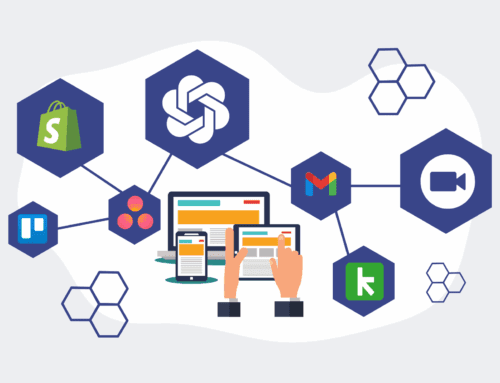
The Silent Drain: Why Inefficient Data Handling is Costing Your Business Millions
In today’s data-driven world, businesses are awash in information. From customer records to operational metrics, financial transactions to HR files, data is the lifeblood of decision-making. Yet, many organizations struggle not with a lack of data, but with the sheer inefficiency of managing it. This silent drain—poor data handling practices—isn’t just a minor operational glitch; it’s a significant financial leak, quietly eroding profits, hindering growth, and stifling innovation.
At 4Spot Consulting, we’ve seen firsthand how high-growth B2B companies, often scaling rapidly, fall victim to fragmented systems, manual data entry, and a lack of a single source of truth. These aren’t merely inconveniences; they are direct contributors to human error, escalating operational costs, and an inability to scale effectively. It’s time to pull back the curtain on this pervasive problem and reveal its true cost.
The Hidden Costs of Fragmented Data Systems
Imagine your business as a complex machine. Every department, every team, every individual relies on specific parts of the machine to function. When data is scattered across disparate systems—a CRM here, an HR platform there, a spreadsheet on a desktop, an email chain in another—it’s like trying to run that machine with critical parts disconnected. The result is friction, wasted energy, and eventual breakdown.
One of the most immediate costs is **lost productivity**. Employees spend countless hours manually reconciling data, cross-referencing information, and correcting errors introduced by inconsistent entries. This isn’t high-value work; it’s soul-crushing, repetitive labor that distracts your top talent from strategic initiatives. For high-value employees, every minute spent on low-value data tasks represents a direct opportunity cost, delaying projects and stifling innovation.
Beyond productivity, there’s the insidious cost of **human error**. Manual data transfer is prone to mistakes, leading to inaccurate reports, flawed financial projections, compliance breaches, and even damaged customer relationships. A single error in a crucial database can ripple through an entire organization, impacting everything from billing accuracy to recruitment decisions. Correcting these errors isn’t free; it requires additional time, resources, and often, costly rework.
Then there’s the issue of **stifled scalability**. As your business grows, the volume and complexity of data multiply exponentially. Without robust, integrated systems for data handling, scaling operations becomes a nightmare. New hires face steep learning curves navigating fractured systems, onboarding becomes inefficient, and the capacity to serve more clients or expand into new markets is severely limited by an archaic data infrastructure. You simply cannot grow efficiently if your data can’t keep up.
The Impact on Strategic Decision-Making and Compliance
Effective business decisions rely on accurate, timely, and holistic data. When data is fragmented and inconsistent, leaders are forced to make decisions based on incomplete or outdated information. This can lead to missed opportunities, poor resource allocation, and ultimately, strategic missteps that can cost millions.
Consider the inability to generate a “single source of truth.” If your sales team sees one version of a customer’s history in their CRM, while the service team sees another in their ticketing system, who is right? And more importantly, how can you effectively serve that customer or extract meaningful insights about their journey? This lack of unified data isn’t just an internal problem; it manifests externally as inconsistent customer experiences and a weakened competitive position.
Furthermore, compliance and data security risks become amplified. Many industries operate under strict regulatory frameworks regarding data privacy and retention. Fragmented data landscapes make it incredibly challenging to ensure compliance, track data lineage, and respond effectively to security incidents. A breach in one unmonitored silo can compromise the entire organization, leading to hefty fines, reputational damage, and loss of customer trust.
Building a Resilient Data Foundation with 4Spot Consulting
The solution isn’t simply more software; it’s a strategic approach to data integration and automation. At 4Spot Consulting, we don’t just build systems; we help you architect a resilient data foundation through our OpsMesh framework.
Our process begins with an **OpsMap™**, a strategic audit designed to uncover the specific inefficiencies and bottlenecks within your current data handling. We look at where data originates, how it flows (or doesn’t flow) between systems, and where the manual gaps are costing you most. This isn’t a generic assessment; it’s a deep dive into your unique operational DNA to surface the most impactful opportunities for automation.
Following the OpsMap™, our **OpsBuild™** phase comes into play. Leveraging low-code platforms like Make.com and our expertise in integrating dozens of SaaS systems, we build the automated workflows that eliminate manual data entry, create a single source of truth (often centered around robust CRM systems like Keap or HighLevel), and ensure data integrity across your entire ecosystem. This includes critical areas like HR and recruiting automation, where seamless data flow from applicant tracking to onboarding is paramount, or CRM and data backup solutions that safeguard your most valuable asset.
The outcomes are transformative: we’ve helped clients achieve over 240% production increases and identify $1M+ in annual cost savings by eliminating the silent drain of inefficient data handling. By reducing low-value work for high-value employees, your teams are freed to focus on growth, innovation, and client success.
If you’re tired of watching inefficiencies silently erode your bottom line, it’s time for a proactive change. Don’t let fragmented data be the Achilles’ heel of your scaling ambitions.
If you would like to read more, we recommend this article: Mastering Business Automation: The OpsMesh Framework