Unlocking Scalability: Why Eliminating Manual Data Entry is Your Next Strategic Move
In the relentless pursuit of growth, businesses often overlook a silent, insidious drain on their resources: manual data entry. It’s the foundational task that underpins nearly every operation, yet its inefficiencies can cripple scalability, inflate operational costs, and introduce a cascade of errors that erode trust and profitability. For high-growth B2B companies, particularly those navigating the complexities of HR, recruiting, or intricate service delivery, the manual handling of data isn’t just a bottleneck; it’s a strategic liability that impedes genuine progress and innovation.
The Hidden Costs of Human Touchpoints in Data
Consider the daily grind within many organizations: an HR leader manually transcribing candidate information from hundreds of resumes into an applicant tracking system, then duplicating much of that data into a CRM, and perhaps again into an onboarding platform. A sales team updates client records across disparate systems, prone to typos, forgotten fields, and inconsistent formats. Each manual touchpoint isn’t merely a time sink; it’s an opportunity for human error, a moment of delayed processing, and a direct hit to your team’s overall productivity. These seemingly small, repetitive tasks accumulate, consuming an astonishing percentage of high-value employee time – time that could be far better spent on strategic initiatives, deepening client engagement, or driving critical innovation.
The cumulative effect of these seemingly minor manual interventions is profound. It translates into increased operational expenditure, extended project timelines, and a reduced capacity for your most skilled employees to engage in tasks that genuinely move the needle for your business. The cost isn’t just in wages; it’s in lost opportunities, missed insights, and a stifled ability to adapt swiftly to market changes.
Beyond Efficiency: The Impact on Scalability and Decision-Making
The problem deepens significantly when we consider scalability. As your company experiences growth – adding new clients, expanding service lines, or increasing recruitment volume – so too does the sheer volume of data you must manage. What was marginally manageable with a handful of clients or candidates quickly becomes unsustainable with hundreds or thousands. Manual data entry doesn’t scale linearly; it scales exponentially, demanding disproportionately more resources, more oversight, and inevitably, a higher incidence of errors. This directly impacts your ability to grow without incurring prohibitive increases in headcount and operational overhead, effectively putting a ceiling on your potential.
Furthermore, inaccurate, inconsistent, or outdated data compromises the integrity of your decision-making processes. If your CRM isn’t truly functioning as a “single source of truth” because data is scattered across various systems and updated haphazardly by hand, your sales forecasts, marketing campaign analytics, and even strategic hiring decisions are built on shaky ground. Business leaders require clean, reliable, and instantly accessible data to pivot swiftly, identify trends, and capitalize on emerging opportunities. Manual processes inherently deny this agility, leaving businesses perpetually in a reactive mode rather than positioning them as proactive market leaders.
4Spot Consulting’s Approach: Automating the Mundane to Elevate the Strategic
At 4Spot Consulting, we operate on the fundamental belief that true business transformation isn’t about working harder; it’s about working smarter. Our proprietary OpsMesh™ framework is specifically designed to systematically identify and eliminate these manual data entry black holes that plague high-growth businesses. We don’t just implement technology for technology’s sake; we engineer robust, interconnected systems that ensure data flows seamlessly, accurately, and securely across your entire operational ecosystem. This strategic approach liberates your high-value employees from the drudgery of low-value, repetitive work, allowing them to focus on tasks that truly drive your business forward.
Our journey with clients typically begins with an OpsMap™ – a comprehensive strategic audit. During this phase, we meticulously uncover precisely where manual data entry bottlenecks exist within your organization, rigorously quantify their financial and operational impact, and chart a clear, actionable path to automation. This isn’t a theoretical exercise; it’s a deep, granular dive into your unique workflows to pinpoint the exact opportunities for significant time and cost savings. We specifically target those repetitive tasks in HR, recruiting, operations, and CRM management that are currently consuming 25% or more of your team’s valuable time, transforming them into streamlined, automated processes.
The Power of Integrated Automation and AI
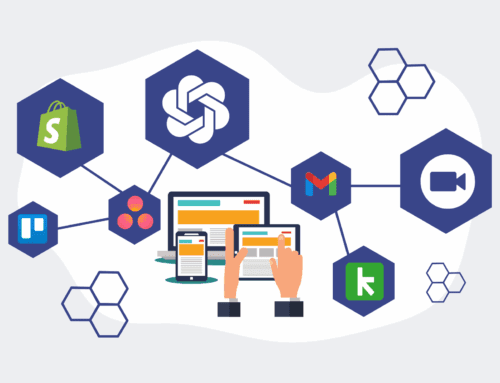
Imagine a recruiting process where candidate resumes are automatically parsed, key data extracted and enriched using advanced AI capabilities, and then seamlessly fed into your ATS and CRM (such as Keap or HighLevel) without a single manual keystroke. Or visualize a client onboarding flow where contract data automatically populates across PandaDoc, your project management tool, and billing systems, all triggered by a single, initial action. This isn’t futuristic dreaming; this is the tangible reality we build for our clients using powerful low-code automation platforms like Make.com, expertly integrated with targeted AI solutions to maximize efficiency and accuracy.
This strategic integration of automation and AI not only eliminates errors and saves hundreds of hours in operational time; it also establishes a verifiable single source of truth for your data. When data is consistently, accurately, and automatically updated across all relevant systems, your leadership team gains unparalleled clarity and confidence, enabling truly data-driven decisions that propel sustained growth and efficiency. It’s about creating an infrastructure where data serves your business, rather than your business serving the data.
Beyond the Numbers: A Culture of Strategic Focus
The benefits of eliminating manual data entry extend far beyond quantifiable hours saved and dollars reclaimed. By removing the drudgery and administrative burden of manual data transcription, you fundamentally empower your employees to focus on what truly matters: building stronger relationships, innovating new solutions, strategizing for future growth, and delivering exceptional value to your clients. It transforms a reactive, administrative workforce into a proactive, strategic one, fostering a culture where human ingenuity and creativity are directed towards complex problem-solving, not repetitive, menial tasks. This fundamental shift is crucial for attracting, retaining, and developing top talent who seek impactful work and meaningful contributions, not administrative overhead.
We’ve seen firsthand how a leading HR firm, for instance, saved over 150 hours per month by automating their resume intake and parsing process, enabling their team to shift their focus entirely to candidate engagement and strategic hiring, rather than manual data transcription. This is not merely an efficiency gain; it’s a profound competitive advantage that redefines what’s possible for your business.
Ready to uncover automation opportunities that could save you 25% of your day? Book your OpsMap™ call today.
If you would like to read more, we recommend this article: The OpsMesh™ Advantage: Building a Future-Proof Automation Strategy