

Post: Make.com vs. Zapier (2026): Which Is Better for Complex Integrations?
For simple, linear workflows, Zapier gets the job done. For anything with branching logic, data iteration, cross-system transformation, or built-in error handling, Make.com is the structurally superior choice, and that gap grows wider as your workflow complexity scales. Here is what actually separates them.
Quick Comparison: Make.com vs. Zapier at a Glance
| Factor | Make.com | Zapier |
|---|---|---|
| Workflow model | Visual, node-based canvas | Linear trigger-action chain |
| Branching / conditional logic | Native — unlimited branches per scenario | Paths feature — limited; real complexity requires separate Zaps |
| Looping / iteration | Native iterator + aggregator modules | Requires workarounds or external tools |
| Data transformation | JSON, XML, CSV modules + full function library | Basic field mapping; complex transforms need external steps |
| Error handling | Built-in error routes on the canvas | Requires a separate error-catching Zap |
| Pricing model | Operations per scenario run — predictable at scale | Operations per step — multiplies fast on multi-branch workflows |
| Learning curve | Moderate — canvas logic takes initial investment | Low — fastest time to first working automation |
| Best for | Complex, multi-system, conditional workflows | Simple, stable, linear integrations |
Workflow Architecture: Canvas vs. Linear Chain
Make.com renders automation as a visual canvas. Every module — connectors, logic gates, data tools, error handlers — is a node you wire together with lines. You see the entire workflow in one view. Branches are visible. Dependencies are visible. The flow is readable without running it.
Zapier works as a linear chain: one trigger, one action, then the next action. The Paths feature adds conditional branching, but each path is essentially its own embedded Zap. Complex logic fragments into multiple nested structures that are difficult to audit or modify without breaking something downstream.
For a two-step automation — form submission creates a CRM record — Zapier’s linear model is fast and clean. For a workflow that checks three conditions, processes an array of records, transforms a payload, and fires different actions depending on the result, Make.com’s canvas is not just more convenient. It is structurally the only tool built for that use case.
Branching and Conditional Logic
In Make.com, a Router module splits a scenario into unlimited parallel branches. Each branch runs its own filter criteria and its own sequence of modules. All branches live on the same canvas — you configure them, see them, and test them in one place.
In Zapier, Paths gives you branching inside a Zap, but each path has limits on nesting depth, and complex conditional trees push you toward separate Zaps that reference each other. That architecture works at small scale. It breaks down when you need six branches that share upstream data, because the data-mapping duplication and maintenance overhead compound with every new condition.
Real-world example: a new hire triggers onboarding. Depending on department, employment type, location, and equipment needs, the workflow branches into eight different sequences. In Make.com, that is one scenario with one Router and eight branches. In Zapier, that is multiple Zaps, each needing its own trigger handling, each duplicating the shared upstream steps.
Looping and Data Iteration
Make.com has native Iterator and Aggregator modules. An Iterator takes an array — a list of records, a JSON array, a CSV — and processes each item through subsequent modules individually. The Aggregator collects the results back into a single bundle when the loop completes.
This matters in almost every real business integration. Processing all open tickets from a help desk, updating multiple line items in an order, sending personalized messages to a list of contacts pulled from a database — all of these require iteration.
Zapier has no native iterator. The workarounds involve external tools, multiple Zaps firing each other in sequence, or writing code in Zapier’s Code step. All of those approaches add complexity, failure points, and maintenance overhead that the native Make.com modules eliminate entirely.
Data Transformation
Make.com ships with dedicated modules for parsing and building JSON, XML, and CSV data. The function library covers string manipulation, date formatting, math operations, and array operations — you handle complex payload transformations inside the scenario without leaving the platform.
Zapier’s field mapping handles straightforward cases well. When you need to parse a nested JSON object, reformat a date string from one API’s format to another’s, or build a custom payload structure from multiple upstream fields, you hit the ceiling fast. The typical workaround is a Formatter step or a Code step, which requires JavaScript knowledge and moves logic outside the visual flow.
In practice, any integration connecting two systems that do not share a data standard — which is most integrations — benefits from Make.com’s transformation toolset. For real examples of what that advantage looks like in production, see 10 Smart Ways HR Teams Are Saving Money with Make.com Automation.
Error Handling
Make.com has a built-in error handling system at the module level. You attach an error route directly to any module — when that module fails, the error route fires and you can log the failure, send an alert, retry the module, or route the data to a fallback process. All of this is configured on the canvas, visible alongside the happy path.
Zapier requires a separate Zap to catch errors. That Zap has to be configured, maintained, and tested independently. When the error Zap itself fails, there is no handler for the handler. The architecture is workable for low-stakes automations. For production workflows where a failure means a missed billing event, a skipped compliance step, or a stuck onboarding record, the Make.com approach is materially more reliable.
Expert Take
Error handling is the clearest separator between platforms built for prototypes and platforms built for production. When a workflow fails silently in Zapier, you find out from a downstream consequence — a client complaint, a missing record, a skipped step nobody noticed. In Make.com, the error route fires immediately: you see which module failed, which data bundle caused it, and exactly where in the sequence it stopped. That is not a feature preference. It is an operational requirement for any workflow that touches revenue, compliance, or client experience. Build production automations on a platform with production-grade error architecture.
For a detailed look at configuration practices that prevent the most common Make.com failure modes, see 11 Critical Make.com Mistakes to Avoid for Successful HR Automation.
Pricing: Why Operations-Based Billing Changes at Scale
Make.com bills on operations — the number of module executions in a scenario run. A 20-module scenario that runs 1,000 times consumes 20,000 operations. Zapier bills on tasks — the number of action steps that complete successfully. A Zap with 8 steps that runs 1,000 times consumes 8,000 tasks.
The difference compounds when branching enters the picture. A Zapier workflow with 4 Paths, each with 5 steps, executing 1,000 times, consumes up to 20,000 tasks. The same workflow in Make.com — one scenario with one Router — only counts the modules that actually execute in each run. Branches that do not fire do not count.
At low automation volume, the price difference is noise. At scale — hundreds of thousands of records processed monthly, dozens of active workflows — the operational math favors Make.com. For a closer look at what Make.com integrations unlock at that scale, see 10 Essential Make.com Integrations to Unlock Cheaper, More Powerful Business Automation.
When Zapier Is the Right Call
Zapier is faster to deploy for simple, stable workflows. If you need to connect two apps, pass a handful of fields, and never touch it again, Zapier’s setup time advantage is real. Its app library is large, its trigger configuration is straightforward, and the interface requires less upfront learning.
The use cases where Zapier remains the right tool:
- Single-trigger, single-action workflows with no branching
- Automations that run infrequently, where operational cost is irrelevant
- Teams with no appetite for the Make.com learning curve and no complex workflow requirements
- Quick prototypes where speed of setup matters more than architecture
The moment a workflow needs conditional logic, array processing, nested data handling, or production-grade error management, Zapier’s linear architecture becomes a liability. The question is not which platform is better in the abstract — it is which one fits the actual complexity of the workflow you are building.
The Complexity Tipping Point
The tipping point is not about the number of apps connected. It is about the logic required between them.
A workflow connecting 8 apps in a straight line is still a linear workflow — Zapier handles it. A workflow connecting 3 apps but requiring a loop over a dataset, two conditional branches, and an error handler for the API call is a complex workflow — Make.com is the right architecture.
Every hour spent working around Zapier’s limitations on a complex workflow is an hour that compounds. The workarounds accumulate. The maintenance overhead grows. Eventually the question is not “Should we use Make.com?” but “How much did we spend getting here on the wrong tool?”
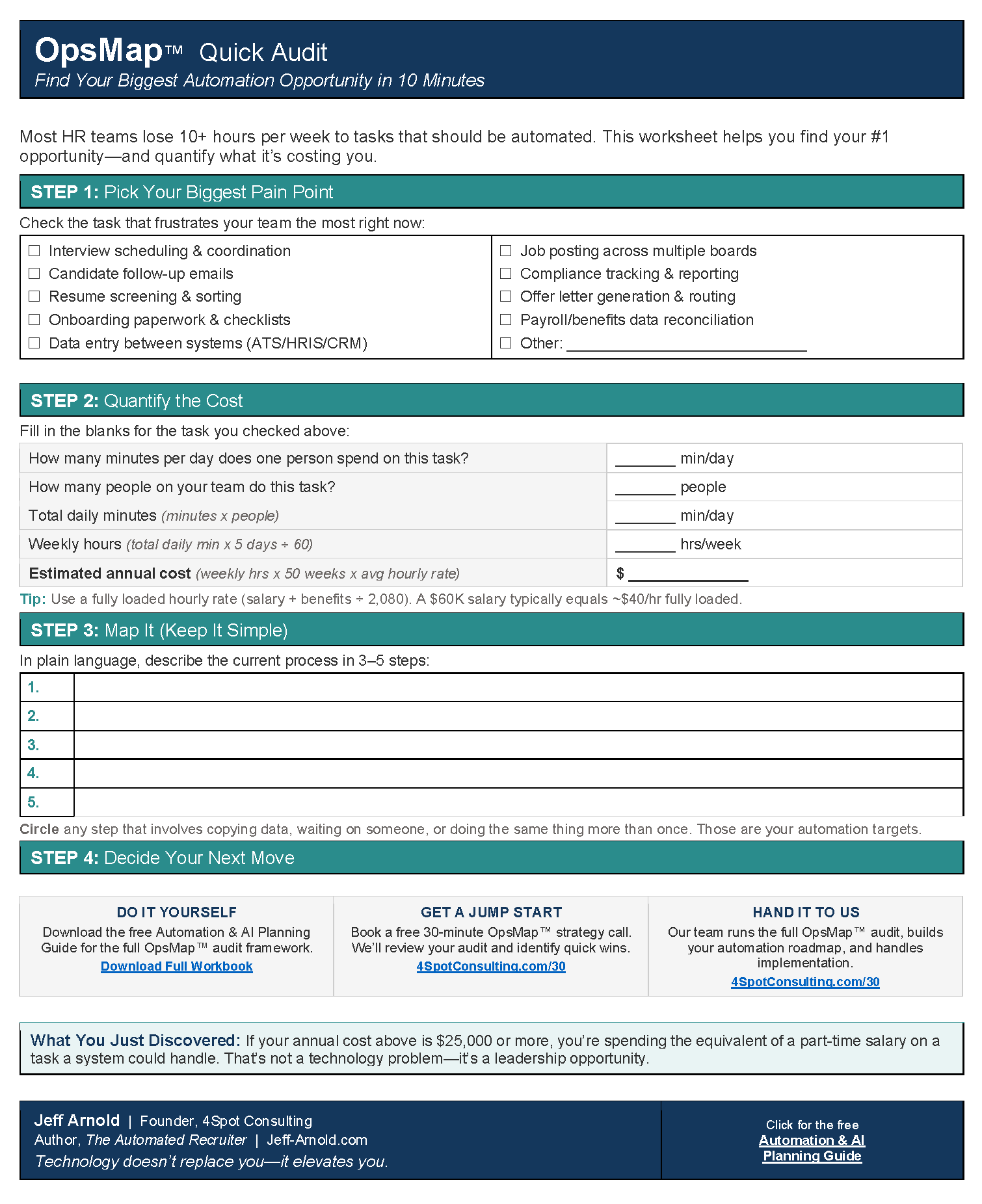
If you want to understand what your current automation stack actually looks like before making any architectural changes, the OpsMap™ discovery process maps every workflow and surfaces the ones where technical debt is accumulating. That audit is where most migration decisions get made with real data instead of assumptions.
Frequently Asked Questions
Is Make.com better than Zapier for complex integrations?
Make.com is the right tool for complex integrations. Branching, iteration, data transformation, and error handling are native capabilities built into the canvas. In Zapier, each of those requires workarounds that compound in complexity and maintenance cost the longer the workflow runs in production.
Does Make.com cost more than Zapier?
Make.com costs less than Zapier at scale for complex, multi-branch workflows. The operations-based billing model means branches that do not fire do not count toward your usage. Zapier’s task-based pricing multiplies across every step in every path, which makes multi-branch workflows significantly more expensive at volume.
How hard is it to learn Make.com if I am coming from Zapier?
The canvas model requires an initial adjustment of a few days before most users become productive. The core concepts — modules, bundles, routes — map to Zapier’s model, but the visual layout and branching mechanics are different enough to require hands-on learning. Most Zapier users build confidently in Make.com within a week.
What is the Make.com operations billing model?
Make.com counts one operation per module execution per scenario run. Inactive branches within a Router generate zero operations, which is why multi-branch workflows cost less in Make.com than equivalent Zapier workflows at scale. That pricing structure is one of the primary economic arguments for migrating complex workflows off Zapier.
Related Reading
- 11 Make.com Features Elevating HR Automation Beyond Zapier
- 10 Essential Make.com Integrations to Unlock Cheaper, More Powerful Business Automation
- 10 Zapier Quick Wins: Instant Time Savings for Every Business
- 10 Smart Ways HR Teams Are Saving Money with Make.com Automation
- 10 Automations Finally Easy to Build with Make AI (No Developer Required)



RELATED POST

