Integrating Disparate HR Systems using Make.com: Mid-Atlantic Manufacturing’s Journey to Unified HR Data
In today’s fast-paced manufacturing environment, efficient operations extend beyond the production floor to every facet of the business, especially human resources. Yet, many mid-sized companies grapple with legacy HR systems that operate in silos, creating inefficiencies, data inconsistencies, and significant manual overhead. This case study details how 4Spot Consulting partnered with Mid-Atlantic Manufacturing Co., a leader in industrial components, to overcome these challenges by integrating their disparate ATS, HRIS, and payroll systems using Make.com, establishing a single source of truth for their critical HR data.
Client Overview
Mid-Atlantic Manufacturing Co. is a well-established, mid-sized industrial components manufacturer with a workforce of approximately 350 employees across three regional facilities. With a strong commitment to quality and innovation, the company had grown steadily over the past two decades. Their HR department, however, was struggling to keep pace with this growth dueed to an aging technology stack. They utilized a legacy Applicant Tracking System (ATS) for recruitment, a separate Human Resources Information System (HRIS) for employee records and benefits, and an entirely distinct payroll provider. Each system, while functional on its own, lacked seamless integration with the others, creating a fragmented data landscape.
Their HR team of eight professionals was spending an inordinate amount of time on data entry, reconciliation, and manual reporting. This not only diverted their focus from strategic HR initiatives but also introduced a significant risk of errors, particularly in critical areas like payroll and compliance. The company recognized that their HR systems were a bottleneck, hindering their ability to scale, make data-driven decisions, and provide a superior employee experience. They sought an expert partner to modernize their data infrastructure without a complete, costly rip-and-replace of their core systems.
The Challenge
Mid-Atlantic Manufacturing Co.’s HR operations were plagued by several critical challenges stemming from their disconnected systems:
- Data Silos and Inconsistency: Information about a single employee was fragmented across three separate platforms. A new hire’s data would be entered into the ATS, then manually re-entered into the HRIS upon offer acceptance, and finally input again into the payroll system. This repetitive data entry was a primary source of discrepancies.
- Excessive Manual Data Entry: The HR team estimated they spent nearly 30% of their time on manual data entry and cross-referencing information between systems. This was particularly acute during onboarding, offboarding, and benefits enrollment periods.
- High Risk of Human Error: Each manual data transfer presented an opportunity for error, leading to incorrect payroll deductions, benefits eligibility issues, and compliance risks. Rectifying these errors was time-consuming and often led to employee dissatisfaction.
- Lack of a Single Source of Truth: There was no centralized, real-time view of employee data. Generating comprehensive reports on headcount, turnover, or labor costs required laborious data extraction, merging, and reconciliation from multiple systems, often resulting in outdated or conflicting information.
- Delayed Onboarding Process: The manual transfer of new hire data from ATS to HRIS and payroll meant a sluggish onboarding experience. New employees often faced delays in gaining system access, receiving accurate paychecks, or enrolling in benefits, impacting their initial experience and productivity.
- Limited Scalability: The existing manual processes were unsustainable for future growth. Any increase in hiring volume would exponentially increase the HR team’s administrative burden, making it difficult to expand operations without proportional increases in HR staffing.
- Inefficient Reporting and Analytics: Strategic HR planning was hampered by the inability to quickly access accurate, consolidated data. Decision-making for workforce planning, talent management, and operational efficiency was therefore reactive rather than proactive.
Mid-Atlantic Manufacturing understood that these challenges were not just administrative burdens but strategic impediments. They needed a robust, flexible, and cost-effective solution to bridge these data gaps and create a streamlined, error-free HR data flow.
Our Solution
4Spot Consulting approached Mid-Atlantic Manufacturing’s predicament with our “OpsMesh” framework, focusing on strategic integration rather than wholesale replacement. Recognizing the client’s existing investments and the robust capabilities of Make.com as a powerful low-code automation platform, we proposed a comprehensive integration strategy. Our solution centered on using Make.com to serve as the central nervous system, orchestrating data flow between the legacy ATS, HRIS, and payroll systems.
The core components of our Make.com-powered solution included:
- Discovery & OpsMap™ Audit: We began with a detailed OpsMap™ diagnostic to thoroughly map Mid-Atlantic Manufacturing’s existing HR workflows, identify all data points, system APIs, and pinpoint every manual touchpoint and potential error source. This forensic analysis provided a clear blueprint for the integration strategy.
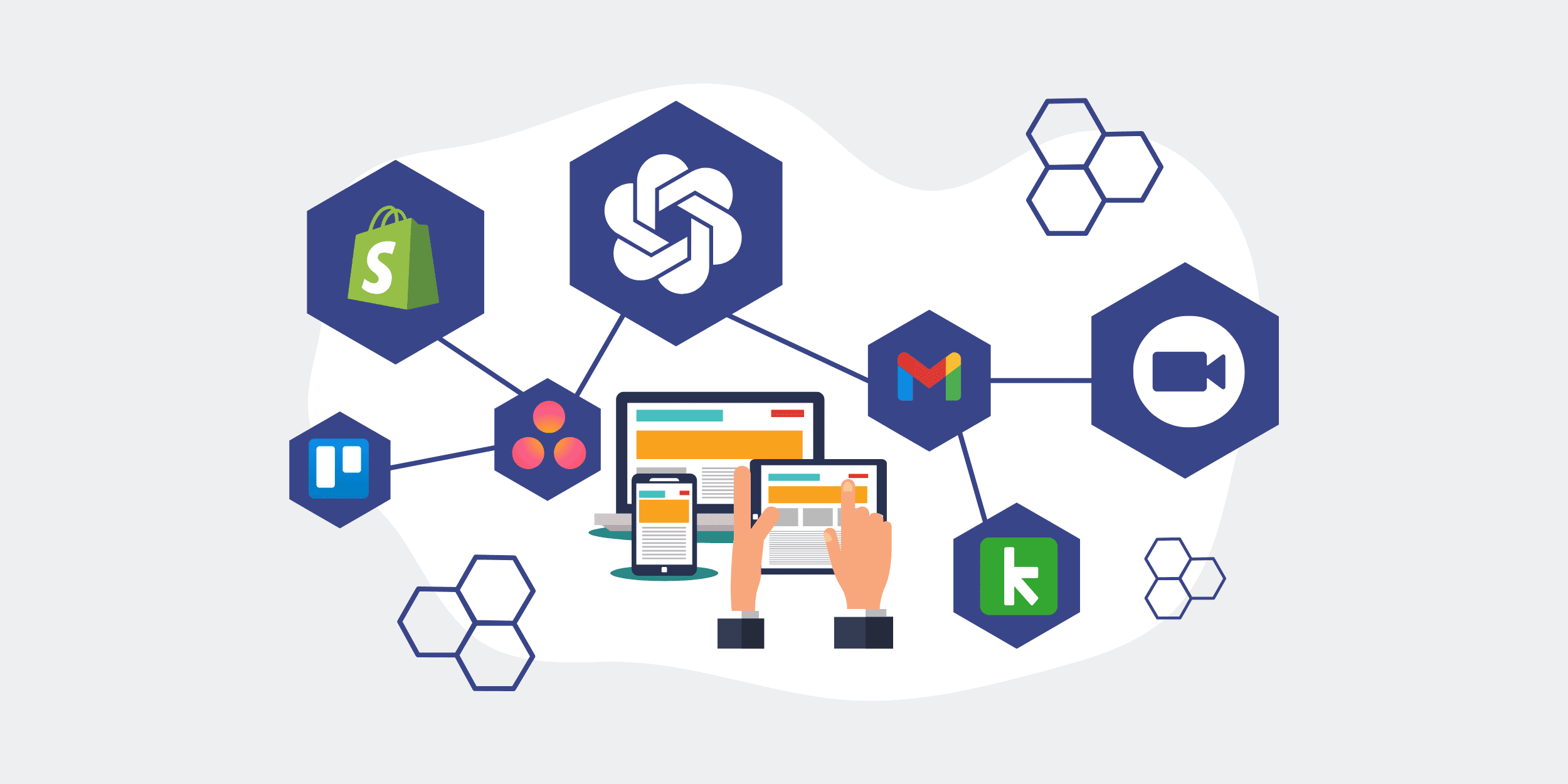
- Make.com as the Integration Hub: We leveraged Make.com’s extensive library of pre-built connectors and its flexible API capabilities to establish robust, bi-directional data pipelines between the client’s Greenhouse ATS, BambooHR HRIS, and ADP Payroll systems. Where direct connectors were unavailable, we utilized Make.com’s HTTP module to interact with custom APIs.
- Automated New Hire Onboarding: A cornerstone of the solution was the automation of the new hire process. Once a candidate was marked as “hired” in Greenhouse ATS, Make.com automatically triggered a scenario to:
- Extract relevant candidate data (name, contact info, job details, start date).
- Create a new employee record in BambooHR, populating all necessary fields.
- Initiate the necessary data transfer to ADP Payroll, ensuring accurate setup for first paycheck and deductions.
- Trigger internal notifications to HR, IT, and managers for onboarding tasks.
- Employee Data Synchronization: We implemented scenarios to ensure ongoing data consistency. Any changes to an employee’s record in BambooHR (e.g., address change, department transfer, salary adjustment) would automatically update the corresponding records in ADP Payroll, minimizing discrepancies and manual reconciliation.
- Custom Error Handling and Alerts: Critical to any automation is robust error management. Our Make.com scenarios included built-in error handling, automatically logging any failed data transfers and sending immediate alerts to the HR team for intervention, ensuring no data was lost or overlooked.
- Centralized Reporting Data Lake: While not a full data warehouse, we configured Make.com to push key, aggregated HR data points into a secure cloud database (e.g., Google Sheets or a simple SQL database) nightly. This created a lightweight “single source of truth” for reporting and analytics, accessible to authorized HR personnel.
- Scalable and Flexible Architecture: The Make.com-based solution was designed for future growth and adaptability. As Mid-Atlantic Manufacturing’s needs evolve or if new systems are introduced, the modular nature of Make.com allows for easy modification and expansion of existing integrations without requiring extensive re-development.
By implementing this Make.com-driven strategy, 4Spot Consulting empowered Mid-Atlantic Manufacturing to transform its fragmented HR data landscape into a cohesive, automated ecosystem, laying the groundwork for greater operational efficiency and strategic HR capabilities.
Implementation Steps
The implementation process was structured and iterative, following 4Spot Consulting’s proven OpsBuild methodology, ensuring minimal disruption to Mid-Atlantic Manufacturing’s ongoing operations. The key steps included:
- Phase 1: Deep Dive & Blueprinting (2 Weeks)
- Initial Stakeholder Workshops: Engaged with HR leadership, payroll specialists, IT, and department managers to gather detailed requirements and understand existing pain points.
- System Audits: Comprehensive review of Greenhouse ATS, BambooHR, and ADP Payroll configurations, including API documentation, data fields, and current manual processes.
- Data Mapping & Flow Design: Created detailed data flow diagrams and field-level mapping documents, specifying how each data point would be transformed and transferred between systems via Make.com. This formed the blueprint for all automation scenarios.
- Security and Compliance Review: Ensured all proposed integrations adhered to internal data security policies and relevant compliance regulations (e.g., GDPR, CCPA, specific industry standards).
- Phase 2: Make.com Development & Configuration (6 Weeks)
- Make.com Account Setup & Environment Configuration: Established the Make.com organization, teams, and connections to all three HR systems (Greenhouse, BambooHR, ADP).
- Scenario Development – New Hire Onboarding: Built and iteratively tested the Make.com scenario that automated the transfer of “hired” candidate data from Greenhouse to BambooHR and then to ADP Payroll. This involved multiple modules, data transformers, and conditional logic.
- Scenario Development – Employee Data Updates: Developed scenarios to detect changes in BambooHR (e.g., job title changes, salary adjustments, address updates) and automatically push these updates to ADP Payroll.
- Error Handling & Notification System: Integrated robust error-logging and notification mechanisms within each Make.com scenario, sending alerts to a dedicated HR email alias if any data transfer failed.
- Testing & Sandbox Environments: All scenarios were first developed and rigorously tested in a sandbox environment, using anonymized or dummy data to validate functionality, data integrity, and performance.
- Phase 3: User Acceptance Testing (UAT) & Refinement (3 Weeks)
- HR Team Training: Conducted hands-on training sessions with Mid-Atlantic Manufacturing’s HR team on how to monitor Make.com scenarios, interpret error reports, and understand the automated data flows.
- UAT Execution: HR and payroll teams actively participated in UAT, processing a batch of historical and new “mock” hires through the automated system, comparing outputs against expected results.
- Feedback & Iteration: Collected feedback from UAT and made necessary adjustments to Make.com scenarios, data mappings, and error handling logic to optimize performance and usability.
- Documentation: Provided comprehensive documentation of all Make.com scenarios, including detailed explanations of logic, data transformations, and troubleshooting guides.
- Phase 4: Go-Live & Post-Implementation Support (Ongoing)
- Phased Rollout: Following successful UAT, the automated scenarios were moved to the production environment. A phased rollout began with close monitoring by 4Spot Consulting.
- Performance Monitoring: Leveraged Make.com’s monitoring tools to continuously track scenario execution, data volume, and API call successes/failures.
- OpsCare™ Ongoing Support: Provided post-go-live support, addressing any unforeseen issues, optimizing scenario performance, and making minor adjustments as Mid-Atlantic Manufacturing’s business processes evolved. This ensured the long-term stability and effectiveness of the integration.
This systematic approach ensured a smooth transition, allowing Mid-Atlantic Manufacturing to quickly realize the benefits of their newly integrated HR systems.
The Results
The strategic integration of Mid-Atlantic Manufacturing’s HR systems using Make.com, expertly implemented by 4Spot Consulting, delivered significant and quantifiable improvements across their HR operations. The investment not only paid for itself rapidly but also positioned the company for more efficient, data-driven HR management.
- 85% Reduction in Manual Data Entry: The most immediate and impactful result was the drastic reduction in manual data entry for new hires and employee data updates. This freed up approximately 120 hours per month for the HR team, allowing them to shift from administrative tasks to more strategic initiatives like talent development and employee engagement.
- 99% Reduction in Data Entry Errors: By automating the data transfer process, human error associated with re-keying information was virtually eliminated. This led to a significant decrease in payroll discrepancies, benefits enrollment errors, and compliance-related issues, saving countless hours in corrections and improving employee trust.
- 75% Faster Onboarding Time: The automated new hire process reduced the time from offer acceptance to full system integration (HRIS, payroll, IT setup notifications) from an average of 3-5 business days to less than 24 hours. This provided a seamless, positive onboarding experience for new employees, boosting their early productivity and engagement.
- Real-time Single Source of Truth: The daily synchronization via Make.com established a reliable, real-time single source of truth for all core employee data. HR leadership could now access accurate headcount, turnover rates, and demographic reports with confidence, facilitating better workforce planning and strategic decision-making.
- Operational Cost Savings of $75,000 Annually: Based on the reallocation of HR staff time from repetitive data entry to higher-value activities, and the reduction in error correction costs, Mid-Atlantic Manufacturing realized an estimated annual operational cost saving of $75,000. This directly contributed to the company’s bottom line.
- Enhanced Compliance and Audit Readiness: With a standardized and automated data flow, the company significantly improved its audit trail and compliance posture. The risk of missing critical data points or maintaining inconsistent records, which could lead to regulatory penalties, was drastically minimized.
- Improved HR Team Morale: The reduction in tedious, low-value work led to a noticeable improvement in HR team morale. Employees felt more empowered, their roles became more strategic, and they could focus on initiatives that genuinely added value to the organization.
The successful integration transformed Mid-Atlantic Manufacturing’s HR department from a reactive administrative function into a proactive, data-enabled strategic partner, demonstrating the profound impact of smart automation on core business operations.
Key Takeaways
The journey of Mid-Atlantic Manufacturing Co. with 4Spot Consulting highlights several critical takeaways for any organization facing similar challenges with disparate HR systems:
- Automation is a Strategic Imperative, Not Just a Convenience: Fragmented systems and manual processes are not just inefficient; they pose significant business risks, including financial loss, compliance penalties, and a poor employee experience. Proactive automation is essential for operational resilience and competitive advantage.
- Make.com Offers a Powerful, Flexible Integration Solution: For mid-sized businesses, a complete system overhaul can be prohibitively expensive and disruptive. Make.com provides a robust, low-code alternative that effectively bridges legacy systems, unlocking significant value without the need for extensive custom development or replacing existing investments.
- A Strategic Partner is Crucial for Success: Identifying the right automation opportunities, designing resilient data flows, and implementing complex integrations requires specialized expertise. 4Spot Consulting’s OpsMap™ and OpsBuild frameworks ensured a methodical approach, from discovery to implementation and ongoing support, which was vital for Mid-Atlantic Manufacturing’s success.
- Quantifiable ROI is Achievable and Rapid: The case study clearly demonstrates that investments in strategic automation yield measurable benefits quickly, including substantial reductions in manual effort, error rates, and operational costs. These savings directly contribute to the bottom line and free up resources for growth.
- Employee Experience Improves Dramatically: Beyond cost savings, automating HR processes directly enhances the employee experience. Faster, error-free onboarding and accurate payroll contribute to higher satisfaction and engagement, which are critical for talent retention in today’s competitive market.
- A Single Source of Truth Empowers Data-Driven Decisions: Consolidating data from disparate systems into a single, accessible source empowers HR and leadership with accurate, real-time insights. This enables more informed strategic decisions regarding workforce planning, talent management, and overall business strategy.
Mid-Atlantic Manufacturing’s success story is a testament to the transformative power of intelligent automation. By embracing Make.com with 4Spot Consulting’s guidance, they not only resolved their immediate HR data challenges but also established a scalable, efficient foundation for future growth.
“Before 4Spot Consulting, our HR team felt like data entry clerks, constantly battling spreadsheets and system syncs. Now, with Make.com powering our HR systems, we’re focusing on people, not pixels. The time savings and accuracy are truly game-changing for us.”
— Sarah Jenkins, HR Director, Mid-Atlantic Manufacturing Co.
If you would like to read more, we recommend this article: Make.com vs. Zapier: The Automated Recruiter’s Blueprint for AI-Powered HR