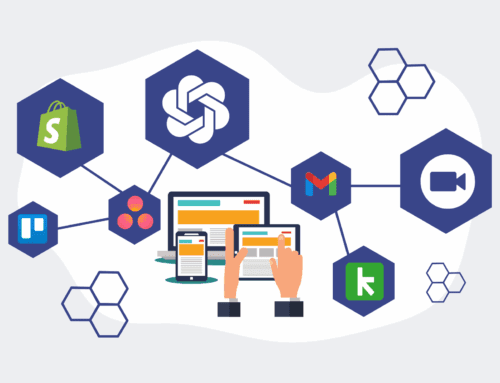
A Glossary of Automation & Webhook Terms for HR and Recruiting Professionals
In today’s fast-paced business environment, HR and recruiting professionals are constantly seeking innovative ways to streamline operations, enhance candidate experiences, and reduce manual workload. Automation and the strategic use of tools like webhooks are no longer optional but essential for building efficient, scalable processes. This glossary provides clear, actionable definitions for key terms related to automation, webhooks, and their practical application in human resources and recruitment, empowering you to better understand and leverage these powerful technologies.
Webhook
A webhook is an automated message sent from an app when a specific event occurs. It’s essentially a user-defined HTTP callback that is triggered by an event on a source site and delivered to a destination URL. For HR and recruiting, webhooks enable real-time data flow between different systems without manual intervention. For instance, when a candidate completes an assessment in one system, a webhook can instantly notify your ATS or CRM, updating the candidate’s profile, initiating the next stage of the hiring process, or triggering an automated email communication. This eliminates delays and ensures all platforms have the most current information, critical for a responsive and effective recruitment pipeline.
API (Application Programming Interface)
An API, or Application Programming Interface, is a set of rules and protocols that allows different software applications to communicate and interact with each other. Think of it as a menu in a restaurant: you can order specific dishes (data or functions) without needing to know how the kitchen (the software) prepares them. In HR, APIs are fundamental for integrating various tools like applicant tracking systems (ATS), human resource information systems (HRIS), payroll, and background check services. While webhooks are about event-driven notifications (one-way pushes), APIs facilitate more complex, bi-directional data exchange, enabling systems to request, send, and modify data, thus creating a truly integrated ecosystem for talent management.
JSON (JavaScript Object Notation)
JSON, or JavaScript Object Notation, is a lightweight data-interchange format that is easy for humans to read and write, and easy for machines to parse and generate. It’s the most common format for sending data to and from web servers, especially when using APIs and webhooks. When a webhook sends data, that information is typically structured in JSON. For HR professionals, understanding JSON isn’t about coding, but recognizing that this structured format allows systems to accurately interpret candidate details, application statuses, or employee data being transferred between platforms. A well-structured JSON payload ensures seamless communication and accurate updates across all integrated HR tools.
Data Payload
In the context of webhooks and APIs, a data payload refers to the actual data being sent in a transmission. When an event triggers a webhook, the “payload” is the package of information about that event. For example, if a candidate applies for a job, the data payload might include their name, contact information, resume URL, the job ID, and application date, all typically structured in JSON. Understanding what information is contained within a data payload is crucial for setting up effective automations. HR teams can then configure their automation platforms to extract specific pieces of information from this payload to update records, trigger emails, or initiate subsequent workflow steps in their recruiting or onboarding processes.
Automation Platform
An automation platform is a software solution designed to build, manage, and execute automated workflows across various applications and services. Tools like Make.com, Zapier, or Integromat allow users, often without extensive coding knowledge, to connect different systems and automate repetitive tasks. For HR and recruiting, these platforms are game-changers, enabling the automation of everything from candidate sourcing and interview scheduling to onboarding paperwork and performance review reminders. By acting as the central hub for integrations and workflow logic, an automation platform significantly reduces manual effort, minimizes human error, and frees up valuable time for HR professionals to focus on strategic initiatives and direct candidate engagement.
Trigger
In automation, a trigger is an event that initiates a specific workflow or series of actions. It’s the “when this happens” part of an “if this, then that” statement. Triggers can be diverse: a new candidate applying in an ATS, an email being received with a specific subject line, a new entry in a spreadsheet, or a form submission. For HR teams, defining precise triggers is fundamental to building effective automations. For instance, a trigger could be “candidate status changes to ‘Hired'” in your ATS, which then initiates a series of onboarding actions. Webhooks are a common mechanism for triggers, enabling real-time initiation of workflows based on events in external applications.
Action
An action, in the context of workflow automation, is a specific task or operation performed in response to a trigger. It’s the “then do this” part of an automated sequence. Following a trigger, one or more actions are executed to complete the desired task. Examples of actions in HR automation include sending an automated email to a candidate, updating a candidate’s status in an ATS, creating a new record in a CRM, scheduling an interview, or generating an offer letter. Effectively combining triggers and actions allows HR professionals to design sophisticated, multi-step workflows that transform manual, time-consuming processes into efficient, automated sequences, ensuring consistency and accuracy.
Workflow Automation
Workflow automation is the design and implementation of technology to automate a sequence of tasks or processes, typically involving multiple steps and different software applications. Its goal is to streamline operations, reduce human error, and improve efficiency by eliminating manual intervention in repetitive tasks. For HR and recruiting, workflow automation is transformative. It can automate the entire hiring journey from initial application screening and interview coordination to background checks, offer generation, and new hire onboarding. By automating these intricate workflows, HR teams can deliver a smoother candidate experience, ensure compliance, reduce administrative burden, and redirect their expertise towards strategic talent management and development.
System Integration
System integration refers to the process of connecting different IT systems, applications, and data sources to enable them to communicate and function as a unified whole. Instead of operating in isolated silos, integrated systems share data and functionality, creating a more cohesive and efficient operational environment. In HR, effective system integration is crucial for avoiding data duplication, improving data accuracy, and creating a single source of truth for employee and candidate information. Integrating your ATS with your HRIS, payroll system, and communication tools, for example, ensures that data entered once is accessible and consistent across all platforms, powering seamless workflows from recruitment to retirement. This strategic approach underpins efficient, scalable HR operations.
Applicant Tracking System (ATS)
An Applicant Tracking System (ATS) is a software application that enables recruiters and employers to manage the entire recruiting and hiring process. From posting job openings and collecting resumes to screening candidates, scheduling interviews, and managing offer letters, an ATS centralizes and streamlines these critical tasks. For HR professionals, an ATS is indispensable for managing high volumes of applications, ensuring compliance, and optimizing candidate pipelines. When integrated with automation platforms, an ATS can trigger workflows like sending automated rejection emails, updating candidate statuses based on assessment results, or moving qualified candidates to the next stage of the hiring process without manual clicks.
Candidate Relationship Management (CRM)
A Candidate Relationship Management (CRM) system, often used in conjunction with an ATS, focuses on nurturing relationships with potential candidates, whether they are actively applying or passive talent being pipelined for future roles. It helps organizations build and maintain a talent pool, engage with candidates through targeted communications, and track interactions over time. For HR and recruiting professionals, a CRM is a powerful tool for proactive talent acquisition, allowing for long-term engagement and personalized outreach. Integrating a CRM with webhooks and automation platforms means that candidate interactions, such as attending a recruitment event or viewing a job posting, can automatically update their profile, trigger follow-up emails, or assign them to specific talent pools, ensuring no potential talent slips through the cracks.
Data Parsing
Data parsing is the process of extracting specific pieces of information from a larger block of unstructured or semi-structured data and transforming it into a structured, usable format. In HR automation, this is particularly valuable when dealing with incoming data from various sources, such as resumes, application forms, or webhook payloads that might contain diverse information. For example, parsing a resume means automatically extracting the candidate’s name, contact details, work history, and skills into distinct fields in your ATS or CRM. This eliminates the tedious manual data entry, ensures accuracy, and makes the information readily searchable and actionable for screening, reporting, and populating other automated workflows. It’s a critical step in turning raw data into valuable intelligence.
Low-Code/No-Code Automation
Low-code and no-code automation platforms empower individuals, including non-technical HR professionals, to build and deploy complex applications and automated workflows with minimal or no traditional programming. No-code solutions use visual drag-and-drop interfaces to connect systems and define logic, while low-code platforms provide a similar visual approach but allow for some custom coding for more advanced scenarios. This democratizes automation, enabling HR teams to quickly build solutions for their specific needs—like automating onboarding forms or interview scheduling—without relying heavily on IT departments. This agility allows businesses to respond faster to operational needs, drive innovation, and significantly reduce the time and cost associated with digital transformation.
Scalability
Scalability, in the context of business operations and technology, refers to a system’s ability to handle an increasing amount of work or demand without compromising performance or efficiency. For HR and recruiting, highly scalable processes are essential for businesses experiencing growth or seasonal hiring surges. Automation plays a critical role in achieving scalability. By automating repetitive tasks like resume screening, background checks, or payroll processing, HR systems can handle a much larger volume of applications or employees without requiring a proportional increase in manual staffing. This ensures that as a company grows, its HR functions can keep pace, maintain service quality, and continue to operate cost-effectively, supporting strategic expansion rather than becoming a bottleneck.
Artificial Intelligence (AI) in HR
Artificial Intelligence (AI) in HR refers to the application of AI technologies to enhance various human resources functions, from talent acquisition to employee development and retention. This includes tools that leverage machine learning, natural language processing (NLP), and predictive analytics to automate, optimize, and intelligentize HR processes. Examples include AI-powered resume screening to identify best-fit candidates, chatbots for answering candidate or employee queries, sentiment analysis in employee feedback, and predictive models for identifying flight risks. For HR professionals, AI acts as a powerful assistant, automating routine tasks, providing data-driven insights to improve decision-making, reducing bias, and freeing up time to focus on strategic, human-centric initiatives that drive business value and foster a positive workplace culture.
If you would like to read more, we recommend this article: 1. Catch Webhook body satellite_blog_post_title