Post: Building a Single Source of Truth: Unifying Operations Beyond Your CRM
Beyond the CRM: Building a Single Source of Truth for Unshakeable Business Operations
In today’s fast-paced business environment, most companies have embraced Customer Relationship Management (CRM) systems as their central repository for customer interactions. Yet, for many high-growth B2B firms, the CRM, while vital, often falls short of being a true “single source of truth.” It’s a critical piece of the puzzle, but rarely the whole picture. The real challenge lies in integrating CRM data with the myriad of other operational systems – from HR and recruiting platforms to accounting software and project management tools – creating a unified, trustworthy dataset that powers every decision. Failing to achieve this level of integration leads to fragmented information, costly errors, and a significant drain on valuable employee time.
Consider the typical scenario: a sales leader checks the CRM for client history, while the operations team relies on a separate project management tool for service delivery details. HR might have employee data in one system, and finance in another. When these systems don’t speak to each other, critical business intelligence becomes a manual assembly job, prone to outdated information and inconsistencies. This isn’t just inefficient; it actively hinders scalability and decision-making. High-value employees find themselves constantly cross-referencing, verifying, and manually transferring data – work that offers zero strategic value but consumes countless hours.
The Illusion of a Single Source: Why Your CRM Isn’t Enough
Many businesses mistakenly believe their CRM is their single source of truth. While it’s undoubtedly the cornerstone for sales and marketing, it rarely encompasses the full breadth of operational data needed for a holistic view of the business. Information about a client’s project status, recruitment pipeline, employee performance, or contract details might reside in completely separate applications. This creates data silos, where each department operates with its own version of reality. The consequences are tangible: delayed project starts due to missing client onboarding details, inaccurate financial forecasts based on incomplete sales data, or hiring decisions made without a full understanding of an applicant’s journey through the HR pipeline.
This fragmentation isn’t merely an annoyance; it’s a systemic weakness. It leads to duplicate data entry, manual reconciliation efforts, and a lack of real-time visibility into overall business health. Imagine trying to get a complete profit-and-loss statement when your revenue data is in one system, your operational costs in another, and your staffing expenses in a third. The effort to compile accurate reports detracts from the time leaders could spend analyzing those reports and formulating strategy. It’s a fundamental bottleneck that prevents agile responses to market changes and inhibits true growth.
Unifying Your Operational Ecosystem: What a True SSOT Looks Like
A genuine Single Source of Truth (SSOT) isn’t just a database; it’s a strategic architecture where all critical business data, regardless of its origin, is consistent, accurate, and accessible from a central point. This doesn’t mean cramming everything into one monolithic system – that’s often impractical and expensive. Instead, it means strategically connecting disparate systems so they share data seamlessly and intelligently, establishing one authoritative record for each piece of information. For instance, when a new client is added to the CRM, their data should automatically flow to project management, accounting, and even HR if new staffing is required to service them.
Achieving this requires more than just off-the-shelf integrations; it demands a deep understanding of your business processes and the intricate relationships between your various software platforms. It involves identifying the core data points, determining their authoritative source, and then building robust automation workflows to ensure consistency across the entire ecosystem. This strategic integration is where organizations like 4Spot Consulting excel, transforming fragmented data landscapes into cohesive, intelligent operational networks that truly reflect the state of your business at any given moment.
The 4Spot Approach: Strategic Integration for Unbeatable Clarity
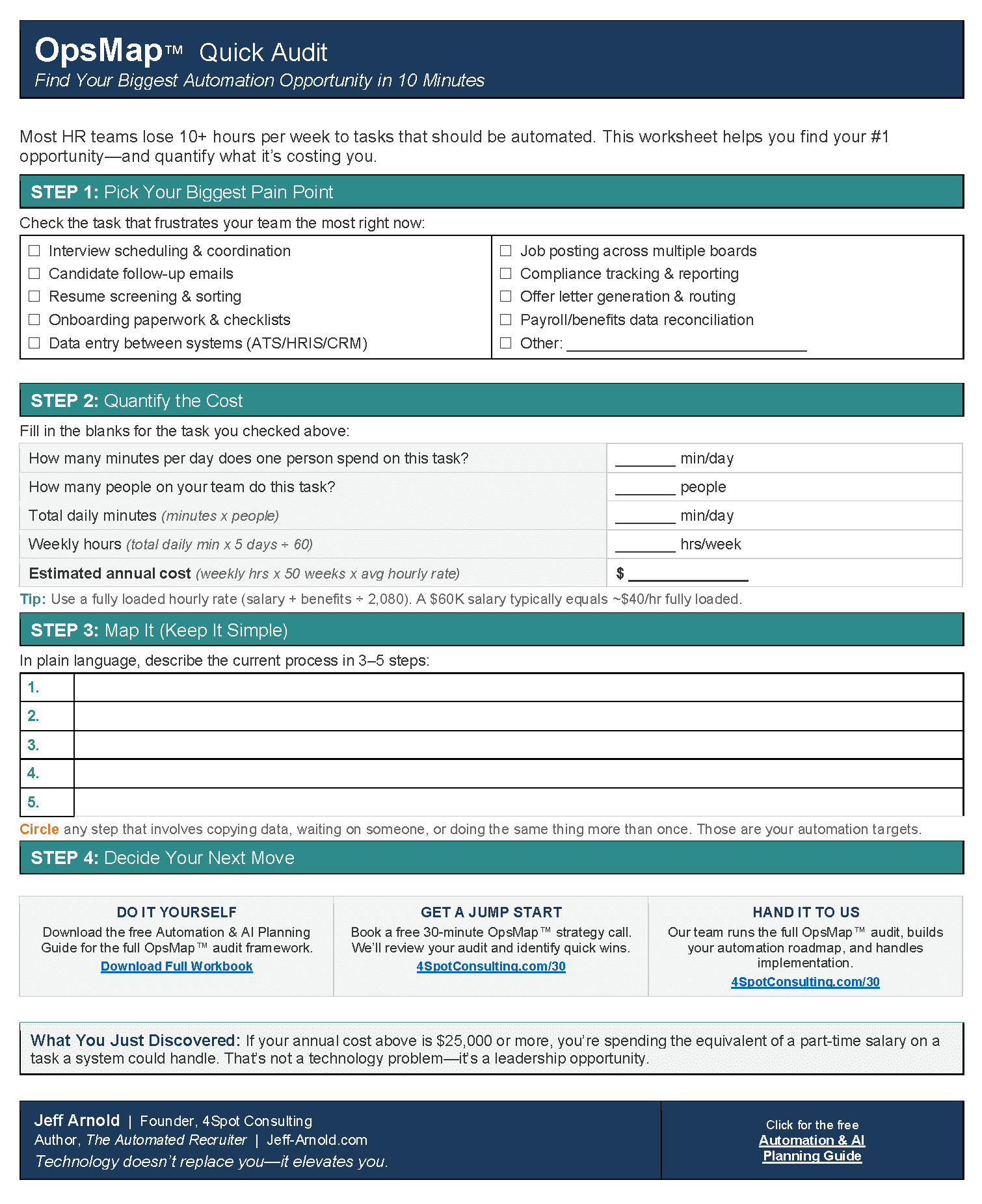
At 4Spot Consulting, we approach the creation of a Single Source of Truth not as a technical task, but as a strategic imperative. Our OpsMesh framework is designed precisely to address these complex integration challenges, ensuring that your operational backbone is strong and unified. We begin with an OpsMap™, a strategic audit that meticulously uncovers inefficiencies and identifies where your critical data lives and where it needs to flow. This isn’t about guessing; it’s about a methodical investigation into your existing systems and workflows to pinpoint exactly where data fragmentation is costing you time and money.
Following the OpsMap™, our OpsBuild phase leverages powerful low-code automation platforms like Make.com to connect your disparate systems. Whether it’s syncing Keap CRM data with PandaDoc for contract generation, automating resume intake for HR, or ensuring all client communications are logged and accessible, we engineer solutions that eliminate manual data handling. The goal is to create an operational environment where data integrity is guaranteed, reducing human error and freeing up your high-value employees from tedious, repetitive tasks. We’ve seen clients save hundreds of hours monthly and achieve a more than 2x increase in production simply by ensuring their systems work together seamlessly.
Establishing a true Single Source of Truth is a journey that moves beyond basic CRM functionality to create a fully integrated operational ecosystem. It’s about empowering your business with accurate, real-time data to make smarter decisions, scale more efficiently, and ultimately, save 25% of your day. This strategic alignment of information is not a luxury; it’s the foundation for sustained growth and competitive advantage in the modern market.
If you would like to read more, we recommend this article: The OpsMesh Framework: Your Blueprint for Business Automation Success

RELATED POST