Post: Automated Data Management: The B2B Path to Sustainable Growth
Beyond the Spreadsheet: How Automated Data Management Drives Scalability for B2B
For B2B companies eyeing sustainable growth, the seemingly mundane task of data management often becomes an invisible bottleneck. While the allure of new markets and innovative products captures headlines, the operational backbone—how data flows, is stored, and leveraged—can silently dictate the true pace of expansion. Many organizations find themselves shackled by manual data entry, disparate systems, and a constant struggle to maintain a “single source of truth.” This isn’t just an inefficiency; it’s a direct impediment to scalability and profitability.
Consider the daily realities: vital customer information scattered across CRM, accounting software, and countless spreadsheets. Recruitment data siloed from HR systems. Operational metrics requiring tedious manual compilation for weekly reports. Each instance represents not just wasted time but an increased risk of human error, leading to miscommunication, lost opportunities, and frustrated high-value employees whose time could be better spent on strategic initiatives rather than data reconciliation.
The Hidden Costs of Disconnected Data
The immediate costs of poor data management are obvious: hours spent on repetitive data entry, delayed reporting, and the sheer mental drain on staff. However, the deeper, more insidious costs are often overlooked. When data isn’t synchronized or easily accessible, decision-making becomes reactive rather than proactive. Market trends are missed, customer service suffers from incomplete profiles, and the ability to rapidly onboard new clients or scale operations is severely hampered.
Think about a sales leader trying to forecast revenue without a unified view of the pipeline, or an HR director struggling to track candidate progress because applicant data isn’t integrated with the onboarding system. These are not minor inconveniences; they are foundational cracks in a business’s ability to grow. Manual processes are inherently unscalable; every new client, every new hire, every new project adds exponentially to the data management burden, quickly outstripping human capacity and budget.
Why a “Single Source of Truth” is Non-Negotiable for Growth
The concept of a “single source of truth” (SSOT) isn’t merely a buzzword; it’s a strategic imperative for modern B2B organizations. An SSOT ensures that all critical business data—from customer profiles to inventory, HR records to financial transactions—resides in one central, accessible, and consistently updated location. This eliminates data duplication, reduces discrepancies, and provides a reliable foundation for analytics and decision-making.
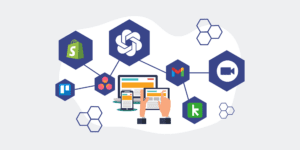
Achieving SSOT status requires more than just buying a new CRM. It demands a holistic approach to automation and integration, connecting disparate systems like your CRM (Keap, HighLevel), project management tools, accounting software, and HR platforms. When data flows seamlessly between these systems, you unlock real-time insights, streamline workflows, and empower your teams with accurate, up-to-the-minute information. This directly translates into faster sales cycles, improved customer retention, and more efficient operational processes, all critical drivers of scalability.
4Spot Consulting’s Approach: Automating Your Data Landscape
At 4Spot Consulting, we understand that building a resilient, scalable business requires a meticulous approach to how information is managed. Our OpsMesh framework, powered by tools like Make.com, is designed precisely for this challenge. We don’t just recommend software; we architect comprehensive automation solutions that transform your data landscape from a collection of silos into a unified, intelligent ecosystem.
Our process begins with an OpsMap™ diagnostic, a strategic audit to uncover where your data bottlenecks lie and where automation can deliver the most significant impact. We look at your current systems, identify points of manual entry and data fragmentation, and then design a blueprint for seamless integration. This isn’t about “tech for tech’s sake”; it’s about tying every automation to a tangible ROI, whether that’s saving 150+ hours a month by automating resume intake and parsing for an HR firm, or ensuring your CRM data is consistently backed up and synchronized across platforms.
Building for the Future: From Data Chaos to Operational Harmony
Implementing a robust automated data management system frees your high-value employees from low-value, repetitive tasks. Imagine your sales team spending more time building relationships and less time manually updating records. Envision your operations team focusing on strategic improvements rather than reconciling conflicting spreadsheets. This shift isn’t a luxury; it’s a competitive advantage that directly impacts your ability to scale without proportional increases in operational costs.
With 4Spot Consulting, you gain a partner dedicated to building the infrastructure that supports your growth ambitions. We leverage low-code automation and AI integration to connect your systems, eliminate human error, and create an environment where data is an asset, not an obstacle. Our OpsBuild phase brings these designs to life, and OpsCare ensures ongoing optimization and support, guaranteeing your automation infrastructure evolves with your business needs.
The future of B2B scalability isn’t about working harder; it’s about working smarter, and that begins with intelligent data management. By embracing automation, you can transform your operational efficiencies, enhance decision-making, and position your business for sustained, profitable growth far beyond the limitations of a spreadsheet.
If you would like to read more, we recommend this article: Mastering Business Automation: Your Guide to 4Spot Consulting’s OpsMesh Framework




RELATED POST