Post: **Candidate Experience ROI: Unmasking Hidden Costs Through Automation**
Beyond the Offer Letter: Quantifying the Hidden Costs of Poor Candidate Experience
In today’s competitive talent landscape, the war for skilled professionals isn’t just about offering competitive salaries and attractive benefits. It’s increasingly about the journey a candidate undertakes from first touchpoint to potential hire. Many organizations meticulously track time-to-hire and cost-per-hire, yet overlook the insidious, often unquantified drain caused by a subpar candidate experience. This isn’t just a “nice-to-have”; it’s a measurable operational cost that directly impacts your bottom line and long-term talent acquisition strategy.
The misconception is that a poor candidate experience only results in a lost applicant. While that’s true, the ramifications extend far wider, touching brand reputation, employee morale, and ultimately, your company’s capacity for growth. Think about it: every recruiter hour spent chasing candidates who drop out, every delayed hire due to inefficient processes, every negative Glassdoor review – these are all symptoms of a broken experience, and each carries a quantifiable price tag.
The Tangible Impact of Disconnected Candidate Journeys
When the candidate journey is riddled with manual handoffs, inconsistent communication, and a lack of transparency, the costs quickly accumulate. Consider the hours your talent acquisition team spends on administrative tasks that could be automated: scheduling interviews, sending follow-up emails, collating feedback, or simply trying to locate a candidate’s status across disparate systems. Each of these manual touchpoints is prone to human error, delays, and ultimately, contributes to a frustrating experience for the candidate.
Delayed hiring, a direct consequence of inefficient processes, has a cascading effect. A critical role left open for weeks or months longer than necessary means lost productivity, increased workload for existing team members, and potentially missed revenue opportunities. The economic impact of a vacant sales role, for instance, can be hundreds of thousands of dollars in lost pipeline and closed deals. For an engineering role, it might mean project delays that push back product launches or stifle innovation. These are not abstract losses; they are direct hits to your operational efficiency and strategic objectives.
Brand Damage and Its Long-Term Ramifications
Beyond the immediate operational costs, a poor candidate experience erodes your employer brand. In an era where information spreads instantly, negative reviews on platforms like Glassdoor, LinkedIn, or even personal social media can deter future talent. A strong employer brand is a magnet for top talent, reducing your reliance on expensive recruiting agencies and increasing the quality of your applicant pool. Conversely, a tarnished reputation can significantly increase your cost-per-hire and time-to-hire, making it harder and more expensive to attract the right people.
Furthermore, candidates who have a negative experience might also be future customers or clients. A disrespectful or disorganized hiring process can turn a potential customer into an outspoken critic, impacting your revenue far beyond just recruitment. This ripple effect underscores the importance of viewing the candidate journey as an integral part of your overall business strategy, not just an HR function.
Automating for an Exceptional Candidate Experience and Measurable ROI
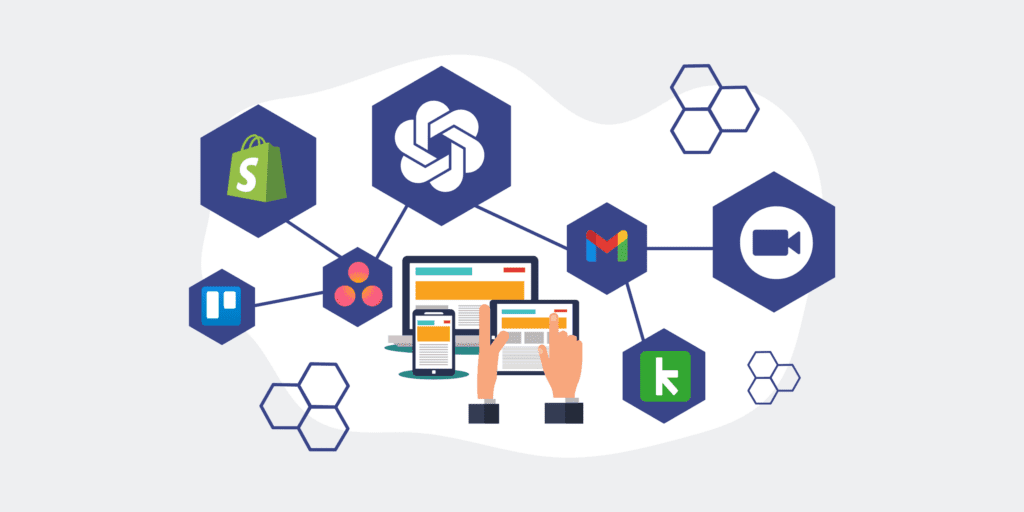
At 4Spot Consulting, we approach the candidate experience not as a soft skill, but as a critical business process ripe for optimization through automation and AI. Our OpsMesh framework allows us to identify bottlenecks and eliminate manual redundancies that plague traditional recruitment funnels. By strategically implementing low-code automation platforms like Make.com, we can connect disparate HR tech systems, ensuring seamless data flow and consistent communication at every stage.
Imagine a world where interview scheduling is entirely automated, feedback forms are instantly routed to hiring managers, and candidates receive personalized updates without any manual intervention. This isn’t a futuristic fantasy; it’s a reality we build for our clients through our OpsMap™ diagnostic. We uncover where human error and inefficiency are costing you time and money, and then through OpsBuild™, we implement systems that streamline the entire process, freeing your high-value employees to focus on strategic engagement rather than administrative drudgery.
For example, we recently partnered with an HR tech client facing significant manual overload in their resume intake and parsing. By deploying Make.com and AI enrichment, we automated the entire process, syncing directly to their Keap CRM. This resulted in an immediate saving of over 150 hours per month for their team, allowing them to engage with more qualified candidates and reduce their time-to-hire dramatically. The result was not just happier recruiters, but a significant boost in operational efficiency and a more positive experience for every applicant.
Reclaiming Your Day and Your Talent Pipeline
The true cost of a poor candidate experience extends far beyond what appears on a spreadsheet. It impacts your employer brand, delays critical hires, and drains your team’s valuable time. By embracing intelligent automation, organizations can transform their recruitment process from a series of disjointed tasks into a smooth, efficient, and candidate-centric journey. This not only reduces operational overhead but also positions your company as an employer of choice, attracting the best talent and accelerating your growth.
Don’t let hidden inefficiencies hold back your talent acquisition efforts. Your talent team should be building relationships, not managing spreadsheets and calendars. By strategically automating, you save valuable time, reduce human error, and create an experience that converts applicants into enthusiastic employees.
If you would like to read more, we recommend this article: Reducing Candidate Ghosting & Boosting ROI with Automated Interview Scheduling


RELATED POST