Post: CRM Data Degradation: The Silent Killer of B2B Growth
The Silent Erosion: Unmasking the True Cost of CRM Data Degradation for High-Growth Businesses
In the relentless pursuit of growth, high-performing B2B companies often invest heavily in their CRM systems, viewing them as the nerve center of their sales, marketing, and customer service operations. Yet, beneath the surface of sophisticated dashboards and extensive contact lists, a silent erosion often takes hold: CRM data degradation. This isn’t just a minor annoyance; it’s a fundamental flaw that can cripple scalability, inflate operational costs, and undermine strategic decision-making, costing businesses far more than they realize.
For leaders who value efficiency and measurable outcomes, understanding and addressing data degradation is not merely a technical task—it’s a strategic imperative. When CRM data becomes inaccurate, incomplete, or outdated, the very foundation of customer relationships begins to crack. Duplicate records, missing contact information, outdated company details, or irrelevant historical interactions can lead to wasted marketing spend, frustrated sales teams, and ultimately, missed revenue opportunities. Imagine a sales rep chasing a lead that no longer exists at a particular company, or a marketing campaign targeting prospects who have already converted or are no longer a good fit. These inefficiencies compound, turning what should be a robust growth engine into a money pit.
The Hidden Dangers of Neglected CRM Data
The impact of poor CRM data extends far beyond minor operational hitches. It distorts your understanding of your customer base, making it nearly impossible to segment effectively, personalize communications, or predict future buying behaviors. This lack of a single source of truth about your customers means departments operate in silos, unable to leverage collective intelligence. Sales might be using different contact information than customer service, leading to disjointed experiences and damaged trust. Crucially, without accurate data, any AI initiative you attempt to integrate into your operations will be built on sand, providing faulty insights and unreliable predictions.
Moreover, the cost of data degradation isn’t just about lost revenue; it’s about wasted time—a resource that high-value employees simply cannot afford to lose. Manual data cleansing, cross-referencing information, and troubleshooting issues consume countless hours that could be dedicated to strategic tasks, customer engagement, or innovation. This low-value work for high-value employees directly contradicts the core principle of operational excellence. It creates bottlenecks, breeds frustration, and hinders your company’s ability to scale efficiently, especially for B2B companies with complex sales cycles and long-term client relationships.
How Data Degradation Manifests and Undermines Growth
Data degradation isn’t a single event; it’s a continuous process influenced by various factors. Employee turnover can lead to inconsistent data entry practices. Mergers and acquisitions can dump incompatible datasets into your system. Even legitimate customer interactions, such as job changes or company reorganizations, can quickly render existing data obsolete. Without a proactive strategy, these small, consistent changes accumulate, transforming your valuable CRM into a chaotic archive.
The consequences for high-growth businesses are severe. Inaccurate forecasting becomes the norm, leading to poor resource allocation and missed targets. Customer churn rates can increase because personalized outreach is impossible with outdated information. Compliance risks related to data privacy (like GDPR or CCPA) also escalate when you lack confidence in the accuracy and consent status of your records. Ultimately, your ability to make agile, data-driven decisions—a cornerstone of competitive advantage—is severely compromised.
Building a Resilient CRM with 4Spot Consulting
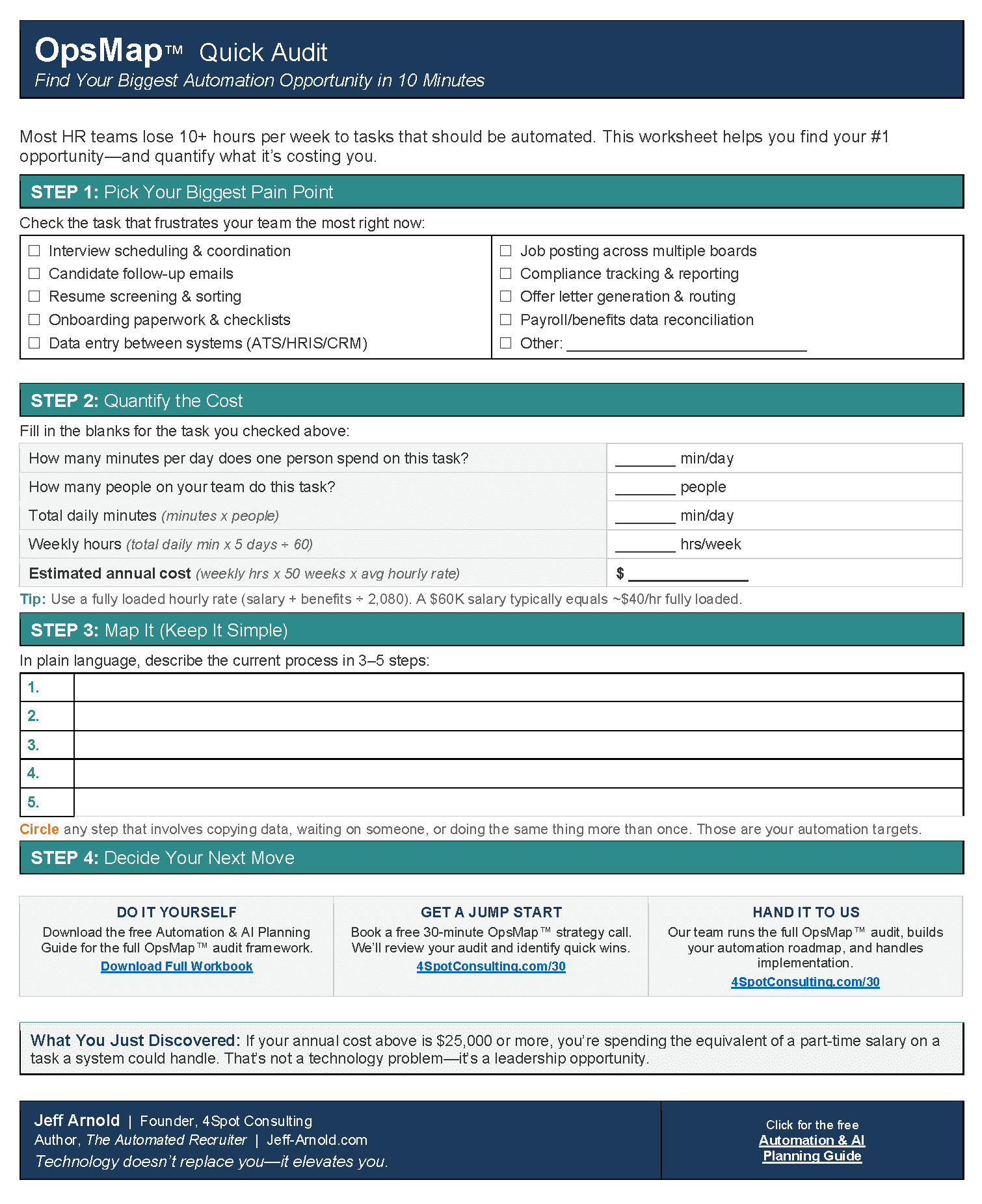
At 4Spot Consulting, we understand that a robust CRM is the backbone of your business, not just another piece of software. Our approach begins with the OpsMap™—a strategic audit designed to pinpoint the precise points of data degradation and inefficiency within your existing systems, whether it’s Keap, HighLevel, or another CRM. We don’t just identify problems; we architect solutions that ensure your CRM becomes a truly reliable single source of truth.
Through our OpsBuild™ framework, we implement automation and AI solutions that proactively combat data degradation. This includes setting up automated data validation processes, integrating disparate systems to prevent data silos, and leveraging tools like Make.com to ensure seamless data flow and regular cleansing. We focus on creating resilient systems that automatically update records, identify duplicates, and enrich existing data, significantly reducing the need for manual intervention. Our expertise in connecting dozens of SaaS systems means your CRM integrates effortlessly with your sales, marketing, and HR platforms, ensuring consistency across your entire operational ecosystem.
Imagine a system where new lead information is automatically validated and entered, existing customer data is updated in real-time based on public records or engagement, and duplicate entries are flagged for merging before they can cause issues. This level of automation doesn’t just save time; it transforms your CRM into a strategic asset that supports, rather than hinders, your growth objectives. We’ve seen firsthand how an HR tech client, by automating their resume intake and parsing process, saved over 150 hours per month and dramatically improved data accuracy in their Keap CRM. This isn’t just about technology; it’s about re-engineering your operational DNA to achieve unparalleled efficiency and scalability.
If you would like to read more, we recommend this article: Mastering Business Automation: Your Blueprint for Unprecedented Efficiency

RELATED POST