Post: Unlocking the Unseen: AI’s Strategic Edge in Modern HR & Recruiting
8 Unseen Benefits of AI Automation in Modern HR & Recruiting
In the rapidly evolving landscape of human resources and recruitment, the buzz around artificial intelligence (AI) and automation often focuses on efficiency gains and cost reduction. While these are undeniable advantages, they only scratch the surface of the transformative power AI brings to the talent acquisition and management lifecycle. Many HR and recruiting professionals are still discovering the deeper, more strategic benefits that AI automation unlocks – advantages that can fundamentally redefine how organizations attract, nurture, and retain top talent. At 4Spot Consulting, we’ve seen firsthand how thoughtfully implemented AI solutions move beyond simple task automation to create profound impacts on organizational culture, employee experience, and long-term strategic growth. It’s not merely about doing things faster; it’s about doing entirely new things, and doing existing things smarter. From refining candidate pipelines to predicting future talent needs and elevating the overall employee journey, AI offers a wealth of opportunities that remain largely untapped by many. This deep dive explores eight such unseen benefits, providing actionable insights for HR and recruiting leaders ready to move beyond basic automation and truly revolutionize their operations.
1. Enhanced Candidate Sourcing & Engagement Beyond Keywords
While most recognize AI’s ability to quickly scan resumes for keywords, its true power in candidate sourcing extends far beyond this rudimentary function. Advanced AI algorithms can analyze vast datasets of public information, professional networks, and even company culture data to identify passive candidates who not only possess the required skills but also align with the organization’s values and long-term vision. This isn’t just about matching qualifications; it’s about predicting cultural fit and potential for success within the specific environment. Furthermore, AI-powered tools can personalize engagement at scale. Imagine automated, tailored outreach messages that adapt based on a candidate’s online activity, career interests, and even their preferred communication channels. This level of personalized interaction, previously only achievable with immense manual effort, now becomes standard, fostering stronger relationships from the very first touchpoint. For recruiting teams drowning in generic applications, AI offers a refined approach that surfaces truly exceptional matches and cultivates genuine interest, significantly reducing the time-to-hire for critical roles. It allows recruiters to spend less time sifting through irrelevant applications and more time building relationships with high-potential candidates who are genuinely engaged.
2. Streamlined Application & Screening with Deeper Insights
The application and initial screening process is often a bottleneck, characterized by manual data entry, repetitive tasks, and the potential for human bias. AI automation, however, can transform this into a seamless, data-rich experience. Beyond merely filtering out unqualified applicants, AI can conduct initial interviews (via chatbots or AI-driven video analysis) to gather consistent data points, assess soft skills, and even identify communication styles. This objective approach minimizes unconscious bias, ensuring every candidate receives a fair initial evaluation based on predetermined criteria. For example, an AI system can analyze responses to structured questions for coherence, problem-solving aptitude, and critical thinking, rather than relying on a recruiter’s subjective interpretation. Integration with systems like Keap allows applicant data to flow directly into a centralized CRM, enabling automated follow-ups, talent pool segmentation, and long-term nurturing for future opportunities. This frees up recruiting professionals from the arduous task of manual review and enables them to focus their expertise on the most promising candidates, drastically improving the quality and speed of the hiring funnel while maintaining a positive candidate experience. It’s about creating an efficient, equitable, and intelligent screening process that supports strategic hiring decisions.
3. Predictive Hiring & Reduced Turnover Through Data Analytics
One of the most profound, yet often overlooked, benefits of AI automation in HR is its capability for predictive analytics. By analyzing historical data – including hiring patterns, employee performance metrics, engagement surveys, and even external market trends – AI can identify key indicators for successful hires and potential flight risks. This allows HR leaders to move from reactive hiring to proactive talent planning. For instance, AI might reveal correlations between specific onboarding experiences and long-term employee retention, or identify early warning signs of disengagement within a particular department. This insight empowers organizations to refine their talent strategies, optimize training programs, and implement targeted retention initiatives before problems escalate. We’ve leveraged platforms like Make.com to connect disparate data sources, allowing clients to build comprehensive profiles that predict future needs and potential challenges. Such predictive capabilities not only reduce costly employee turnover but also ensure a more stable and productive workforce. For a company aiming for sustained growth, understanding who will succeed and who might leave, before it happens, is an invaluable strategic advantage. This foresight saves significant resources and cultivates a more resilient and high-performing team.
4. Personalized Onboarding Experiences at Scale
The first few weeks are critical for a new hire’s success and long-term engagement, yet onboarding is often a fragmented and inconsistent experience. AI automation can transform this into a highly personalized and efficient journey, moving beyond a simple checklist to create a truly welcoming and productive start. Imagine an AI-powered system that automatically provisions IT equipment based on role, schedules introductory meetings with key stakeholders, assigns personalized training modules based on skills gaps identified during hiring, and even sends welcome messages from team members. This level of customization ensures new employees feel valued, informed, and integrated from day one, without burdening HR staff with endless manual coordination. Using tools like PandaDoc, AI can automate the generation and tracking of crucial onboarding documents, ensuring compliance and efficiency. Furthermore, AI can monitor early engagement metrics and proactively flag new hires who might be struggling, allowing HR to intervene with targeted support. This personalized, automated approach not only accelerates time-to-productivity but also significantly boosts new hire satisfaction and retention rates, demonstrating an organization’s commitment to its people right from the start. It shifts onboarding from a transactional process to a strategic investment in human capital.
5. Optimized HR Operations & Enhanced Compliance
The sheer volume of administrative tasks in HR can overwhelm even the most efficient teams, diverting valuable resources from strategic initiatives. AI automation offers a robust solution, taking over routine, repetitive operations with precision and speed, thereby enhancing both efficiency and compliance. Think of tasks like benefits administration, time-off requests, payroll data verification, and policy dissemination. AI can manage these processes with minimal human intervention, reducing the likelihood of human error that can lead to costly mistakes or compliance penalties. For example, an AI system can cross-reference employee data against regulatory changes, automatically flagging discrepancies or suggesting necessary updates to ensure adherence to labor laws and internal policies. This ensures data accuracy, reduces audit risks, and frees up HR professionals to focus on higher-value activities like employee development, strategic planning, and fostering a positive workplace culture. Our OpsMesh framework specifically targets these operational bottlenecks, integrating various HR tech tools to create a seamless flow of information and automated execution. The benefit here is not just saving time, but establishing a more robust, compliant, and reliable HR operational backbone that can support sustainable growth and adapt to evolving regulatory landscapes with greater agility.
6. Improved Employee Experience & Proactive Retention Strategies
Beyond the initial hire and onboarding, AI automation plays a pivotal role in cultivating a continuously positive employee experience, which is crucial for long-term retention. AI-powered tools can analyze employee feedback from surveys, internal communication platforms, and performance reviews to identify emerging trends or potential dissatisfaction hotspots long before they escalate. This allows HR to proactively address concerns, tailor interventions, and implement targeted support programs. For instance, if AI detects a pattern of stress in a particular department, it can trigger automated nudges for managers, suggest relevant wellness resources, or even prompt HR to initiate a confidential check-in. Furthermore, AI can help in creating personalized career development paths, recommending relevant training courses or mentorship opportunities based on an employee’s skills, aspirations, and performance data. This proactive, data-driven approach to employee well-being and growth demonstrates a genuine commitment to the workforce, fostering loyalty and reducing voluntary turnover. By leveraging AI to understand and respond to individual employee needs at scale, organizations can build a more engaged, productive, and ultimately, more stable workforce that feels truly supported and valued throughout their tenure. It transforms HR from a reactive support function to a proactive partner in employee success.
7. Data-Driven Decision Making & Strategic Foresight
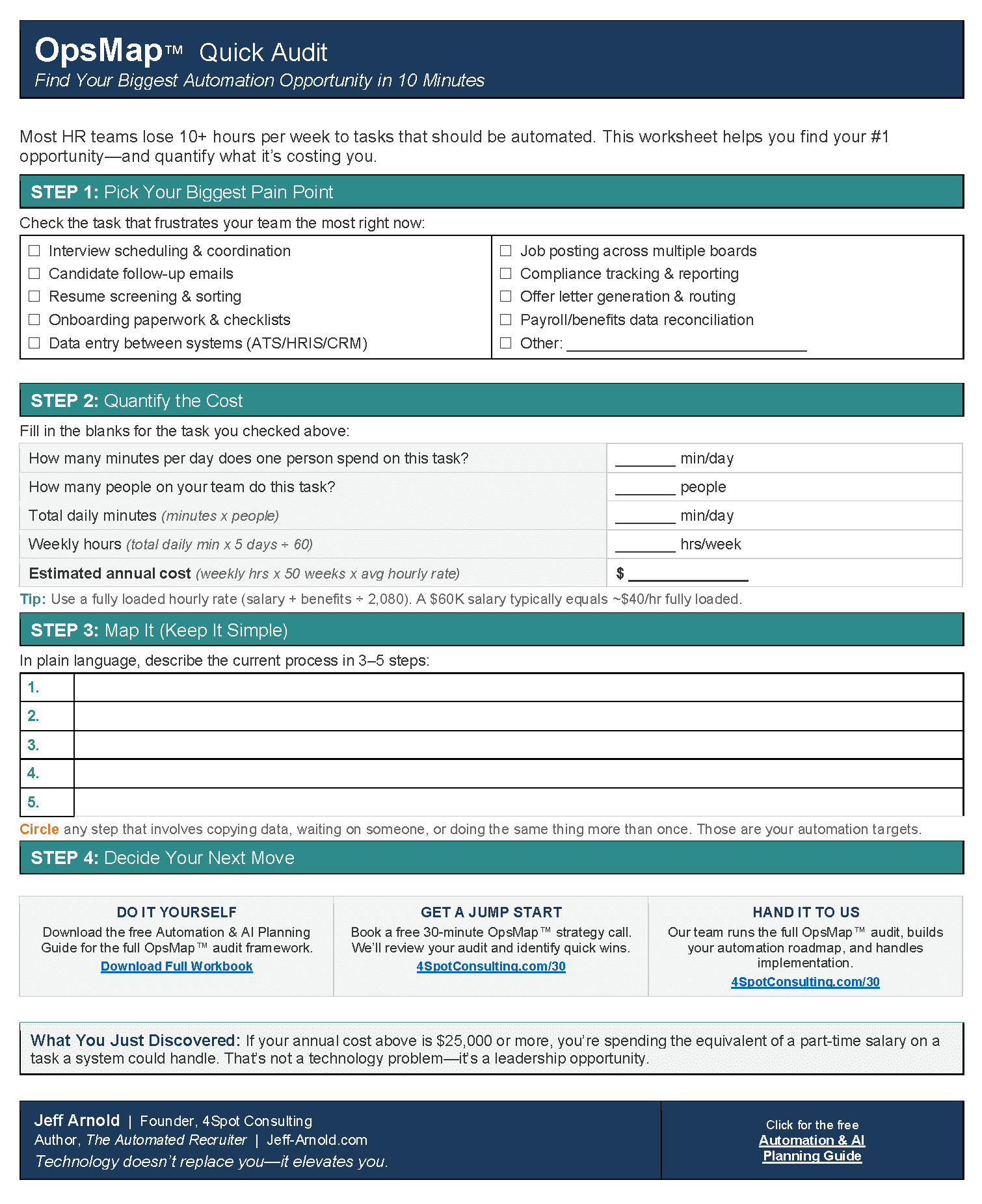
For too long, HR decisions have relied on intuition, anecdotal evidence, or lagging indicators. AI automation ushers in an era of true data-driven decision making, transforming HR into a strategic powerhouse. By integrating and analyzing data from disparate systems—applicant tracking systems, HRIS, performance management platforms, and even external market data—AI provides a holistic view of the workforce. It can identify patterns, uncover hidden correlations, and generate actionable insights that would be impossible to discern manually. For example, AI can reveal which recruitment channels yield the highest-performing employees, predict the optimal team composition for specific projects, or even forecast future skill gaps based on business growth projections. This isn’t just about generating reports; it’s about providing strategic foresight that informs budgeting, talent development, and organizational restructuring. At 4Spot Consulting, we help clients implement OpsMap™, our strategic audit, to identify critical data points and leverage automation to connect them, turning raw data into strategic intelligence. This enables HR leaders to present compelling business cases, justify investments in talent programs, and contribute meaningfully to the overarching business strategy, solidifying HR’s role as a vital contributor to the bottom line.
8. Scalability Without Sacrificing Quality or Experience
One of the persistent challenges for growing organizations is how to scale operations, especially in HR and recruiting, without an exponential increase in manual workload or a degradation of candidate and employee experience. AI automation is the linchpin for achieving this delicate balance. By automating repetitive tasks, standardizing workflows, and providing intelligent assistance, AI allows HR teams to manage a larger volume of candidates, support a growing employee base, and expand into new markets without needing a proportional increase in headcount. For instance, an AI-powered chatbot can handle hundreds of candidate inquiries simultaneously, providing consistent and immediate responses around the clock, ensuring no applicant feels ignored. Similarly, automated HR workflows ensure that onboarding processes for 10 new hires are just as smooth and personalized as they would be for one. This operational elasticity means organizations can respond quickly to growth opportunities, mergers, or market shifts with confidence. It allows the existing HR team to focus on complex, human-centric challenges that truly require their expertise, rather than being bogged down by administrative overhead. Ultimately, AI automation empowers businesses to grow efficiently, maintain high standards of quality, and deliver exceptional experiences, demonstrating a true strategic advantage in a competitive landscape.
The journey into AI automation for HR and recruiting is less about replacing human ingenuity and more about augmenting it. The unseen benefits highlighted here demonstrate that AI extends far beyond simple efficiency gains; it’s a strategic imperative for organizations looking to build resilient, high-performing, and future-ready workforces. By embracing these advanced applications, HR and recruiting professionals can elevate their role from administrative support to strategic business partners, driving growth, improving employee satisfaction, and ensuring long-term success. At 4Spot Consulting, we believe that understanding these deeper advantages is the first step towards truly transforming your HR and recruiting operations. It’s about working smarter, not harder, and unlocking the full potential of your most valuable asset: your people.
If you would like to read more, we recommend this article: 8 Unseen Benefits of AI Automation in Modern HR & Recruiting
RELATED POST