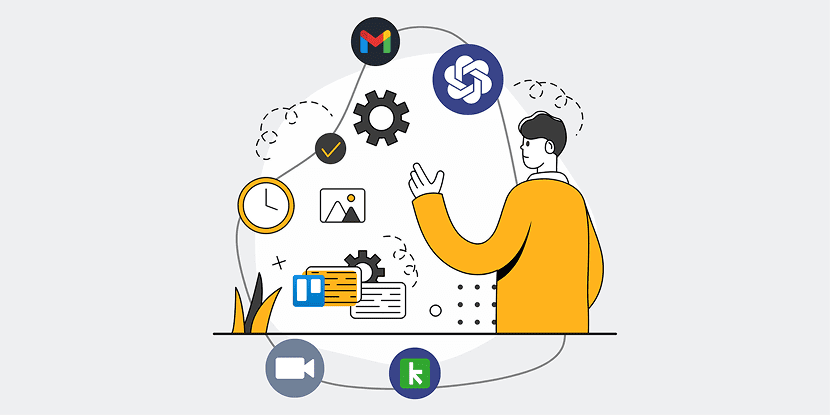
Post: From Bottleneck to Breakthrough: How AI Transforms Talent Acquisition
Transforming Talent Acquisition: The Role of AI in Modern Recruitment Strategies
In today’s fiercely competitive talent landscape, the traditional recruitment playbook is no longer sufficient. Businesses are grappling with talent shortages, high churn rates, and the daunting task of sifting through countless applications, all while striving to maintain an exceptional candidate experience. The manual processes that once defined talent acquisition are now significant bottlenecks, costing companies not just time and money, but also the opportunity to secure top-tier talent. Leaders, from HR Directors to COOs, are keenly aware that something has to give, and the answer, increasingly, lies in the intelligent application of AI.
The Evolving Landscape of Talent Acquisition Challenges
Recruitment has always been a complex dance, balancing the needs of the organization with the aspirations of individuals. However, the sheer volume of applications, coupled with the imperative for speed and precision, has stretched HR departments thin. Manual resume reviews, scheduling interviews, conducting initial screenings, and managing the deluge of administrative tasks consume valuable hours that could be better spent on strategic talent engagement. This leads to burnout for recruiters, a frustratingly slow experience for candidates, and ultimately, missed opportunities for the business to grow and innovate.
Beyond the administrative burden, there’s the challenge of bias. Human decision-making, while invaluable, can inadvertently introduce biases into the hiring process, hindering diversity and potentially overlooking exceptional candidates. Furthermore, the ability to accurately predict candidate success and retention is often more art than science, leaving companies vulnerable to costly mis-hires. These are not minor inconveniences; they are systemic challenges that impact a company’s bottom line and long-term viability.
AI: Beyond the Hype to Practical Application in Hiring
Artificial Intelligence isn’t a futuristic concept for recruitment; it’s a present-day imperative. For business leaders, the question isn’t whether to adopt AI, but how to strategically integrate it to achieve tangible, measurable outcomes. AI’s power in talent acquisition stems from its ability to process vast amounts of data, identify patterns, and automate repetitive tasks with unparalleled accuracy and speed. This allows human talent professionals to refocus on the uniquely human aspects of their role: building relationships, strategic planning, and culture fit.
Streamlining Candidate Sourcing and Screening
One of the most immediate benefits of AI in recruitment is its capacity to transform sourcing and screening. Instead of manual keyword searches, AI-powered tools can analyze resumes and profiles across various platforms, identifying candidates whose skills, experience, and even behavioral patterns (derived from publicly available data, ethically used) align best with job requirements. This goes beyond simple keyword matching, using natural language processing (NLP) to understand context and nuance.
For initial screenings, AI chatbots can engage candidates, answer FAQs, and even conduct preliminary interviews, freeing up recruiters from this time-consuming front-end work. This not only accelerates the hiring funnel but also ensures a consistent and immediate experience for every applicant, regardless of volume.
Enhancing Decision-Making and Reducing Bias
AI can provide objective, data-driven insights to support hiring decisions. By analyzing historical performance data and correlating it with candidate profiles, AI can help predict which candidates are most likely to succeed in a particular role or within a specific team. This predictive power minimizes guesswork and significantly reduces the risk of costly hiring mistakes.
Moreover, AI tools can be designed to identify and mitigate unconscious biases in job descriptions and candidate evaluations. By focusing purely on skills and qualifications, these systems can help level the playing field, promoting a more diverse and inclusive workforce. This isn’t about replacing human judgment but augmenting it with impartial data.
Automating Administrative Burdens
The operational efficiency gains from AI and automation are substantial. Scheduling interviews, sending follow-up communications, managing applicant tracking systems (ATS), and onboarding paperwork can all be automated. Imagine an HR team reclaiming 150+ hours a month by automating resume intake, parsing, and syncing data to the CRM, much like we helped an HR tech client achieve using Make.com and AI enrichment. This isn’t just about saving time; it’s about reallocating high-value employees to high-value tasks, allowing them to focus on strategic initiatives rather than manual data entry.
4Spot Consulting’s Approach: Strategic AI Integration for ROI
At 4Spot Consulting, we understand that integrating AI into your talent acquisition strategy isn’t about implementing technology for technology’s sake. It’s about a strategic overhaul designed to yield measurable ROI. Our OpsMesh framework ensures that AI and automation solutions are deeply integrated into your existing systems, creating a cohesive, efficient, and scalable talent pipeline.
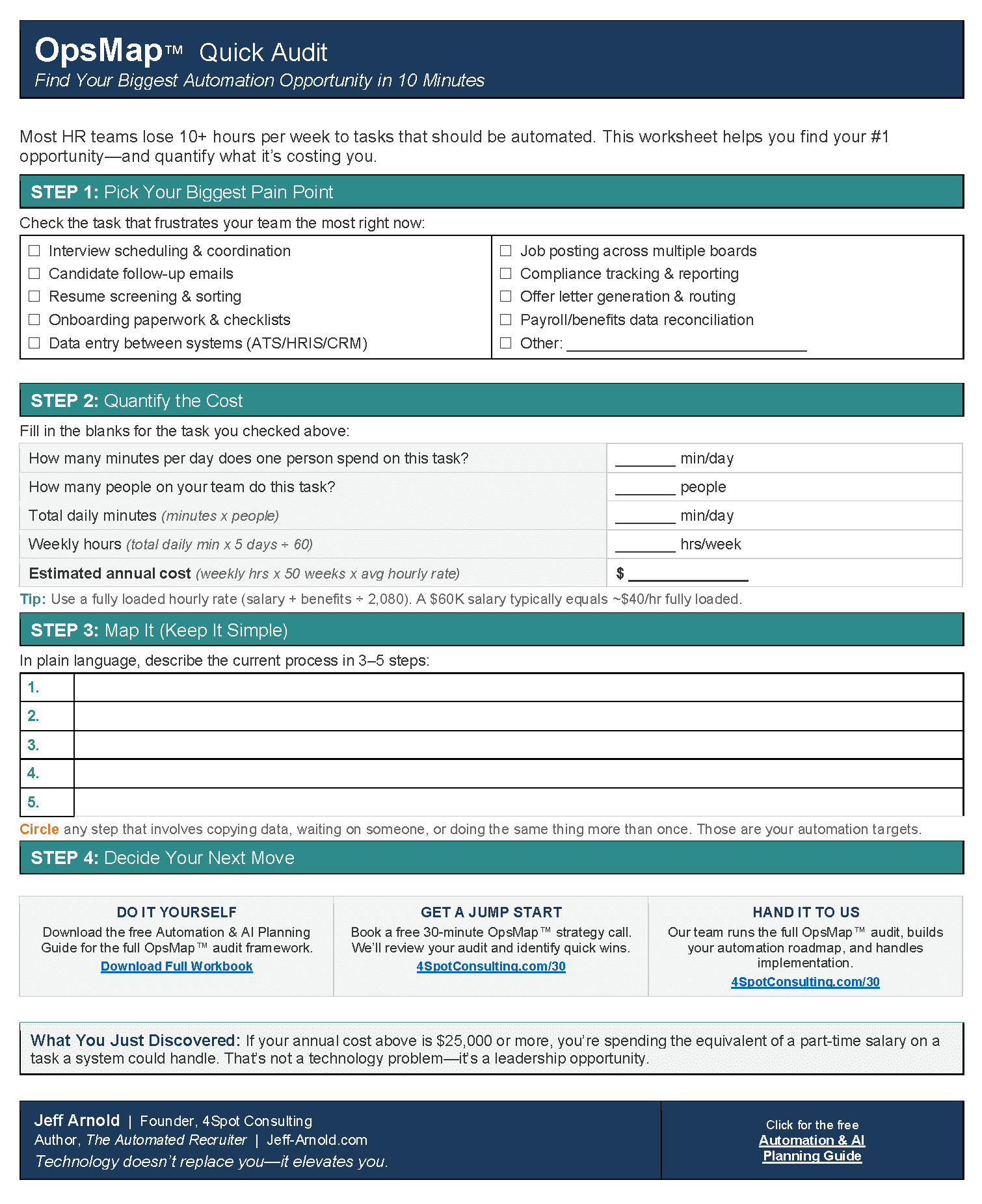
Our process begins with an OpsMap™, a strategic audit to pinpoint your specific bottlenecks in recruitment, where AI can deliver the most significant impact. We then move to OpsBuild™, where we design and implement custom AI-powered workflows, often leveraging tools like Make.com to connect disparate systems and create a “single source of truth” for candidate data. This eliminates human error, reduces operational costs, and ultimately helps you acquire top talent faster and more efficiently.
The shift to AI-powered recruitment is not merely a technological upgrade; it’s a fundamental change in how businesses approach growth and talent strategy. By embracing these advancements, organizations can move from reactive hiring to proactive talent acquisition, securing the human capital essential for future success.
Ready to uncover automation opportunities that could save you 25% of your day in recruitment or other areas of your business? Book your OpsMap™ call today.
If you would like to read more, we recommend this article: The Future of Business Automation: Unlocking Efficiency with AI and Low-Code Solutions
RELATED POST