Post: The AI Imperative: 9 Transformative Applications for Modern HR & Recruiting
9 Transformative AI Applications Revolutionizing HR and Recruiting
The landscape of human resources and recruitment is undergoing a rapid evolution, driven primarily by the relentless march of artificial intelligence. What was once considered a futuristic concept is now a practical, indispensable tool for HR leaders, COOs, and recruitment directors grappling with growing demands, talent shortages, and the imperative to do more with less. The traditional HR function, often bogged down by administrative tasks, manual data entry, and reactive problem-solving, is perfectly positioned for an AI-powered overhaul. Businesses today cannot afford inefficiencies; they need agility, precision, and predictive capabilities to attract, develop, and retain top talent. AI offers exactly that—a strategic partner that frees up high-value employees from low-value work, allowing them to focus on the human aspects of human resources: strategy, engagement, and culture.
At 4Spot Consulting, we’ve witnessed firsthand how integrating AI and automation can eliminate human error, drastically reduce operational costs, and build scalable systems that directly contribute to revenue growth. We’re talking about tangible savings, increased productivity, and a fundamentally better experience for both candidates and employees. The shift isn’t about replacing human judgment but augmenting it, providing insights and efficiencies previously unimaginable. This article will delve into nine practical and transformative AI applications that are not just trends but essential components for any forward-thinking HR and recruiting strategy, empowering your team to save significant time and achieve superior outcomes.
1. AI-Driven Candidate Sourcing and Predictive Screening
One of the most time-consuming and labor-intensive processes in recruitment is sourcing and initial candidate screening. AI is revolutionizing this by automating the discovery and qualification of potential hires. Modern AI tools can crawl vast databases, professional networks, internal talent pools, and even open-source platforms to identify candidates whose skills and experience align perfectly with job requirements. Beyond keyword matching, these systems use natural language processing (NLP) to analyze resumes, cover letters, and online profiles for soft skills, cultural fit indicators, and even potential growth trajectories. For example, AI can parse thousands of applications, score them based on predefined criteria, and flag the top percentile for human review, dramatically reducing the screening time from days to hours.
Furthermore, predictive screening goes a step beyond by analyzing historical data to forecast a candidate’s likelihood of success in a role or retention within the company. By identifying patterns in successful hires—such as specific educational backgrounds, prior job tenure, or skill combinations—AI can provide a more data-driven approach to shortlisting. This not only speeds up the initial stages of the hiring funnel but also significantly improves the quality of candidates presented to hiring managers. This application embodies 4Spot Consulting’s OpsBuild approach, where we engineer intelligent systems using platforms like Make.com to connect disparate data sources and automate complex decision-making processes, ensuring a higher ROI on your recruitment efforts by focusing human attention on the most promising prospects.
2. Automated Interview Scheduling and Management
The back-and-forth of interview scheduling is a notorious bottleneck, often consuming hours of a recruiter’s week, especially for high-volume roles. AI-powered scheduling tools eliminate this administrative burden entirely. These systems integrate seamlessly with calendars (like Outlook or Google Calendar) for both candidates and hiring managers, finding optimal time slots based on availability and sending automated invites, reminders, and follow-ups. But AI’s role extends beyond mere calendar coordination.
Virtual assistants and chatbots can engage candidates in initial conversational screenings, asking pre-qualifying questions to assess basic fit and availability before a human ever steps in. Imagine a candidate receiving a text or email from an AI that accurately understands and responds to their queries about the job, company, or interview process, then efficiently books their slot. This creates a streamlined, professional experience for the candidate while freeing up recruiters to focus on strategic engagement and relationship building. With tools like Bland AI, these conversations can be incredibly natural and effective, ensuring candidates feel valued and informed throughout the process, preventing drop-offs due to poor communication or scheduling frustrations. This level of automation is a prime example of how 4Spot Consulting helps businesses achieve significant time savings—often 25% or more of a high-value employee’s day—by implementing robust, interconnected systems.
3. Enhanced Candidate Experience with AI Chatbots and Virtual Assistants
In today’s competitive talent market, the candidate experience is paramount. A poor experience can not only deter top talent but also damage your employer brand. AI-powered chatbots and virtual assistants are transforming this by providing instant, 24/7 support and personalized interactions. From answering frequently asked questions about company culture, benefits, or the application process to providing real-time updates on application status, these tools ensure candidates never feel left in the dark. This immediate feedback loop reduces candidate anxiety and demonstrates a company’s commitment to transparency and efficiency.
Moreover, AI chatbots can be programmed to deliver personalized content, such as relevant company videos, employee testimonials, or insights into team projects, based on a candidate’s expressed interests or the role they’ve applied for. This level of engagement significantly improves the candidate’s perception of the company, fostering a positive connection even before an interview. By leveraging communication platforms like Unipile in conjunction with AI, businesses can centralize candidate interactions across multiple channels (email, SMS, social media), ensuring a consistent and delightful experience. This strategic application of AI directly contributes to a stronger employer brand, higher application completion rates, and ultimately, more successful hires, aligning perfectly with 4Spot Consulting’s goal of making operations more human-centric through automation.
4. Predictive Analytics for Employee Turnover and Retention
Employee turnover is one of the most significant costs for any organization, impacting productivity, morale, and recruitment budgets. AI is providing a powerful solution by enabling predictive analytics for turnover and retention. By analyzing vast datasets—including employee performance reviews, compensation history, engagement survey results, promotion rates, tenure, and even external market factors—AI algorithms can identify patterns and variables that indicate a high risk of an employee leaving the company. This isn’t about guesswork; it’s about statistically valid predictions.
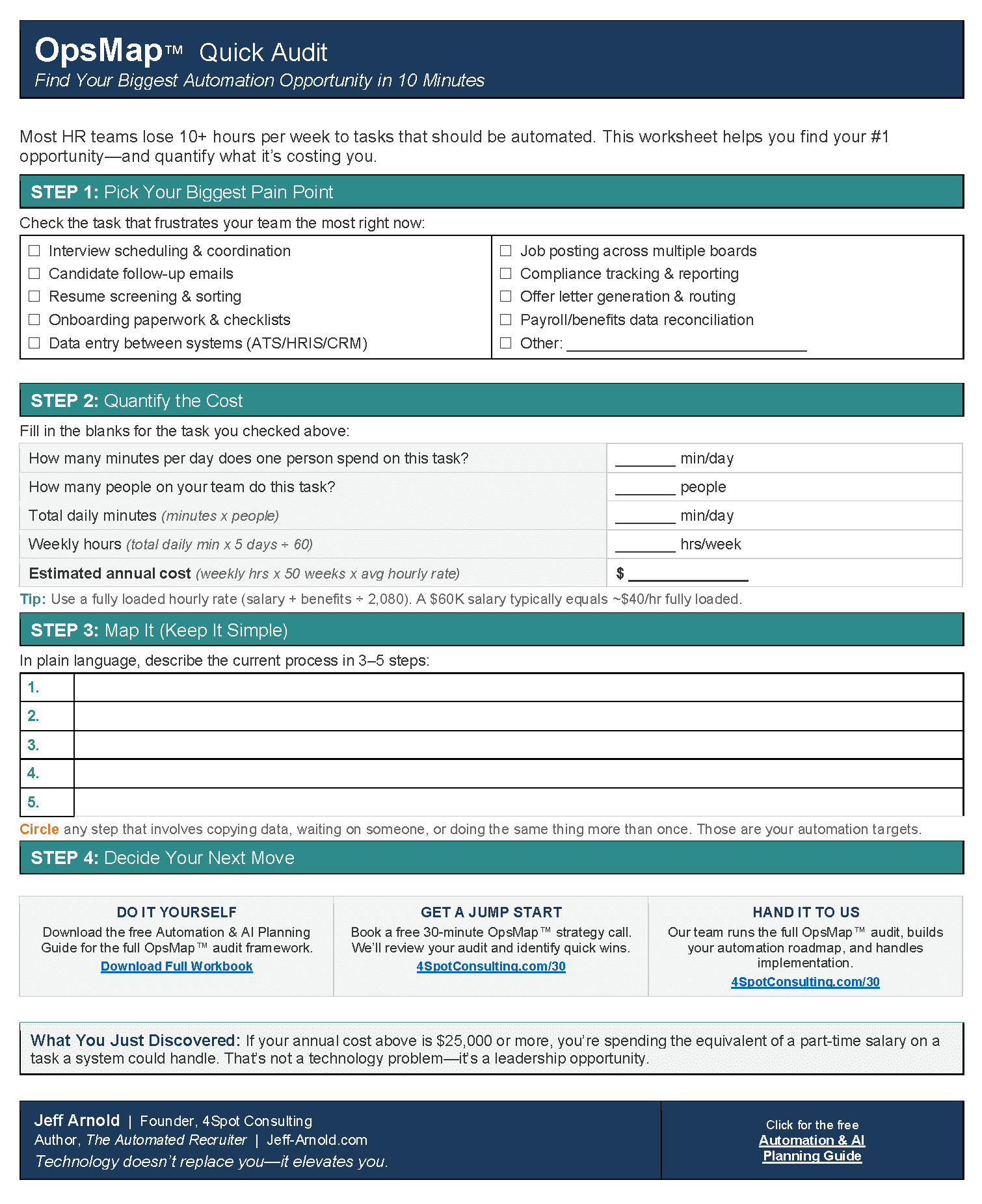
Armed with these insights, HR departments can proactively intervene with targeted retention strategies for at-risk employees. This might involve personalized development opportunities, mentorship programs, compensation adjustments, or even just a timely conversation from a manager. The ability to anticipate potential departures allows organizations to implement preventative measures, saving significant costs associated with recruitment, onboarding, and lost productivity. This strategic use of data aligns with 4Spot Consulting’s OpsMap™ diagnostic, where we help clients identify key data points and inefficient processes to build a roadmap for leveraging automation and AI, turning reactive HR into a proactive, data-driven strategy that impacts the bottom line.
5. AI-Driven Performance Management and Continuous Feedback
Traditional annual performance reviews are often seen as bureaucratic, backward-looking, and ineffective. AI is transforming performance management into a continuous, objective, and development-focused process. AI tools can analyze various data points, including project contributions, peer feedback, self-assessments, and even communication patterns, to provide a holistic and real-time view of an employee’s performance. This continuous feedback loop allows for timely recognition of achievements and early identification of areas needing improvement, fostering a culture of ongoing growth.
Furthermore, AI can help in de-biasing performance evaluations. By identifying language patterns in feedback that might suggest unconscious bias (e.g., gendered language, vague criticism), AI can prompt managers to provide more objective and constructive input. This leads to fairer appraisals, more equitable opportunities, and a more engaged workforce. AI can also assist in creating personalized development plans, recommending specific training modules or resources based on an employee’s performance data and career aspirations. This shifts performance management from a compliance exercise to a strategic tool for talent development and retention, a core principle in how 4Spot Consulting leverages AI to enhance human potential and productivity.
6. Automation of Onboarding and Offboarding Workflows
The processes of onboarding new hires and offboarding departing employees are often ripe with manual, repetitive tasks that are prone to human error, leading to compliance risks and poor employee experiences. AI, combined with automation platforms like Make.com, can drastically streamline these critical workflows. For onboarding, AI can trigger automated sequences for document generation (e.g., contracts via PandaDoc), IT provisioning, training assignments, and welcome communications, ensuring every step is completed accurately and on time. This creates a seamless and positive first impression for new hires, accelerating their time to productivity.
Similarly, for offboarding, AI-driven automation can manage the complex checklist of tasks, from revoking system access and managing final payroll to coordinating equipment returns and conducting exit surveys. This ensures compliance, reduces security risks, and provides valuable data for retention strategies. By connecting various systems—HRIS, IT, payroll, and document management—through a central automation platform, businesses can eliminate manual handoffs and ensure consistency. This application directly addresses 4Spot Consulting’s mission to remove low-value work from high-value employees, turning what were once administrative headaches into efficient, error-free operations that contribute to a polished employer brand and improved operational security.
7. Personalized Learning and Development Paths
In a rapidly changing business environment, continuous learning and skill development are crucial for maintaining a competitive workforce. AI is revolutionizing corporate learning and development by moving beyond one-size-fits-all training programs to highly personalized learning paths. AI algorithms can analyze an employee’s current skills, job role requirements, performance data, career aspirations, and even learning styles to recommend specific courses, modules, articles, or mentorship opportunities. This ensures that every employee receives the most relevant and impactful training, maximizing their growth and contribution to the company.
Adaptive learning platforms powered by AI can adjust the difficulty and content of training materials in real-time based on an individual’s progress and understanding. This personalized approach accelerates skill acquisition, increases engagement, and ensures that training budgets are spent more effectively. For example, if an HR professional needs to upskill in data analytics, AI can curate a sequence of micro-learning modules, practical exercises, and case studies tailored to their existing knowledge base and ultimate learning goals. This is about investing in human capital with surgical precision, a strategic move that 4Spot Consulting advocates for, recognizing that a well-trained, adaptable workforce is a key differentiator in today’s market.
8. Data-Driven HR Decision Making with OpsMesh Integration
Effective HR decision-making relies on accurate, timely, and holistic data. Historically, HR data has often been siloed across disparate systems—ATS, HRIS, payroll, CRM (like Keap for candidate management), and performance management platforms. This fragmentation makes it difficult to gain a comprehensive understanding of the workforce. AI, when integrated within a strategic framework like 4Spot Consulting’s OpsMesh, overcomes this challenge by consolidating and analyzing data from all these sources.
AI-powered analytics dashboards can provide HR leaders with real-time insights into key metrics such as recruitment funnel efficiency, diversity and inclusion statistics, employee engagement trends, workforce demographics, and compensation benchmarks. By correlating data points across systems, AI can uncover hidden trends, identify root causes of HR challenges, and provide predictive insights that inform strategic planning. For instance, AI might reveal that candidates sourced from a specific channel have higher retention rates, or that a particular training program correlates with improved performance. This transforms HR from a reactive department into a proactive, data-driven strategic partner for the entire organization, enabling smarter talent acquisition, development, and retention strategies that directly impact business outcomes and scalability.
9. Combating Bias with AI in Hiring Processes
Unconscious bias remains a significant challenge in recruitment, often leading to less diverse workforces and missed opportunities for talent acquisition. AI is emerging as a powerful ally in the fight against bias, helping to create more equitable and inclusive hiring processes. AI tools can be deployed to analyze job descriptions for gendered language or other biased phrasing, suggesting neutral alternatives to attract a broader pool of candidates. This proactive step ensures job postings are appealing to all qualified individuals, regardless of background.
During the screening phase, AI can anonymize resumes by removing identifying information such as names, ages, and even addresses, forcing recruiters to evaluate candidates purely on skills and experience. AI algorithms can also be trained to identify and flag potential biases in interview questions or evaluation criteria, promoting a more objective assessment process. While AI itself is not immune to bias (if trained on biased data), thoughtful design and continuous auditing can significantly reduce its presence. By leveraging AI to identify and mitigate bias at various stages of the hiring funnel, organizations can build more diverse, equitable, and inclusive teams, leading to enhanced innovation, better decision-making, and a stronger employer brand—a critical component of any modern, responsible business strategy that 4Spot Consulting helps clients implement.
The integration of AI into HR and recruiting is not merely a technological upgrade; it’s a strategic imperative that redefines how organizations attract, develop, and retain talent. From automating mundane tasks and enhancing candidate experiences to providing predictive insights for retention and actively combating bias, AI empowers HR professionals to shift from administrative oversight to strategic leadership. The applications we’ve explored demonstrate a clear path towards increased efficiency, reduced operational costs, and a more engaged, productive workforce.
At 4Spot Consulting, we believe that the true power of AI lies in its ability to augment human capabilities, freeing up your high-value employees to focus on what they do best: building relationships, fostering culture, and driving innovation. Implementing these transformative AI solutions requires a strategic approach, a deep understanding of your existing workflows, and the expertise to integrate complex systems. By embracing these AI applications, your HR and recruiting functions can become powerful engines of growth and competitive advantage, ensuring your business is not just keeping pace, but leading the charge in the future of work.
If you would like to read more, we recommend this article: Mastering HR Automation with AI: A Comprehensive Guide
RELATED POST