

Post: Beyond Reaction: Mastering Predictive Operations with AI and Automation
From Reactive to Proactive: Leveraging AI and Automation for Predictive Business Outcomes
In today’s rapidly evolving business landscape, many organizations find themselves caught in a perpetual cycle of reaction. They respond to problems after they occur, chase down missed opportunities, and scramble to keep pace with demand. This reactive stance, while common, is an unsustainable path that drains resources, stifles innovation, and limits scalability. True growth and resilience come from foresight, from anticipating needs and proactively shaping outcomes. The strategic integration of AI and automation is not merely about doing things faster; it’s about transforming your operations from a reactive scramble to a proactive, predictive engine.
The Cost of Operating in the Rearview Mirror
Operating reactively carries a substantial, often hidden, cost. Businesses that consistently lag behind in anticipating challenges inevitably face higher operational expenses, increased human error, and a significant drain on their most valuable asset: their people. Imagine an HR department constantly battling a backlog of applications, a sales team manually updating CRM records, or an operations unit wrestling with disparate data sources. Each of these scenarios represents a loss of efficiency, a dip in morale, and a missed opportunity to focus on strategic initiatives that truly move the needle.
The Silent Drain: Manual Processes and Hidden Inefficiencies
Manual processes are the silent saboteurs of modern business. They introduce points of failure, create data silos, and consume countless hours of high-value employee time on low-value tasks. The cumulative effect of these inefficiencies is a business that runs on potential rather than performance. We’ve seen firsthand how manual data entry leads to inconsistencies, how fragmented systems prevent a unified view of the customer, and how the absence of automated workflows forces skilled professionals to perform repetitive, mundane work. This isn’t just inefficient; it’s an active deterrent to scaling and innovation.
Shifting Gears: The Power of Predictive Operations
The transition from a reactive to a predictive operating model is not a quick fix; it’s a strategic imperative. By thoughtfully integrating AI and automation, businesses can move beyond simply addressing symptoms to tackling root causes. Predictive operations leverage data-driven insights to anticipate market shifts, customer needs, and operational bottlenecks before they materialize. This allows leadership to make informed decisions, allocate resources more effectively, and pivot with agility. It’s about building a system that doesn’t just record history but actively helps write the future.
Building a Future-Proof Foundation with OpsMesh
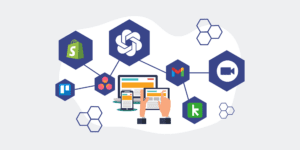
At 4Spot Consulting, our OpsMesh framework is designed precisely for this strategic shift. It’s not just about implementing a single tool; it’s about creating an interconnected web of automated systems that communicate seamlessly, share data intelligently, and work cohesively towards your business objectives. This framework transforms disparate software into a unified ecosystem, establishing a “single source of truth” that eliminates redundancy and ensures data integrity. With OpsMesh, your systems become proactive partners, capable of flagging potential issues, suggesting optimizations, and even initiating workflows based on predicted outcomes, moving your business towards a state of true operational excellence.
How AI and Automation Drive Foresight, Not Just Efficiency
The synergy between AI and automation is where true predictive power emerges. Automation handles the repetitive tasks with precision and speed, freeing up human talent. AI, on the other hand, analyzes vast datasets to identify patterns, forecast trends, and recommend actions. For instance, in recruiting, AI can predict which candidates are most likely to succeed based on historical data, while automation handles the initial screening, scheduling, and communication. In sales, AI can predict customer churn and suggest proactive engagement strategies, with automation then deploying personalized outreach. This combination empowers businesses to not only respond faster but to anticipate and shape future interactions, making every decision more impactful and every resource allocation more precise.
Real-World Impact: Automating for Strategic Advantage
Consider an HR firm drowning in manual resume parsing and data entry. Before automation, this was a reactive process – receive a resume, manually extract information, input into the CRM. With AI and automation, the system can automatically parse resumes, enrich data, identify key skills, and even flag top candidates based on predefined criteria, all before a human even sees them. This shift, exemplified by cases where clients save over 150 hours per month, transforms HR from an administrative burden into a strategic talent acquisition arm. By automating these low-value tasks, high-value employees are liberated to focus on candidate engagement, strategic planning, and fostering a positive employee experience. It’s a move from operational overhead to strategic investment.
Taking the First Step Towards Predictive Excellence
The journey to predictive operations begins with a clear understanding of your current state and a strategic roadmap for your desired future. It requires more than just buying new software; it demands a holistic assessment of your workflows, data, and organizational goals. Our OpsMap™ diagnostic is precisely this first step – a strategic audit designed to uncover hidden inefficiencies, surface high-impact automation opportunities, and chart a clear path to measurable ROI. It’s about designing a system that works for your business, not the other way around, setting the stage for a future where your operations are not just efficient, but truly predictive.
If you would like to read more, we recommend this article: The Strategic Imperative of Business Automation



RELATED POST





