
Post: AI Data Pipelines: The End of Spreadsheets, The Start of Smart Operations
Beyond the Spreadsheet: How AI-Powered Data Pipelines Revolutionize Business Operations
For decades, the spreadsheet has been the unassuming backbone of business operations, a ubiquitous tool for tracking, analyzing, and organizing data. Yet, in our rapidly evolving digital landscape, this workhorse is revealing its limitations. Businesses striving for agility, scalability, and precision are finding that manual data handling, even within sophisticated spreadsheets, is a significant bottleneck. The silent drain of human error, the time lost to data reconciliation, and the inherent fragility of fragmented information systems are no longer minor inconvenances; they are existential threats to competitive advantage.
The Silent Drain: Why Traditional Data Management Fails Modern Businesses
Every business leader understands the value of data. What often goes unacknowledged is the hidden cost of *poorly managed* data. When your teams are manually updating records, exporting CSVs, and copying figures from one system to another, they’re not just performing low-value work; they’re introducing points of failure. Discrepancies between a CRM, an HR system, and a marketing platform aren’t just frustrating; they lead to flawed decision-making, missed opportunities, and ultimately, eroded revenue.
The Trap of Disconnected Systems
Consider the typical tech stack: a CRM for sales, an ATS for recruiting, an ERP for finance, marketing automation tools, project management software, and various communication platforms. Each holds critical pieces of your business puzzle. Without a robust mechanism to connect and synchronize this data, you’re operating in silos. Recruitment doesn’t seamlessly inform HR, sales data doesn’t fully empower marketing, and strategic insights remain elusive. This fragmentation isn’t merely inconvenient; it prevents the holistic view necessary for truly intelligent operations. The result is a workforce constantly battling data discrepancies instead of driving innovation, forcing high-value employees to spend up to 25% of their day on manual data tasks.
The solution isn’t simply more software; it’s smarter orchestration. Enter the realm of AI-powered data pipelines, a strategic shift that transforms how data flows, is understood, and drives action within your organization.
Building the Future: Unifying Data with AI-Powered Pipelines
An AI-powered data pipeline is a sophisticated, automated system designed to ingest raw data from multiple sources, clean and transform it, and then deliver it to its intended destination in a usable format. It’s about creating a seamless, intelligent flow of information that eliminates manual intervention and the errors that come with it. Imagine data from your CRM, ATS, and financial systems automatically converging into a single, reliable source of truth, enriched and categorized by artificial intelligence.
This “single source of truth” isn’t a mythical beast; it’s an achievable operational reality. By leveraging AI, these pipelines can identify patterns, correct inconsistencies, and even infer missing information, dramatically enhancing data quality and reliability. For businesses, this means moving beyond reactive problem-solving to proactive, data-driven strategy.
From Raw Data to Actionable Insight
The immediate benefits are profound: a significant reduction in human error, accelerated data processing, and the liberation of high-value employees from tedious, repetitive tasks. Instead of spending hours reconciling spreadsheets, your team can focus on analysis, strategy, and client engagement. But the true power lies in the strategic advantage. With clean, current, and comprehensive data, businesses can gain deeper insights into customer behavior, operational inefficiencies, and market trends. Predictive analytics become more accurate, enabling better forecasting and more informed decision-making.
At 4Spot Consulting, we’ve walked this path with numerous clients. Our approach isn’t theoretical; it’s built on a foundation of practical implementation. We understand that automating these pipelines requires a deep understanding of both your existing systems and your desired outcomes.
4Spot Consulting’s Approach: Your Blueprint for Data Nirvana
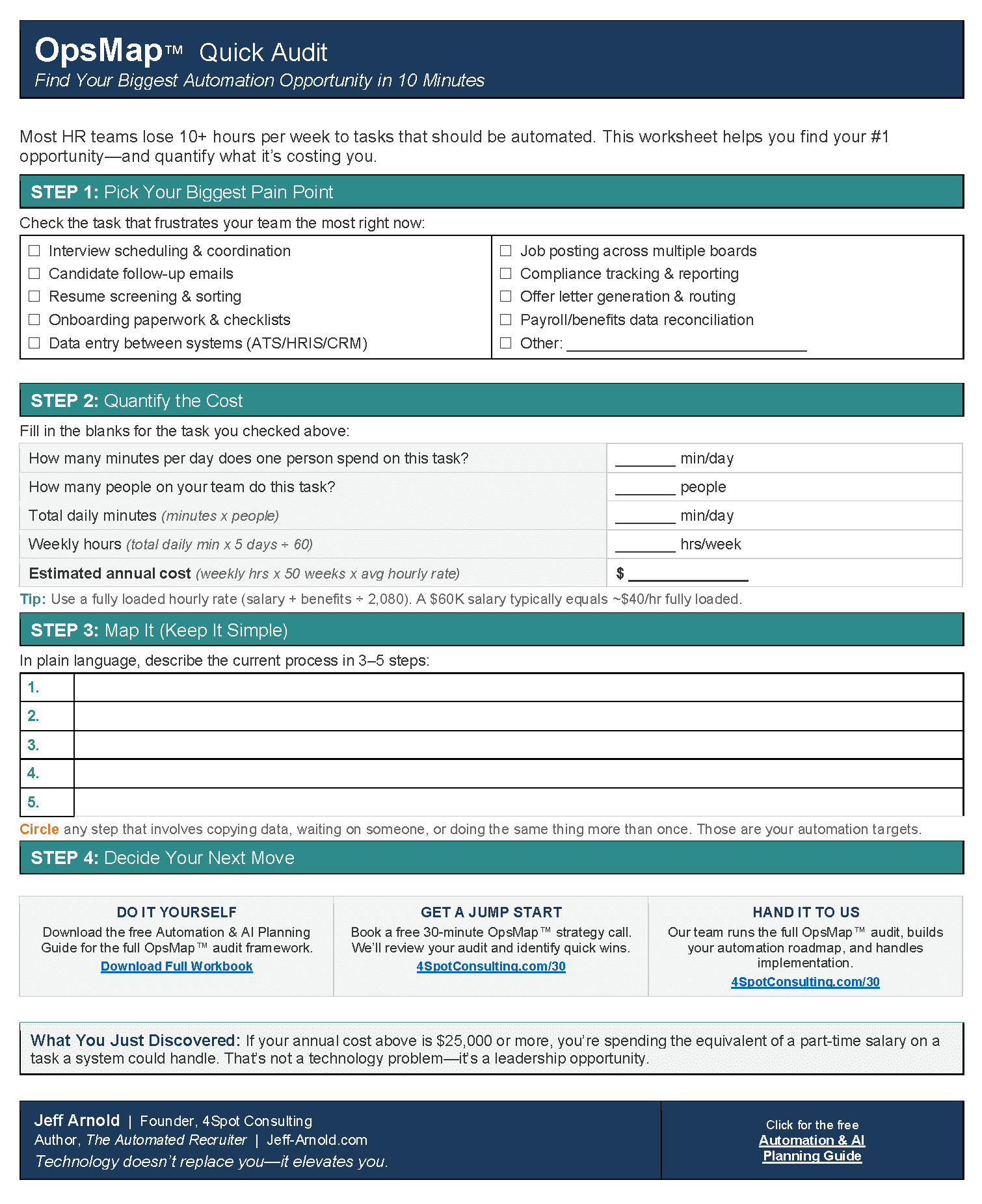
Our methodology begins with the OpsMap™—a strategic audit designed to uncover the specific data inefficiencies and integration opportunities within your business. We don’t just recommend tools; we craft a comprehensive strategy, building your OpsMesh framework to ensure all your critical systems are interconnected and communicating seamlessly. Using powerful low-code platforms like Make.com, we implement the OpsBuild phase, creating bespoke AI-powered data pipelines that automate everything from lead routing and HR onboarding to financial reporting and document generation.
Our focus is always on ROI. We aim to save you 25% of your day by eliminating low-value work, allowing your high-value employees to concentrate on what they do best. Whether it’s consolidating customer data from disparate sources, automating resume parsing into your CRM, or synchronizing sales figures across various platforms, our solutions are engineered for measurable outcomes and tangible cost savings.
The Strategic Advantage: What AI Data Pipelines Mean for Your Business
Adopting AI-powered data pipelines is more than a technical upgrade; it’s a strategic imperative. It empowers your business with unprecedented agility, accuracy, and scalability. It transforms data from a fragmented liability into a unified asset, providing the clear, actionable insights necessary to navigate complex markets and outmaneuver competitors. The era of manual data wrangling is fading; the future belongs to those who embrace intelligent automation to make their data work for them, not the other way around.
Ready to uncover automation opportunities that could save you 25% of your day and revolutionize your data strategy? Book your OpsMap™ call today.
If you would like to read more, we recommend this article: The Future of Business Automation: Unifying Systems with AI and Low-Code


RELATED POST