Post: Unlocking HR Efficiency: 12 AI Applications for Modern Recruiting and Talent Strategy
Unlocking Efficiency: 12 Practical AI Applications Revolutionizing HR & Recruiting
In today’s fast-paced business landscape, HR and recruiting teams are constantly challenged to do more with less. The traditional burdens of manual screening, administrative overhead, and inconsistent candidate experiences can severely bottleneck growth and prevent strategic focus. At 4Spot Consulting, we understand these pain points because we’ve helped countless businesses, from startups to Fortune 500s, navigate them successfully. This isn’t about replacing human judgment; it’s about empowering HR professionals with the tools to eliminate low-value, repetitive tasks, enabling them to focus on what truly matters: people and strategy. AI is no longer a futuristic concept; it’s a present-day reality offering tangible solutions for operational efficiency, improved candidate quality, and enhanced employee engagement. For companies grappling with high-growth demands and the imperative to scale without compromising on quality or succumbing to burnout, integrating AI is a critical step. It’s about creating systems that just work, saving you substantial time and resources, often upwards of 25% of your day. This article dives into 12 practical applications where AI is actively transforming the HR and recruiting functions, providing actionable insights for modern professionals ready to embrace the future.
1. Automated Resume Screening & Shortlisting
One of the most time-consuming aspects of recruiting is sifting through hundreds, if not thousands, of resumes for a single opening. Many qualified candidates are overlooked due to human biases or simply the sheer volume of applications. AI-powered resume screening tools solve this by rapidly analyzing resumes against predefined criteria, job descriptions, and even desired soft skills. These systems can identify keywords, phrases, and patterns related to experience, education, and specific competencies with incredible speed and accuracy. Instead of a recruiter spending hours manually reviewing each application, the AI can filter out unqualified candidates and rank the most suitable ones, presenting a refined shortlist. This significantly reduces the initial screening time, allowing recruiters to focus their energy on engaging with the top-tier candidates who truly fit the role and company culture. Moreover, AI can help mitigate unconscious bias by applying consistent, objective criteria to all applicants, fostering a more equitable hiring process. We’ve seen this firsthand; by automating resume intake and parsing, our clients have saved over 150 hours per month, directly translating to more strategic recruiting efforts and quicker time-to-hire. It’s about getting the right talent in front of you, faster.
2. AI-Powered Candidate Sourcing
Proactive candidate sourcing is crucial for competitive hiring, yet it often involves extensive manual research across various platforms. AI tools are revolutionizing this by intelligently identifying passive candidates who match specific job requirements and organizational profiles. These systems leverage machine learning algorithms to scan vast databases, professional networks, social media, and even academic papers to find individuals with the right skills, experience, and potential fit. They go beyond simple keyword matching, understanding context and inferring potential based on career trajectories and demonstrated capabilities. For example, an AI sourcing tool can identify a software engineer who consistently contributes to open-source projects relevant to a company’s tech stack, even if they aren’t actively looking for a job. This allows recruiting teams to build robust pipelines of high-quality talent before positions even open, giving them a significant competitive edge. It turns reactive hiring into proactive talent acquisition, ensuring that when a critical role emerges, a pool of pre-vetted, high-potential candidates is already identified and primed for engagement, reducing recruitment cycles and improving talent quality.
3. Chatbot for Candidate FAQs & Pre-screening
Candidates often have common questions about job descriptions, company culture, benefits, or application status. Answering these repetitive queries manually consumes valuable recruiter time and can lead to delays in candidate engagement. AI-powered chatbots provide instant, 24/7 responses to candidate inquiries, improving the candidate experience and freeing up recruiters. These chatbots can be integrated directly into career pages, application portals, or messaging apps. Beyond answering FAQs, sophisticated chatbots can also conduct initial pre-screening questions, qualifying candidates based on essential criteria like minimum experience, visa requirements, or salary expectations. This ensures that only candidates who meet the fundamental requirements proceed further in the hiring funnel, streamlining the process for both the applicant and the recruiting team. It provides an immediate, positive interaction for candidates, reducing drop-off rates due to unaddressed queries, and offers recruiters a highly efficient first pass at filtering applicants. This automation delivers a responsive and informative experience, positioning your company as tech-forward and candidate-centric from the very first touchpoint.
4. Personalized Candidate Experience & Engagement
In a competitive talent market, providing a personalized and engaging candidate experience is paramount for attracting and retaining top talent. Generic communications and delayed responses can quickly deter promising applicants. AI enables hyper-personalization by analyzing candidate data – their interactions, preferences, and progress – to tailor communications, content, and even interview processes. For instance, an AI system can send personalized email updates about the application status, suggest relevant company content based on a candidate’s interests, or even recommend additional job openings that might better suit their profile. This creates a more human and connected feel throughout the recruitment journey, demonstrating that the company values each individual applicant. Beyond communication, AI can also optimize interview scheduling to align with candidate availability and interviewer preferences, reducing friction. By treating candidates as individuals with unique needs and aspirations, businesses can significantly enhance their employer brand, improve offer acceptance rates, and build a positive reputation that attracts future talent. This strategic application of AI moves beyond mere efficiency to truly elevate human connections.
5. Predictive Analytics for Turnover & Retention
Employee turnover is costly, impacting productivity, morale, and recruitment expenses. Proactively identifying employees at risk of leaving can enable HR teams to intervene with targeted retention strategies. AI-powered predictive analytics tools analyze various data points – performance reviews, compensation, tenure, engagement survey results, management feedback, and even external market conditions – to identify patterns that correlate with attrition. These models can predict which employees are most likely to leave, and crucially, suggest potential reasons why. For example, an AI might flag an employee with high performance, declining engagement scores, and a recent uptick in LinkedIn activity as a potential flight risk. With this insight, HR can work with managers to implement retention strategies such as career development opportunities, mentorship programs, or compensation adjustments. This shift from reactive to proactive retention not only saves significant costs associated with replacing employees but also fosters a more stable and engaged workforce. It allows HR to be a strategic partner, advising on critical talent management decisions before problems escalate.
6. Skills Gap Analysis & Training Recommendations
Ensuring that an organization’s workforce possesses the necessary skills for current and future business needs is a continuous challenge. AI can play a transformative role in identifying skills gaps and recommending personalized training and development pathways. By analyzing employee profiles, performance data, project requirements, and industry trends, AI tools can map the existing skill sets within a company against its strategic objectives. For example, if a company is pivoting to new technology, AI can identify which teams or individuals lack proficiency in that area. Based on this analysis, the AI can then suggest specific online courses, internal training modules, or mentorship opportunities tailored to close those gaps. This not only makes professional development more targeted and effective but also empowers employees to take ownership of their growth. It ensures that training budgets are allocated efficiently, employees remain relevant and engaged, and the organization maintains a competitive advantage by continuously upskilling its talent. This strategic application of AI turns reactive training into proactive workforce development.
7. Automated Onboarding Workflows
The first few weeks are critical for new hires. A smooth, engaging onboarding experience can significantly impact retention and productivity, yet it often involves a labyrinth of paperwork, system access requests, and introductory meetings. AI and automation, particularly through platforms like Make.com, can transform this process from a disjointed chore into a seamless, positive experience. Imagine a new hire receiving automated emails with essential forms pre-filled, links to their personalized training modules, and an automatically scheduled first week meeting itinerary, all triggered upon their offer acceptance. AI can manage the provisioning of software licenses, setting up necessary accounts, and even assigning mentors based on compatibility profiles. This eliminates manual data entry, reduces administrative errors, and ensures that all compliance requirements are met efficiently. By automating the logistical complexities, HR can focus on the human elements of onboarding – welcoming, integrating, and culturally aligning new employees. This not only makes new hires feel valued and prepared but also accelerates their time to productivity, providing immediate ROI for the organization. It’s about making a powerful first impression that lasts.
8. AI for Interview Scheduling & Logistics
Coordinating interviews across multiple candidates, hiring managers, and panel members is notoriously complex and time-consuming. The back-and-forth emails, calendar clashes, and follow-ups can eat into valuable recruiter time and frustrate candidates. AI-powered scheduling tools eliminate this administrative burden entirely. These systems integrate with calendars to find optimal time slots that work for all parties, sending automated invitations and reminders. More advanced AI can even understand interviewer preferences (e.g., preferred interview length, breaks) and candidate availability to suggest the most efficient schedule. For example, if a candidate has limited availability, the AI can prioritize that and find a solution. Beyond scheduling, AI can also manage the logistics of virtual interviews, generating unique meeting links and ensuring all participants have the necessary access details. This not only drastically reduces the time spent on administrative tasks but also speeds up the interview process, improving the candidate experience by making it smoother and more responsive. Recruiters are freed to focus on candidate quality and engagement rather than calendar Tetris.
9. Sentiment Analysis for Employee Feedback
Understanding employee sentiment is crucial for fostering a positive work environment and making informed HR decisions. Traditional surveys often provide quantitative data but can miss the nuances of qualitative feedback. AI-powered sentiment analysis tools can process large volumes of open-ended employee feedback – from surveys, internal communication platforms, or anonymous suggestion boxes – to identify underlying emotions, key themes, and emerging trends. These tools use natural language processing (NLP) to gauge whether feedback is positive, negative, or neutral, and can even identify specific pain points or areas of satisfaction. For instance, an AI could analyze hundreds of comments and identify a recurring theme of frustration with communication tools or praise for a new leadership initiative. This provides HR leaders with a much deeper, more actionable understanding of the employee experience than manual review alone. It allows organizations to respond quickly to address negative sentiment, reinforce positive behaviors, and tailor HR strategies to genuinely meet employee needs, ultimately boosting morale, engagement, and retention by demonstrating that employee voices are heard and valued.
10. AI-Driven Compensation & Benefits Benchmarking
Attracting and retaining top talent requires offering competitive compensation and benefits packages. However, manually benchmarking against industry standards and market rates is a continuous, labor-intensive process. AI-driven platforms automate this by aggregating and analyzing vast amounts of salary data, industry trends, and economic indicators from various sources. These tools can provide real-time insights into compensation benchmarks for specific roles, industries, and geographies, ensuring that a company’s offerings remain competitive. Beyond raw salary data, AI can also analyze the value and prevalence of different benefits (e.g., healthcare plans, retirement contributions, wellness programs) to help HR teams craft compelling and cost-effective packages. This allows organizations to make data-backed decisions about salary ranges for new hires, adjustments for existing employees, and the design of their overall total rewards strategy. By ensuring fair and competitive compensation, businesses can improve their employer brand, reduce attrition, and optimize their talent acquisition efforts, all while maintaining financial prudence. It’s about being strategically competitive with your most valuable asset – your people.
11. Enhancing Diversity, Equity, and Inclusion (DEI) Efforts
Building a truly diverse, equitable, and inclusive workforce is not just a moral imperative, but a business advantage. AI offers powerful tools to support and enhance DEI initiatives throughout the employee lifecycle. In recruiting, AI can help identify and mitigate unconscious biases in job descriptions, ensuring inclusive language that attracts a broader range of candidates. It can also anonymize candidate data during initial screening to reduce bias related to names, age, or gender. For internal processes, AI can analyze promotion patterns and salary structures to detect potential inequities, providing data-driven insights for corrective action. Furthermore, AI tools can help identify gaps in representation and suggest strategies for targeted sourcing to improve diversity across different roles and teams. It’s crucial to implement these tools responsibly, with human oversight, to prevent algorithmic bias, but when done correctly, AI can be an incredible ally in creating a fairer, more representative workplace. By providing objective data and actionable insights, AI helps turn DEI aspirations into measurable realities, fostering a culture where everyone can thrive.
12. AI for Compliance and Risk Management
Navigating the complex and ever-changing landscape of labor laws, regulations, and internal policies is a significant challenge for HR teams. Non-compliance can lead to hefty fines, legal disputes, and reputational damage. AI-powered solutions are emerging as powerful allies in ensuring HR compliance and mitigating risk. These tools can monitor legislative changes, identify their impact on HR policies, and even suggest necessary updates to handbooks or internal procedures. For example, an AI could alert HR to a new data privacy regulation in a specific state and recommend changes to data handling protocols for employee records. Furthermore, AI can be used to audit internal processes, such as hiring practices or performance management, to ensure they adhere to established guidelines and are free from discriminatory patterns. By automating the oversight of compliance requirements, HR teams can significantly reduce the risk of human error and ensure that the organization operates within legal and ethical boundaries. This provides peace of mind, protects the company, and frees up HR professionals to focus on strategic initiatives rather than being bogged down in compliance minutiae.
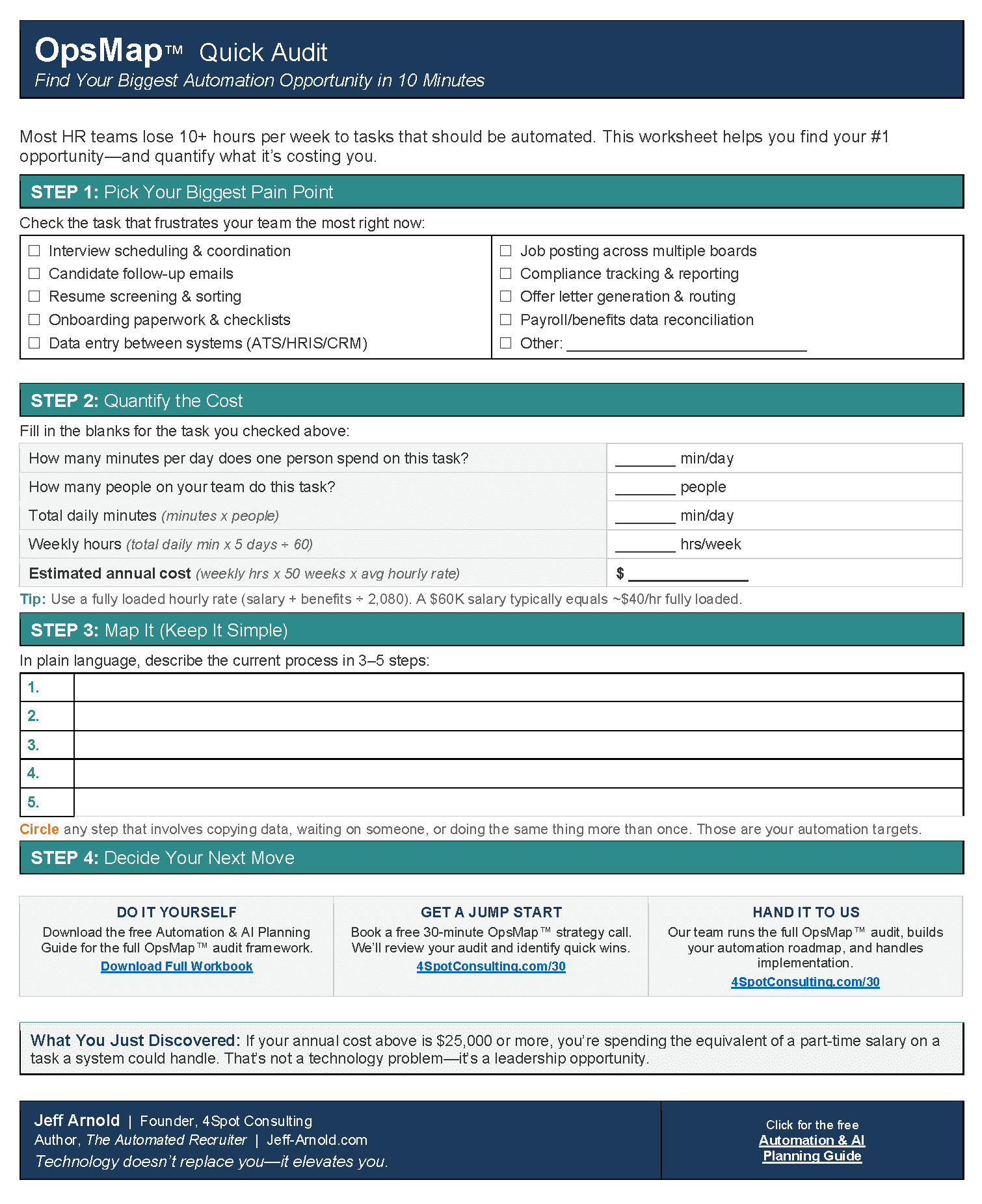
The integration of AI into HR and recruiting is not just an evolution; it’s a revolution offering unprecedented opportunities for efficiency, strategic impact, and enhanced human experiences. From automating repetitive tasks to providing deep predictive insights, AI empowers HR professionals to move beyond administrative burdens and focus on building stronger, more engaged workforces. At 4Spot Consulting, we specialize in helping high-growth businesses strategically implement these kinds of automation and AI solutions. We don’t just build; we strategize, using frameworks like OpsMap™ to identify your unique bottlenecks and then OpsBuild™ to implement tailored, ROI-driven systems using tools like Make.com. The goal is simple: eliminate human error, reduce operational costs, and increase scalability, ultimately saving you 25% of your day. Embracing AI responsibly, with a focus on practical application and human augmentation, is the pathway to a more agile, productive, and future-ready HR function.
If you would like to read more, we recommend this article: The Comprehensive Guide to AI-Powered HR Transformation
RELATED POST