Post: The HR & Recruiting Revolution: 7 AI & Automation Strategies for Growth
7 Ways AI and Automation Are Revolutionizing HR and Recruiting
The landscape of human resources and recruiting is undergoing a seismic shift, driven by the relentless march of artificial intelligence and automation. What was once considered a domain heavily reliant on manual processes, intuition, and extensive paperwork is rapidly transforming into a data-driven, hyper-efficient ecosystem. For HR leaders, COOs, and recruitment directors in high-growth B2B companies, this isn’t just a trend; it’s an imperative for survival and scalability. The challenges are clear: fierce competition for top talent, the burden of administrative tasks, and the constant pressure to optimize costs while enhancing the employee and candidate experience. Ignoring these technological advancements is akin to operating with one hand tied behind your back in today’s fast-paced business environment. At 4Spot Consulting, we’ve seen firsthand how integrating AI and automation can eliminate human error, drastically reduce operational costs, and unlock unprecedented scalability, effectively saving our clients 25% of their day. This isn’t about replacing human judgment but amplifying it, freeing up valuable time for strategic initiatives that truly matter.
The strategic deployment of AI and automation tools allows organizations to move beyond reactive HR, stepping into a proactive model where insights drive decisions, and repetitive tasks are handled with machine precision. From initial candidate outreach to post-hire development, the opportunities for optimization are vast. This article will delve into seven critical areas where AI and automation are not just making a difference but actively revolutionizing the core functions of HR and recruiting. We’ll explore practical applications, real-world benefits, and actionable insights that can help your organization leverage these powerful technologies to build a more agile, efficient, and human-centric workforce.
1. Automated Candidate Sourcing and Screening
One of the most time-consuming and labor-intensive aspects of recruiting is identifying and vetting suitable candidates from a vast talent pool. AI and automation are fundamentally changing this, enabling HR teams to significantly cut down on the initial stages of the hiring funnel. AI-powered sourcing tools can scour job boards, professional networks, and social media platforms to identify passive candidates who align with specific job requirements and company culture, moving beyond simple keyword matching to contextual understanding. Once candidates are identified, automation takes over the initial screening process. This includes automated resume parsing, where AI algorithms extract relevant information, skills, and experience, ranking candidates based on predefined criteria. Tools like Make.com can integrate various sourcing platforms with your Applicant Tracking System (ATS) and CRM (like Keap), creating a seamless workflow that moves candidates through the pipeline with minimal manual intervention. We’ve helped clients save over 150 hours per month by automating their resume intake and parsing process, using AI enrichment to extract key data points and then syncing that data directly into their CRM. This not only speeds up the process but also reduces unconscious bias by focusing on objective qualifications, ensuring a wider, more diverse talent pool is considered. The result is a more efficient, equitable, and effective top-of-funnel recruitment strategy.
2. Enhanced Candidate Experience with AI Chatbots and Virtual Assistants
In today’s competitive talent market, the candidate experience is paramount. A poor experience can lead to top talent disengaging, reflecting negatively on your employer brand. AI-powered chatbots and virtual assistants are revolutionizing this aspect by providing instant, 24/7 support and personalized interactions. These intelligent tools can answer common candidate FAQs about job roles, company culture, benefits, and application processes, freeing up recruiters to focus on more complex interactions. Beyond answering questions, chatbots can also handle initial interview scheduling, send automated reminders, and even conduct preliminary screening questions using conversational AI. Platforms leveraging voice AI, such as Bland AI, can take this a step further, offering natural language interactions that feel more personal and less robotic. This immediate responsiveness not only improves candidate satisfaction but also reduces drop-off rates by maintaining engagement throughout the application journey. For a high-growth company, ensuring a smooth, informative, and engaging candidate experience is critical for attracting and securing the best talent, making AI chatbots an indispensable tool in modern recruitment.
3. Data-Driven Recruitment Analytics and Insights
The digital age has brought an explosion of data, and HR is no exception. However, raw data is only valuable if it can be analyzed and translated into actionable insights. AI and automation are central to building a truly data-driven recruitment strategy. Automation platforms can consolidate data from disparate sources—your ATS, CRM (Keap or HighLevel), HRIS, and even external job boards—into a single source of truth. Once aggregated, AI algorithms can analyze this wealth of information to identify trends, predict future hiring needs, and uncover inefficiencies in your recruitment process. This includes insights into source effectiveness (which channels yield the best candidates), time-to-hire, cost-per-hire, and even potential areas of bias within your hiring decisions. Through our OpsMesh framework, we help organizations connect these dots, providing a holistic view of their talent acquisition ecosystem. Predictive analytics can identify potential flight risks among current employees or forecast future talent gaps, allowing HR leaders to proactively develop retention strategies or pipeline talent for upcoming needs. This strategic application of data ensures that every recruitment decision is informed, measurable, and aligned with overall business objectives, moving HR from a cost center to a strategic driver of growth.
4. Streamlined Onboarding and Offboarding Workflows
The journey with an employee doesn’t end at the job offer; onboarding is a critical phase that significantly impacts retention and productivity. Conversely, offboarding, while less pleasant, must be handled with precision and compliance. Both processes are often riddled with manual, repetitive tasks that are prone to human error. AI and automation can dramatically streamline these workflows, creating a consistent, efficient, and compliant experience. For onboarding, automation can trigger welcome emails, generate all necessary documents (using tools like PandaDoc for contracts and agreements), initiate background checks, set up IT accounts and equipment, assign mandatory training modules, and even schedule initial meetings with managers and teams. This ensures new hires have everything they need on day one, fostering a positive impression and accelerating their time to productivity. For offboarding, automation can manage access revocation, asset return checklists, final payroll processing, and exit interviews, ensuring all regulatory requirements are met and company assets are secured. By eliminating low-value, high-volume administrative tasks, HR professionals can dedicate more time to personalized support and strategic engagement during these crucial transitions, reducing errors and enhancing the overall employee lifecycle experience.
5. Personalized Employee Development and Training
Employee growth and continuous learning are vital for retention and ensuring a skilled workforce. AI and automation are transforming how organizations approach development and training, moving away from one-size-fits-all programs to highly personalized experiences. AI algorithms can analyze an employee’s performance data, career aspirations, skills gaps, and even learning preferences to recommend tailored training modules, courses, and development pathways. This ensures that training is relevant, engaging, and directly contributes to an individual’s growth and the company’s strategic goals. Automation plays a role in managing these learning journeys, automatically enrolling employees in courses, tracking their progress, sending reminders, and facilitating feedback loops. For example, if an employee’s performance review highlights a need for improved project management skills, AI can suggest specific online courses, and automation can enroll them and notify their manager. This proactive and personalized approach not only boosts employee engagement and satisfaction but also ensures the workforce remains agile and equipped with the skills needed to meet future business challenges. It’s about creating a culture of continuous learning that scales with your organization.
6. Predictive Attrition and Retention Strategies
Employee turnover is a costly problem for any business, particularly high-growth companies where every hire is critical. The ability to predict which employees might leave and why, and then to take proactive steps to retain them, is an invaluable application of AI. AI models can analyze a vast array of employee data—performance reviews, tenure, compensation, engagement survey results, manager feedback, and even external market factors—to identify patterns and predict which individuals or groups are at a higher risk of attrition. Once potential flight risks are identified, automation can trigger specific interventions. This could involve scheduling check-ins with HR or management, offering mentorship opportunities, suggesting personalized development programs, or reviewing compensation and benefits packages. This proactive approach to retention is far more effective and less costly than constantly recruiting new talent. By leveraging AI to understand the drivers of attrition within your organization, HR leaders can develop targeted retention strategies that not only reduce turnover but also foster a more engaged and loyal workforce. This strategic foresight empowers HR to influence company culture and bottom-line success significantly.
7. Automated Compliance and HR Administration
The administrative burden of HR compliance and routine operations can be overwhelming, especially with ever-evolving regulations. Manual processes are not only inefficient but also highly susceptible to costly errors and non-compliance fines. AI and automation provide a robust solution to these challenges. Automation can handle a wide array of administrative tasks, from managing leave requests and benefits enrollment to tracking compliance with labor laws and generating necessary reports. For instance, an automated system can ensure that all employees complete mandatory training modules by specific deadlines, send automatic reminders, and report completion status. AI can assist in monitoring regulatory changes and alerting HR to potential areas of non-compliance, ensuring that policies are updated promptly. Document management systems, integrated via platforms like Make.com, can automate the organization, storage, and retrieval of sensitive employee data, ensuring data security and regulatory adherence. By automating these essential but often mundane tasks, HR teams can significantly reduce the risk of human error, ensure legal compliance, and free up their time to focus on strategic initiatives like talent development, employee engagement, and fostering a positive company culture. This shift enables HR to become a true strategic partner rather than just an administrative overhead.
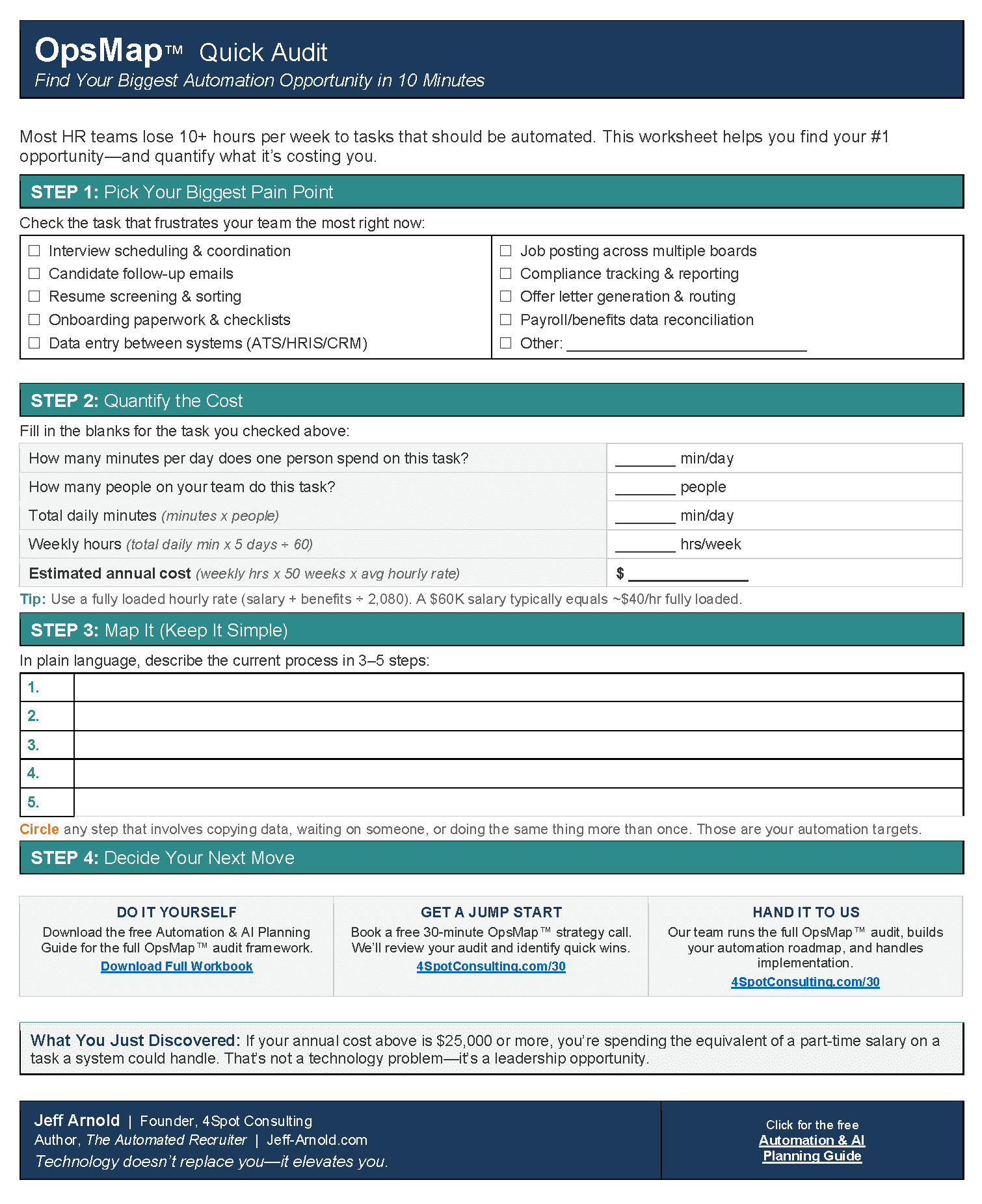
The integration of AI and automation is not merely an upgrade; it’s a fundamental transformation for HR and recruiting. These technologies are empowering organizations to operate with unparalleled efficiency, make data-driven decisions, and cultivate a superior experience for both candidates and employees. By embracing these advancements, HR leaders can shed the administrative burden, elevate their strategic impact, and drive sustainable growth for their businesses. At 4Spot Consulting, our OpsMap™ diagnostic is specifically designed to uncover these inefficiencies and surface automation opportunities tailored to your unique business needs, showing you exactly how to implement solutions that yield tangible ROI. It’s time to leverage the power of smart systems to build a workforce that is agile, engaged, and ready for the future.
If you would like to read more, we recommend this article: The Ultimate Guide to AI and Automation for Business Growth

RELATED POST