Post: 8 Transformative AI Applications: Revolutionizing HR & Recruiting for Strategic Advantage
8 Transformative AI Applications Revolutionizing HR and Recruiting
The landscape of Human Resources and Recruiting is undergoing a seismic shift, driven by the relentless pace of technological innovation. For leaders in HR, talent acquisition, and operations, the promise of Artificial Intelligence isn’t just a futuristic concept; it’s a present-day imperative for competitive advantage. At 4Spot Consulting, we specialize in demystifying these advanced technologies, integrating them into practical, ROI-driven automation strategies that eliminate bottlenecks and free up your high-value employees from low-value, repetitive tasks. This isn’t about replacing human judgment, but augmenting it, allowing HR and recruiting professionals to focus on strategic initiatives, complex problem-solving, and cultivating thriving workplace cultures. The goal is clear: save 25% of your day by harnessing AI to streamline operations, enhance candidate and employee experiences, and elevate your team’s strategic impact. From initial candidate engagement to employee retention, AI offers tangible solutions that directly impact your bottom line and scalability. Ignoring these advancements isn’t an option; embracing them strategically is the path to sustained growth and efficiency in today’s dynamic business environment.
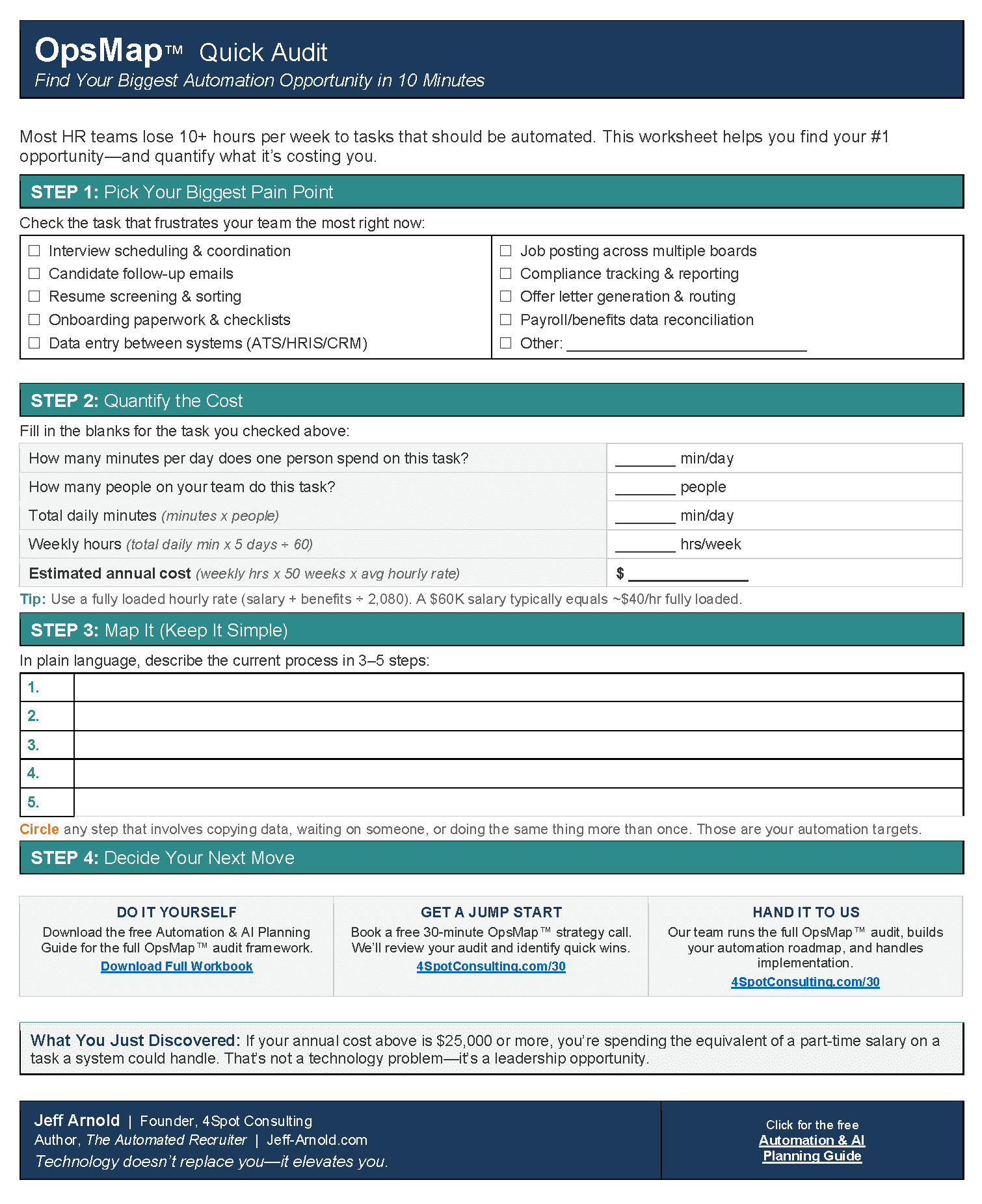
The journey to an AI-powered HR function doesn’t have to be daunting. With a strategic partner like 4Spot Consulting, you can navigate these waters with confidence, identifying the right tools and processes to drive measurable improvements. We move beyond theoretical discussions to implement real-world solutions that integrate seamlessly with your existing systems, such as Make.com, Keap, and PandaDoc. Our OpsMesh framework ensures that every AI integration serves a clear business objective, turning potential overwhelm into strategic advantage. This article will explore eight transformative AI applications that are not just trending, but actively redefining what’s possible in HR and recruiting, offering practical insights that you can begin to consider for your organization today.
1. AI-Powered Candidate Sourcing and Screening
In a competitive talent market, finding the right candidates quickly and efficiently is paramount. Traditional sourcing methods are often time-consuming and prone to human bias. AI-powered platforms are revolutionizing this by intelligently scanning vast databases, social media, and professional networks to identify candidates whose skills, experience, and even cultural fit align perfectly with job requirements. These tools go beyond keyword matching, utilizing natural language processing (NLP) to understand nuances in resumes and job descriptions, identifying passive candidates who might be an ideal fit but aren’t actively looking. The screening process, historically a major bottleneck, is also vastly improved. AI algorithms can analyze resumes and applications at lightning speed, flagging the most promising candidates while ensuring adherence to predefined criteria. This drastically reduces the manual effort involved in reviewing hundreds or thousands of applications, allowing recruiters to focus their valuable time on engaging with qualified individuals rather than sifting through irrelevant submissions. For example, an HR tech client we worked with saved over 150 hours per month by automating their resume intake and parsing process using Make.com and AI enrichment, syncing directly into their Keap CRM. This transformation not only saved time but also improved the quality of their talent pipeline by ensuring that promising candidates were never overlooked.
Furthermore, AI can help identify potential biases in resume language or candidate profiles, prompting recruiters to review objectively. This commitment to fair and equitable hiring practices is not just ethical, but also crucial for building diverse, high-performing teams. By automating the initial stages of sourcing and screening, organizations can achieve a more scalable recruiting function, capable of handling fluctuating hiring demands without compromising on quality or efficiency. The precision and speed offered by AI in these early stages set the foundation for a more strategic and successful talent acquisition strategy, directly contributing to our core promise of saving you 25% of your day by eliminating low-value, high-volume tasks.
2. Automated Interview Scheduling and Logistics
The back-and-forth of interview scheduling is a perennial frustration for candidates, recruiters, and hiring managers alike. It’s a prime example of a low-value, high-volume task that consumes significant time and can negatively impact the candidate experience. AI-powered scheduling tools eliminate this administrative burden entirely. These systems can integrate directly with calendars (e.g., Google Calendar, Outlook), automatically find mutually available times, send out invitations, and even manage rescheduling requests with minimal human intervention. Candidates receive personalized invitations with clear instructions, often with options to select their preferred time slots, leading to a smoother, more professional experience. This level of automation ensures that valuable recruiting bandwidth is conserved, allowing recruiters to focus on candidate engagement, strategic conversations, and building relationships, rather than managing logistical headaches.
Beyond simple scheduling, AI can also manage the entire interview logistics process. This includes sending automated reminders to all parties, providing virtual meeting links, and even preparing interview packets with candidate resumes and relevant job descriptions. For companies with high hiring volumes or complex interview stages, the time savings are enormous. This frees up administrative staff, allowing them to contribute to higher-impact activities. From a candidate’s perspective, a seamless scheduling experience reflects positively on the organization, reinforcing a perception of efficiency and respect for their time. This efficiency translates directly into a faster time-to-hire, a critical metric for businesses in competitive markets. Our OpsBuild process frequently incorporates these types of intelligent automation solutions, connecting tools like Make.com with CRM and calendar systems to create a truly hands-off scheduling experience that delights both candidates and internal teams.
3. Personalized Candidate Experience and Communication
In today’s talent market, the candidate experience is as crucial as the job itself. A poor experience can deter top talent and damage your employer brand. AI is transforming this by enabling highly personalized and engaging candidate journeys at scale. Chatbots and virtual assistants, powered by AI, can provide instant answers to frequently asked questions about job roles, company culture, benefits, and application status, 24/7. This immediate support not only improves candidate satisfaction but also reduces the burden on HR staff who would otherwise be answering these queries manually. These AI tools can be deployed on career pages, job boards, or even within messaging platforms, offering a consistent and helpful touchpoint.
Beyond chatbots, AI can personalize communication throughout the hiring process. This includes tailoring email sequences based on a candidate’s stage in the pipeline, their expressed interests, or even their previous interactions. For example, a candidate who expressed interest in a particular project might receive follow-up content related to that project. This level of personalization makes candidates feel valued and understood, enhancing their engagement and increasing the likelihood of them accepting an offer. AI can also analyze candidate data to predict which candidates are most likely to drop out of the process, allowing recruiters to intervene with personalized outreach. For our clients, integrating tools like Keap with AI-powered communication platforms through Make.com means that candidates receive timely, relevant, and personalized updates without a recruiter lifting a finger, ensuring that no lead falls through the cracks and every candidate feels important.
4. Predictive Analytics for Retention and Performance
Retaining top talent and ensuring optimal employee performance are critical challenges for any organization. AI offers powerful capabilities in predictive analytics, enabling HR leaders to proactively address these issues before they escalate. By analyzing vast amounts of internal data – including performance reviews, engagement surveys, absenteeism rates, promotion history, and even anonymized communication patterns – AI algorithms can identify patterns that indicate a risk of attrition. For example, certain combinations of tenure, performance scores, and lack of recent promotions might flag an employee as potentially disengaged. This early warning system allows HR to intervene with targeted support, mentorship, or new opportunities, rather than reacting after an employee has already decided to leave.
Similarly, AI can predict future performance trends. By correlating various data points, it can identify characteristics of high-performing employees and teams, helping organizations replicate success. This includes identifying effective training programs, leadership styles, or team compositions. For new hires, AI can predict onboarding success or potential challenges, allowing managers to provide tailored support from day one. This proactive approach to talent management saves significant costs associated with employee turnover (often estimated at 1.5-2 times an employee’s salary) and ensures that human capital is maximized. At 4Spot Consulting, our OpsMap™ diagnostic often uncovers these data silos and integration opportunities, showing how connecting disparate HR systems can unlock powerful insights for retention and performance, transforming reactive HR into a truly strategic function.
5. AI-Driven Onboarding and Training Customization
Effective onboarding is crucial for new hire retention and productivity, yet it’s often a generic, one-size-fits-all process. AI can personalize the onboarding experience, making it more relevant and engaging for each individual. By analyzing a new hire’s role, background, department, and even learning style preferences, AI can dynamically curate onboarding modules, resources, and assigned mentors. This ensures new employees receive information that is directly applicable to their success, rather than wading through irrelevant material. For example, an AI system could recommend specific training courses, internal resources, or team introductions based on the new hire’s initial engagement and progress.
Beyond onboarding, AI also transforms ongoing employee training and development. Learning management systems (LMS) powered by AI can offer adaptive learning paths, recommending courses and content based on an employee’s current skills, career aspirations, and performance gaps. If an employee struggles with a particular concept, the AI can provide additional resources or alternative learning formats. This personalized approach to continuous learning keeps employees engaged, upskills them more effectively, and ensures that training investments yield maximum ROI. For our clients, integrating platforms like PandaDoc for automated document signing with personalized training modules ensures that employees are not only compliant but also strategically developed. This reduces the administrative burden of managing training schedules and content, allowing HR to focus on the human elements of development and coaching, aligning perfectly with our goal of eliminating low-value work.
6. Smart HR Ticketing and Employee Support
Employees often have a myriad of questions ranging from benefits and payroll to IT issues and company policies. Manually addressing each query is time-consuming for HR departments, pulling them away from strategic tasks. AI-powered smart HR ticketing systems and intelligent chatbots provide instant, accurate support, significantly improving employee experience and HR efficiency. These systems can process employee queries, understand their intent using natural language processing, and provide immediate answers or direct them to the appropriate resources. For complex issues, the AI can triage the request and route it to the correct HR specialist, pre-populating relevant information to expedite resolution.
This automation of routine inquiries means HR professionals are no longer bogged down by repetitive questions. Instead, they can focus on complex employee relations, strategic initiatives, and personalized support where human empathy and expertise are truly required. The continuous learning capabilities of these AI systems mean they become smarter over time, improving their accuracy and coverage of questions. Imagine an employee needing to know their PTO balance or how to submit an expense report – an AI chatbot can provide this information in seconds, round-the-clock, without involving an HR representative. This not only enhances employee satisfaction by providing immediate access to information but also dramatically boosts the operational efficiency of the HR department, directly contributing to the 25% daily time savings we champion at 4Spot Consulting.
7. Bias Reduction and Fairness in Hiring
Unconscious bias is a significant challenge in hiring, often leading to less diverse workforces and missed opportunities for top talent. AI offers powerful tools to identify and mitigate these biases, fostering fairer and more equitable hiring processes. AI algorithms can analyze job descriptions for gender-coded language or other biased phrasing, suggesting neutral alternatives to attract a broader candidate pool. During the resume screening phase, AI can be designed to focus solely on skills and experience, masking identifying information like names, photos, or even educational institutions that might inadvertently trigger bias. This ensures that candidates are evaluated based on merit alone.
Furthermore, some AI tools can analyze interview transcripts or even video interviews (when ethically and legally permissible) to identify patterns of bias in interviewer behavior, providing feedback and training opportunities. While AI itself can carry embedded biases if trained on skewed data, responsible AI implementation involves careful calibration and continuous monitoring to ensure fairness. The goal is not to eliminate human judgment but to provide tools that support objective decision-making and promote diversity. By leveraging AI in this way, organizations can build more diverse teams, which research consistently shows leads to greater innovation, better problem-solving, and improved financial performance. 4Spot Consulting emphasizes strategic, ethical AI integration within our OpsBuild framework, ensuring that technology serves to enhance, not detract from, human values like fairness and inclusion in the workplace.
8. Automated Compliance and Policy Management
Staying compliant with ever-evolving labor laws, industry regulations, and internal policies is a daunting task for HR departments. Manual tracking and updates are prone to error and consume significant resources. AI-powered systems are revolutionizing compliance by automating many aspects of policy management and regulatory adherence. These systems can monitor legal changes in real-time, flag potential compliance gaps in existing policies, and even suggest necessary updates. For example, if a new overtime law is enacted, an AI system can instantly notify HR and audit relevant internal documents.
Beyond proactive monitoring, AI can automate the dissemination and acknowledgment of policies. When a new policy is introduced or updated, AI can ensure it is distributed to all relevant employees, track their review and acknowledgment, and provide audit trails – all without manual intervention. This not only reduces the administrative burden but also significantly mitigates legal risks by ensuring that employees are consistently informed and compliant. Furthermore, AI can assist in auditing employee records and processes to ensure they align with internal controls and external regulations, flagging discrepancies for human review. This level of automation frees up HR teams from the tedious, high-stakes work of compliance management, allowing them to focus on employee engagement and strategic initiatives. Through our OpsMesh framework, we help clients build robust, AI-driven compliance systems that provide peace of mind and significantly reduce operational overhead, aligning perfectly with our promise to eliminate human error and reduce operational costs.
The integration of AI into HR and recruiting is not a luxury, but a strategic necessity for organizations aiming to thrive in the modern business landscape. From supercharging talent acquisition to personalizing the employee experience and ensuring robust compliance, these eight applications demonstrate the profound impact AI can have. The benefits extend beyond mere efficiency gains; they encompass enhanced decision-making, reduced bias, greater scalability, and ultimately, a more strategic and impactful HR function. At 4Spot Consulting, we believe in practical, ROI-focused implementation, helping high-growth B2B companies leverage automation and AI to eliminate human error, reduce operational costs, and increase scalability, thereby saving them 25% of their day. The time for exploration is over; the time for strategic implementation is now. Embracing these transformative technologies will empower your HR and recruiting teams to move beyond administrative tasks and truly drive business success.
If you would like to read more, we recommend this article: The Future of HR: Crafting AI-Powered Strategies for Talent Acquisition and Management


RELATED POST