Post: AI: Redefining Business Operations for Strategic Advantage
Beyond Efficiency: How AI is Redefining Business Operations
In today’s hyper-competitive landscape, the pursuit of efficiency often dominates strategic discussions. Businesses are constantly seeking ways to streamline processes, cut costs, and do more with less. While these goals remain critical, the advent of artificial intelligence (AI) has pushed the conversation far beyond mere efficiency gains. AI is not just about making existing operations faster; it’s fundamentally redefining what’s possible, opening new avenues for innovation, scalability, and strategic advantage. For high-growth B2B companies, understanding this shift is not optional – it’s essential for sustained relevance and accelerated growth.
For decades, automation focused on repetitive, rule-based tasks. RPA (Robotic Process Automation) helped us mimic human actions, removing bottlenecks and reducing manual errors. AI, however, introduces a new dimension: intelligence. It allows systems to learn, adapt, and make decisions in ways that static automation simply cannot. This isn’t just about moving data from one place to another; it’s about intelligent data processing, predictive insights, natural language understanding, and adaptive workflows that continuously optimize themselves. This capability moves operations from being reactive and prescriptive to proactive and predictive, empowering business leaders to make more informed decisions faster than ever before.
From Repetitive Tasks to Strategic Insights: The AI Leap
Consider the HR and recruiting landscape, a sector rife with manual, time-consuming processes. Traditional automation might help parse resumes for keywords, but AI takes this further. AI-powered tools can analyze candidate profiles not just for keywords but for fit, potential, and even cultural alignment based on vast datasets. They can automate initial candidate engagement, schedule interviews, and even provide insights into potential flight risks post-hire. This frees up high-value HR professionals from low-value screening tasks, allowing them to focus on strategic talent acquisition, employee development, and fostering a positive workplace culture. The shift is profound: from HR as an administrative overhead to HR as a strategic business partner, driven by intelligent systems.
Similarly, in CRM and data management, AI’s impact is transformative. Maintaining a “single source of truth” is a common challenge for businesses. Data sprawl across various systems leads to inconsistencies, wasted time, and missed opportunities. AI can unify disparate data sources, identify anomalies, cleanse data, and even predict customer behavior or sales trends. For platforms like Keap and HighLevel, integrating AI means not just better data backup and organization, but a proactive system that identifies critical leads, automates personalized follow-ups, and optimizes sales funnels in real-time. This isn’t just about data backup; it’s about making your data intelligent and actionable, turning raw information into a powerful engine for revenue growth.
Unlocking Scalability and Reducing Human Error
One of the most significant benefits of integrating AI into business operations is its unparalleled ability to drive scalability. Human capacity is inherently limited; as a business grows, adding more human resources often introduces new complexities, increased costs, and the inevitable risk of human error. AI systems, once properly configured and trained, can scale their operations almost infinitely without the proportional increase in cost or error rate. This means that as your customer base expands, or as your service offerings diversify, your operational backbone can grow with you, maintaining consistent quality and efficiency.
Furthermore, AI significantly mitigates human error. While AI models can have their own biases or require careful training, they do not suffer from fatigue, distraction, or oversight in the way humans do. In critical areas like legal document review, financial reconciliation, or complex data entry, AI can achieve near-perfect accuracy, eliminating costly mistakes that could impact compliance, customer satisfaction, or the bottom line. This level of precision, combined with speed, allows businesses to operate with a new degree of confidence and reliability.
The Strategic Imperative: Integrating AI with OpsMesh™
At 4Spot Consulting, we’ve witnessed firsthand how businesses grapple with the promise and complexity of AI integration. It’s not enough to simply adopt AI tools; a strategic framework is necessary to ensure these technologies serve specific business outcomes. Our OpsMesh™ framework provides this strategic blueprint, ensuring that AI and automation initiatives are not isolated projects but interconnected components of a holistic, optimized operational ecosystem. This isn’t about chasing the latest shiny object; it’s about meticulously planning how AI will eliminate bottlenecks, drive revenue, and save valuable time for your highest-value employees.
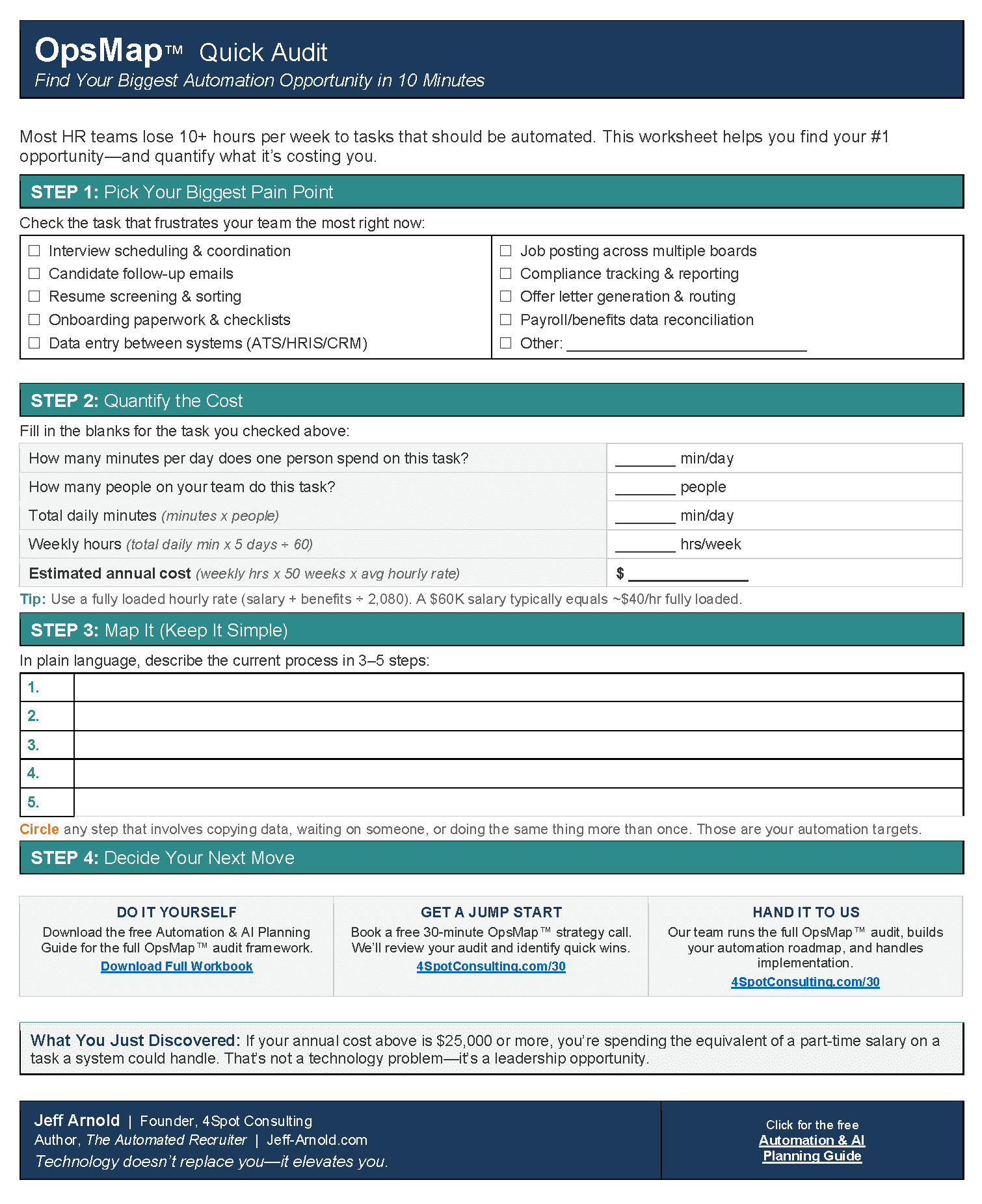
Our process begins with an OpsMap™ diagnostic, a comprehensive audit designed to uncover existing inefficiencies and identify prime opportunities for AI and automation. We don’t just recommend technology; we pinpoint the exact pain points where intelligent systems will deliver the most significant ROI. This strategic, outcome-driven approach is what differentiates effective AI integration from costly, disjointed experiments. By focusing on your core business objectives, we ensure AI becomes a true accelerator, saving you 25% of your day and enabling unparalleled growth.
The conversation around AI in business operations is no longer about hypothetical future scenarios. It is about present-day competitive advantage, redefined possibilities, and the strategic imperative to evolve. For leaders seeking to transform their operations from mere efficiency engines into dynamic, intelligent, and scalable powerhouses, the time to act is now. The future of business isn’t just automated; it’s intelligently automated, and the companies that embrace this transformation will be the ones that thrive.
If you would like to read more, we recommend this article: Mastering Business Automation: Your Guide to Strategic AI Implementation


RELATED POST