Post: AI for Smarter Data Organization: Building Your Business’s Single Source of Truth
Unlocking the Power of AI for Smarter Data Organization in Business Operations
In today’s fast-paced business landscape, data is often hailed as the new oil. Yet, for many high-growth B2B companies, this invaluable resource remains untapped, scattered across disparate systems, siloed departments, and countless digital documents. The result isn’t a competitive advantage, but a quagmire of inefficiency, redundant effort, and critical data obscured by sheer volume. Business leaders frequently grapple with the unseen costs of manual data entry, fragmented information, and the precious time high-value employees spend hunting for answers instead of driving strategic initiatives. This isn’t merely an inconvenience; it’s a significant bottleneck to scalability, a drain on profitability, and a silent killer of productivity.
The conventional approaches to data management, relying heavily on human input and legacy systems, are simply failing to keep pace. As businesses expand, so does the volume and complexity of their data, exacerbating the problem. We’ve seen firsthand how teams become overwhelmed, errors proliferate, and the potential for a “single source of truth” remains an elusive ideal. The challenge isn’t just collecting data; it’s organizing, interpreting, and making that data actionable in a way that truly supports growth and operational excellence. This is precisely where the strategic integration of Artificial Intelligence transforms a chaotic data environment into a well-oiled, intelligent information hub.
Beyond Basic Storage: AI-Powered Intelligent Data Architecture
Many organizations mistake storing data for organizing it. True data organization goes beyond simply having a place for everything; it involves creating an intelligent architecture where information is automatically classified, contextualized, and made readily accessible. This is the domain where AI shines. By leveraging advanced machine learning algorithms, AI can ingest vast amounts of unstructured data—from emails and meeting notes to contracts and customer interactions—and transform it into structured, searchable insights. Imagine an AI system that not only files a document but understands its content, extracts key entities, links it to related projects or clients, and tags it for future retrieval without a single human touch.
This isn’t just about automation; it’s about intelligence. AI can identify patterns, detect anomalies, and even predict future trends based on the data it processes. For example, in HR and recruiting, AI can automatically parse resumes, extract relevant skills, and match candidates to roles with far greater accuracy and speed than a human could, ensuring that critical talent data is not only stored but optimally utilized. In operations, AI can monitor transaction flows, flag potential issues, and ensure compliance by verifying document completeness and accuracy across systems. This strategic deployment of AI elevates data from mere records to predictive assets.
Building a “Single Source of Truth” with AI and Automation
At 4Spot Consulting, our OpsMesh framework emphasizes the creation of a truly integrated operational ecosystem, and at its heart lies the principle of a “single source of truth.” AI is the catalyst that makes this possible, especially when combined with powerful automation platforms like Make.com. We help businesses integrate their disparate systems—CRMs like Keap, document management tools, communication platforms, and specialized industry software—into a cohesive whole. AI acts as the intelligent layer, categorizing and routing information, ensuring consistency, and eliminating data duplication across these various touchpoints.
Consider a sales cycle: customer interactions from email (managed by tools like Unipile), proposal generation (PandaDoc), and CRM updates (Keap) often create fragmented data trails. An AI-powered system can seamlessly connect these dots, ensuring that every piece of information about a client is accessible from a single, unified view. This not only empowers sales teams with immediate, comprehensive context but also drastically reduces the potential for human error and ensures that no critical detail falls through the cracks. Our OpsBuild process is designed to implement these sophisticated AI and automation solutions, custom-tailored to a business’s unique operational flows, turning complex data challenges into streamlined, intelligent processes.
The ROI of Intelligent Data Organization
The tangible benefits of leveraging AI for smarter data organization are profound. We’ve seen clients achieve significant reductions in operational costs, often by eliminating hundreds of hours of manual data entry and reconciliation each month. Beyond cost savings, there’s a substantial increase in scalability; businesses can grow without proportionally increasing their administrative headcount, as their automated systems handle the expanded data load. High-value employees are freed from repetitive, low-impact tasks, allowing them to focus on strategic thinking, client engagement, and innovation—the activities that truly drive revenue and competitive advantage.
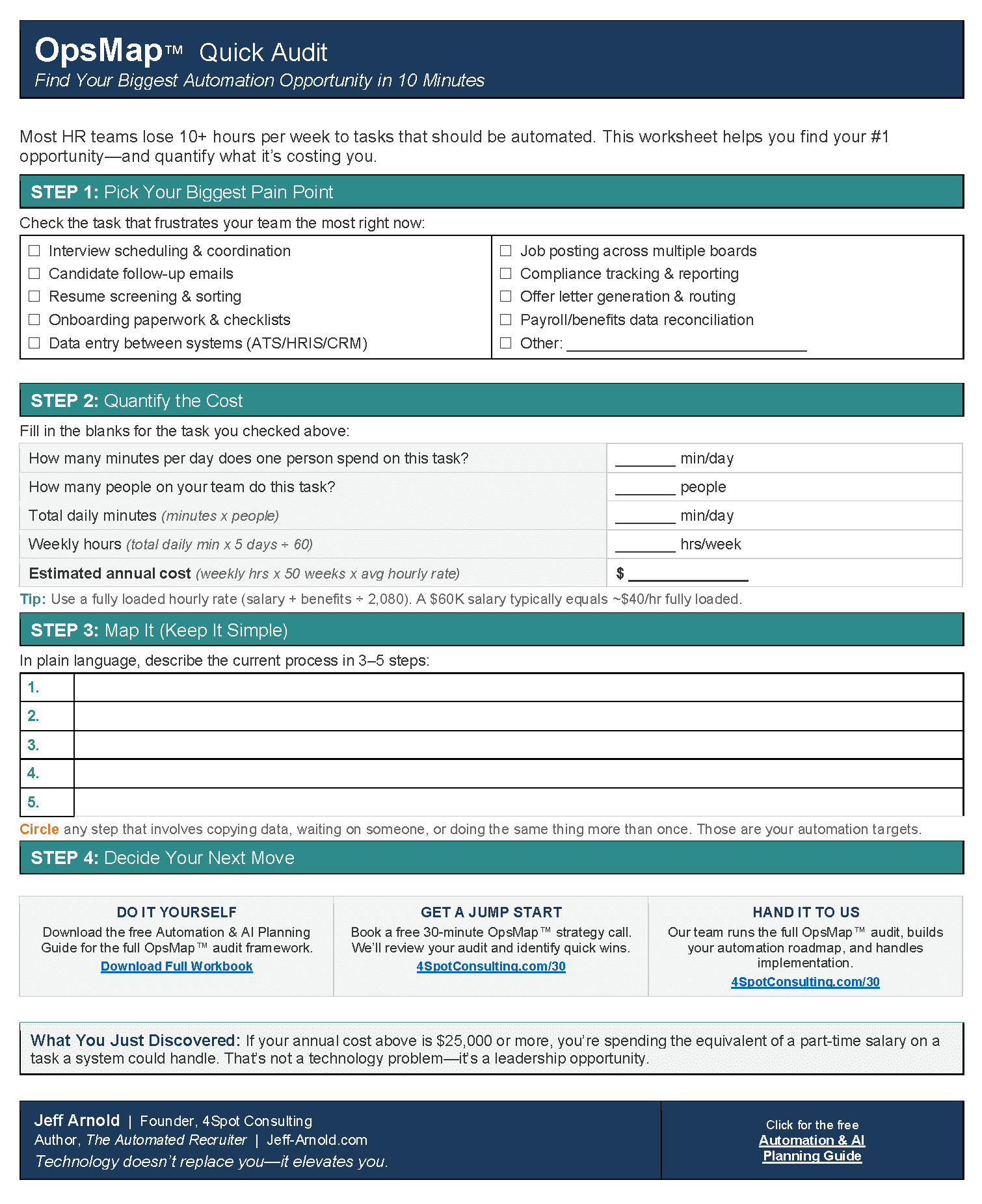
For organizations struggling with disparate information, the journey begins with understanding current inefficiencies. Our OpsMap™ diagnostic is a strategic audit designed to pinpoint exactly where data bottlenecks exist and how AI and automation can be strategically deployed for maximum impact. We don’t just offer technology; we offer a roadmap to operational clarity, efficiency, and a truly intelligent data infrastructure. The future of business operations isn’t just automated; it’s intelligently organized, powered by AI, and designed to unlock your team’s full potential.
Ready to uncover automation opportunities that could save you 25% of your day? Book your OpsMap™ call today.
If you would like to read more, we recommend this article: The Unseen Costs of Manual CRM Data Entry: What You Don’t Know is Hurting You


RELATED POST