Post: From Inbox Chaos to Operational Excellence: The Power of Email Automation
Beyond the Inbox: Automating Your Email Workflows for True Productivity
In today’s fast-paced business environment, the sheer volume of emails can feel like a relentless tide, threatening to drown productivity and divert valuable time from high-impact tasks. For business leaders, COOs, and HR directors, this isn’t just an annoyance; it’s a systemic drain on resources, contributing to employee burnout and missed strategic opportunities. The inbox, once a tool for connection, has become a bottleneck, demanding constant attention and manual sorting that stifles real progress.
Many organizations attempt to manage this deluge through sheer force of will or by implementing more sophisticated email clients. While these efforts might offer temporary relief, they rarely address the root cause: the underlying workflows that generate and process emails. True liberation from inbox chaos doesn’t come from better organization within your email client; it comes from intelligently automating the tasks that make email a burden in the first place. This isn’t about eliminating email, but transforming it into a seamless conduit for information and action, rather than a black hole for human effort.
The Hidden Cost of Manual Email Management
Consider the daily routines within your business. How many hours are spent by your team members manually categorizing emails, extracting data, forwarding requests, scheduling appointments, or chasing down approvals? In HR, this could involve processing applicant inquiries, sending onboarding documents, or managing PTO requests. For sales and operations, it might mean relaying lead information, updating CRM records based on customer interactions, or coordinating service delivery. Each of these seemingly small, manual steps adds up, creating a significant drag on efficiency and introducing the potential for human error. High-value employees, hired for their strategic thinking and problem-solving abilities, often find themselves trapped in a cycle of low-value, repetitive email-driven tasks.
This isn’t just about lost time. It impacts morale, reduces accuracy, and ultimately constrains scalability. An organization that relies heavily on manual email processes will hit a ceiling where growth is inhibited by its operational capacity. Automating these workflows isn’t just a convenience; it’s a strategic imperative for businesses aiming for sustained growth and optimal performance. It’s about reclaiming the 25% of your day that might currently be lost to the inbox.
Strategic Automation: More Than Just Auto-Replies
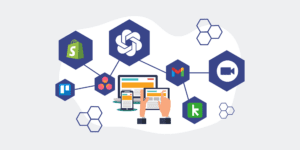
When we talk about email automation, we’re not simply referring to setting up auto-responders or basic filters. We’re discussing comprehensive, intelligent systems that leverage tools like Make.com, AI, and robust CRM platforms to handle complex, multi-step processes. This involves identifying specific email-driven workflows and then designing automated sequences that manage these tasks from end-to-end.
Imagine, for example, a new lead inquiry arriving. Instead of a sales associate manually logging it into the CRM, assigning it, and initiating a follow-up, an automated workflow can instantly parse the email, extract key contact information, create a new record in Keap or HighLevel, notify the appropriate team member via Slack, and even trigger a personalized initial response. This ensures rapid engagement, reduces the risk of leads falling through the cracks, and frees your sales team to focus on conversion, not data entry.
In HR, consider the application process. Emails containing resumes can be automatically parsed, key data extracted using AI, and then uploaded directly into your applicant tracking system or CRM. Automated responses can acknowledge receipt, schedule initial screening calls based on calendar availability, and even send preliminary questionnaires, significantly streamlining the recruitment funnel and saving hundreds of hours per month, as we’ve seen with clients saving 150+ hours using similar systems.
Building a Robust Automation Framework
The key to successful email workflow automation lies in a strategic-first approach. It’s not about haphazardly connecting tools; it’s about understanding your current operational bottlenecks, identifying the highest-impact areas for automation, and then building a cohesive, integrated system. This is where frameworks like our OpsMesh come into play, providing a structured approach to integrating disparate systems and processes.
Our OpsMap™ diagnostic is designed precisely for this purpose—to uncover those hidden inefficiencies, surface opportunities for automation, and roadmap profitable, time-saving solutions. It’s a strategic audit that moves beyond the symptom of a full inbox to address the underlying process flaws. Following this, our OpsBuild phase meticulously implements these automations, connecting dozens of SaaS systems via platforms like Make.com, ensuring that every solution is tied directly to ROI and tangible business outcomes. We don’t just build; we build with purpose, ensuring your systems are a “single source of truth” and eliminate human error.
The ultimate goal is to create an environment where email serves your business, rather than dominating it. By automating repetitive tasks, you empower your high-value employees to focus on what they do best: innovating, strategizing, and driving the business forward. This transition from reactive email management to proactive workflow automation is a fundamental step toward achieving true operational excellence and scalable growth. It’s how businesses stop just responding to the inbox and start truly mastering their productivity.
If you would like to read more, we recommend this article: The Strategic Imperative of Business Automation




RELATED POST