Post: Unshackle B2B Agility: The Automation Blueprint for Manual Data Freedom
The Invisible Handcuffs: How Manual Data Drags Down B2B Agility and How Automation Frees It
In the relentless pursuit of growth, B2B companies often find themselves ensnared by an insidious, yet often overlooked, adversary: manual data management. It’s the silent drain on resources, the subtle inhibitor of innovation, and the invisible handcuff on organizational agility. While the allure of shiny new technologies often dominates strategic discussions, the foundational efficiency – or lack thereof – in handling information can be the ultimate determinant of a company’s scalability and competitive edge.
Consider the daily reality within many high-growth B2B environments. Teams are tirelessly engaged in tasks that, at their core, involve moving data from one system to another, validating entries, reconciling discrepancies, or simply preparing reports. HR departments manually parse resumes, sales teams update CRM records from disparate sources, and operations specialists wrestle with spreadsheets to track project progress. Each of these seemingly minor, repetitive actions accumulates, forming a colossal drag on productivity. It’s not just about the time spent; it’s about the opportunity cost, the human error introduced, and the sheer mental fatigue that diverts high-value employees from strategic thinking to administrative drudgery.
The Erosion of Productivity and Strategic Focus
The true cost of manual data processes extends far beyond salary expenditure for the hours consumed. Every moment an employee spends on data entry or reconciliation is a moment they are not strategizing, innovating, or directly engaging with clients. This erosion of strategic focus leads to a slower response to market shifts, missed opportunities for deeper customer engagement, and a generally reactive rather than proactive business posture. For B2B companies targeting $5M+ ARR, this isn’t merely an inconvenience; it’s a critical bottleneck that actively hinders the realization of ambitious growth targets.
Furthermore, manual data handling is inherently prone to error. A single misplaced digit, an overlooked email, or an incorrectly transferred record can cascade into significant operational issues, financial discrepancies, or even compliance risks. In an environment where data integrity is paramount for informed decision-making, relying on human diligence for repetitive, high-volume tasks is a gamble with your company’s future. Automation, in this context, isn’t just about speed; it’s about precision and reliability, laying a stable foundation for all subsequent operations.
Unlocking Agility with Integrated Automation and AI
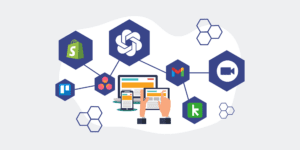
The solution lies not in working harder, but in working smarter – by strategically deploying automation and AI to liberate your workforce from these invisible handcuffs. At 4Spot Consulting, our OpsMesh framework is designed precisely to address this challenge, integrating disparate systems into a cohesive, intelligent operational fabric. We move beyond simple task automation to build comprehensive, end-to-end solutions that mirror your business processes, but with unparalleled efficiency and accuracy.
Imagine an HR process where a resume submission automatically triggers parsing, extracts key data points, enriches the candidate profile with AI insights, and then seamlessly updates your CRM (like Keap or HighLevel) and initiates a personalized communication sequence – all without a single human touchpoint for the initial steps. This is not a futuristic vision; it’s the present reality we implement for our clients. Such automation eliminates hours of manual effort, reduces human error to near zero, and dramatically accelerates the recruiting lifecycle, allowing your HR leaders to focus on talent strategy and candidate experience.
From Reactive to Proactive: A Strategic Shift
Our approach, beginning with an OpsMap strategic audit, pinpoints precisely where manual data processes are creating the most significant friction and where automation can deliver the greatest ROI. We then move into OpsBuild, implementing robust systems using platforms like Make.com, ensuring that data flows seamlessly and intelligently between all your critical applications. This strategic-first methodology means we’re not just building automation for its own sake, but meticulously crafting solutions that are directly tied to your business outcomes: reducing operational costs, enhancing scalability, and saving your high-value employees 25% of their day.
Beyond individual tasks, the power of AI-powered operations truly comes to life when it provides a single source of truth for your organizational data. No more disparate spreadsheets or conflicting reports. Instead, a unified, continuously updated view of your operations, enabling leadership to make faster, more confident decisions. This shift from reactive problem-solving to proactive, data-driven strategy is transformative, allowing businesses to adapt quickly, capitalize on emerging trends, and outmaneuver competitors.
Freeing your business from the invisible handcuffs of manual data isn’t a luxury; it’s a strategic imperative for sustained growth and resilience in today’s dynamic B2B landscape. It’s about empowering your teams to excel, ensuring data integrity, and establishing an operational framework that can scale with your ambitions, not against them.
If you would like to read more, we recommend this article: The Hidden Costs of Manual Operations: Unveiling Inefficiency in Modern Business



RELATED POST