Conditional Logic for Automated Interview Workflows
Implement conditional logic to automate your hiring workflows. Tailor candidate journeys based on specific role requirements, cut time-to-hire, and improve candidate experience.

Small businesses don't need enterprise budgets to win with AI in HR. The highest ROI moves target the same five to ten repetitive, high-volume tasks every small HR team drowns in — resume screening, interview scheduling, onboarding, FAQ handling, and payroll prep. Fix those first. Strategic AI follows the foundation, not the other way around.
The right Keap plan is the one whose automation depth matches your highest-cost manual bottleneck. Start with a workflow audit, calculate hours reclaimed per process, and select the tier whose incremental features cover a documented cost — not the tier with the most features you might use someday.
Customer experience is the most under-measured profit driver in mid-market businesses. Keap automation converts CX from a cost center into a revenue engine by eliminating the manual touchpoints that cause churn, delay onboarding, and erode lifetime value. The financial payoff is not theoretical — it shows up in retention rates, cost-per-acquisition, and headcount efficiency within one quarter of deployment.
Manual processes don't just slow growth — they cap it. These 9 Keap automation strategies target the workflows that consume the most hours, introduce the most errors, and stall the most revenue. Leaders who implement them systematically reclaim double-digit hours per week, reduce costly mistakes, and build operations that scale without adding headcount.
Proving Keap sales automation revenue impact requires a measurement framework built before the first workflow goes live — not bolted on afterward. Define conversion KPIs, configure Keap tagging and campaign goals to capture attribution data, then surface that data in a reporting dashboard leadership can read in under five minutes.
Understand the core automation terms you need. This glossary defines APIs, Webhooks, and Workflow Automation, showing how they apply directly to HR and recruiting efficiency.
Retention ROI compounds faster than acquisition ROI — but only when workflows are built before relationships erode. Use Keap automation™ to systematize onboarding, flag churn signals, trigger reengagement, and close the feedback loop. Each step turns reactive customer service into a measurable, repeatable loyalty engine with trackable financial returns.
Keap's reporting suite is the difference between claiming automation works and proving it. Nine report types — from pipeline velocity to campaign attribution to client retention — give HR directors, sales leaders, and COOs the defensible numbers they need to justify every automation dollar and secure the next budget cycle.
Automated offboarding wins on every dimension that matters: speed, security, compliance, and cost. Manual offboarding introduces sequencing gaps that leave credentials active, assets unreturned, and payroll unclosed — each a documented liability. Organizations running deterministic automation eliminate those gaps entirely and recover the process overhead for higher-value work.
Automated financial offboarding wins on every measurable dimension: speed, accuracy, compliance auditability, and employee experience. Manual processes introduce data-entry errors, missed deadlines, and legal exposure that compound with every departure. For any organization processing more than five exits per month, automation is not optional — it is the only defensible operating standard.
Full-funnel ROI with Keap automation means measuring returns at every stage — lead capture, conversion, onboarding, retention, and referral — not just the top of the funnel. Businesses that automate the complete customer lifecycle consistently outperform those that stop at lead generation, compounding ROI through reduced churn, higher CLV, and lower cost-per-acquisition.
Keap ROI is the total measurable return — financial, operational, and strategic — generated by automating CRM, marketing, and sales workflows in Keap. It spans direct revenue attribution, time reclaimed from manual processes, reduced error costs, and customer lifetime value gains. Quantifying each dimension converts a line-item CRM expense into a defensible business case.
Efficiency gains alone plateau inside 18 months. Sustainable growth requires automating the entire customer lifecycle — lead capture, nurture, conversion, and retention — inside one integrated system. Teams that follow a structured Keap automation roadmap routinely reclaim 10+ hours per week, reduce cost-per-hire, and build operational capacity that scales without proportional headcount increases.
Efficiency is the floor, not the ceiling. Businesses that deploy Keap automation to eliminate repetitive tasks without a growth architecture hit a ceiling fast. The ones that win treat every automated workflow as a compounding asset—building predictable revenue, consistent customer experience, and a scalable operating model that survives demand spikes without adding headcount.
Most marketing automation investments fail the ROI test because the measurement framework is built after deployment. TalentEdge reversed that sequence — defining lead-source tagging, conversion goals, and pipeline attribution inside Keap before launching a single sequence — and produced $312,000 in annual savings with a documented 207% ROI in 12 months.
Manual operations cost more than the hours they consume—they cost decision speed, accuracy, and compounding opportunity. Keap automation wins on every measurable factor: error rate, throughput, cost-per-task, and employee retention. For teams processing more than twenty recurring tasks per week, the manual path is not a choice; it is a liability.
Use Make.com to build foundational offboarding workflows and secure your organization. Eliminate manual errors, protect intellectual property, and boost operational efficiency.
Automated benefit termination notices eliminate the compliance gaps, missed deadlines, and data-entry errors that define manual workflows. For any organization processing more than two offboardings per month, automation delivers faster notice delivery, airtight audit trails, and measurable cost savings — manual processes cannot compete on any of these dimensions.

Quantifying Keap automation ROI starts with three financial levers: labor hours reclaimed, revenue acceleration from faster sales cycles, and error-cost elimination. Assign dollar values to each, subtract total investment, and divide by that investment to get a defensible ROI percentage. Leaders who follow this sequence produce board-ready numbers in under an hour.
Leaving a former employee's CRM account active for even 48 hours exposes customer data, violates data-privacy obligations, and burns license budget. Automated CRM deactivation — triggered the moment HR confirms a termination — eliminates all three risks simultaneously. The workflow costs minutes to build and closes a gap that manual checklists reliably miss.
Customer lifetime value collapses when follow-up is inconsistent and communication is generic. TalentEdge, a 45-person recruiting firm, deployed Keap automation across nine workflow categories, replacing manual nurture with precision-timed sequences. The result: $312,000 in documented annual savings, a 207% ROI inside twelve months, and a client retention rate that turned one-time placements into recurring accounts.
Keap automation delivers measurable ROI when workflows target specific, high-cost bottlenecks — not processes in general. Three real-world implementations show time-to-hire cut by 40%, onboarding cycles compressed by 70%, and data-entry errors producing five-figure payroll mistakes. The pattern is consistent: fix the process first, then automate it.
Enterprise offboarding is a sequencing problem that manual checklists cannot solve at scale. Automated workflows trigger on termination, revoke access across every system, recover assets, close payroll, and log every action — eliminating the security gaps and compliance failures that cost large organizations millions each year.
Keap automation™ wins on every measurable productivity dimension against manual processes: it eliminates up to 40% of repetitive administrative work, cuts cycle times by compressing multi-day workflows into minutes, and generates the audit trail leaders need to prove ROI. For teams spending more than five hours per week on rote tasks, manual is not a viable alternative.
Manual offboarding is a sequencing failure, not a staffing problem. When Sarah's HR team moved from ad-hoc checklists to a structured automation workflow, they cut processing time by 60%, eliminated active-credential overruns, and reclaimed six hours per week — without adding headcount or changing their HRIS.
The status quo is not free. For mid-market teams still relying on manual workflows, the annual cost of inaction — lost recruiter hours, data errors, and stalled pipelines — routinely exceeds the fully loaded cost of Keap automation by a factor of three or more. Build the comparison side-by-side and the budget case writes itself.
Keap automation ROI is the net financial return generated when Keap's CRM and workflow automation replaces manual processes—measured in labor hours reclaimed, cost-per-hire reduced, revenue cycle accelerated, and error costs eliminated. Leaders who define and quantify each component before presenting a business case consistently win budget approval faster than those who rely on vendor promises alone.
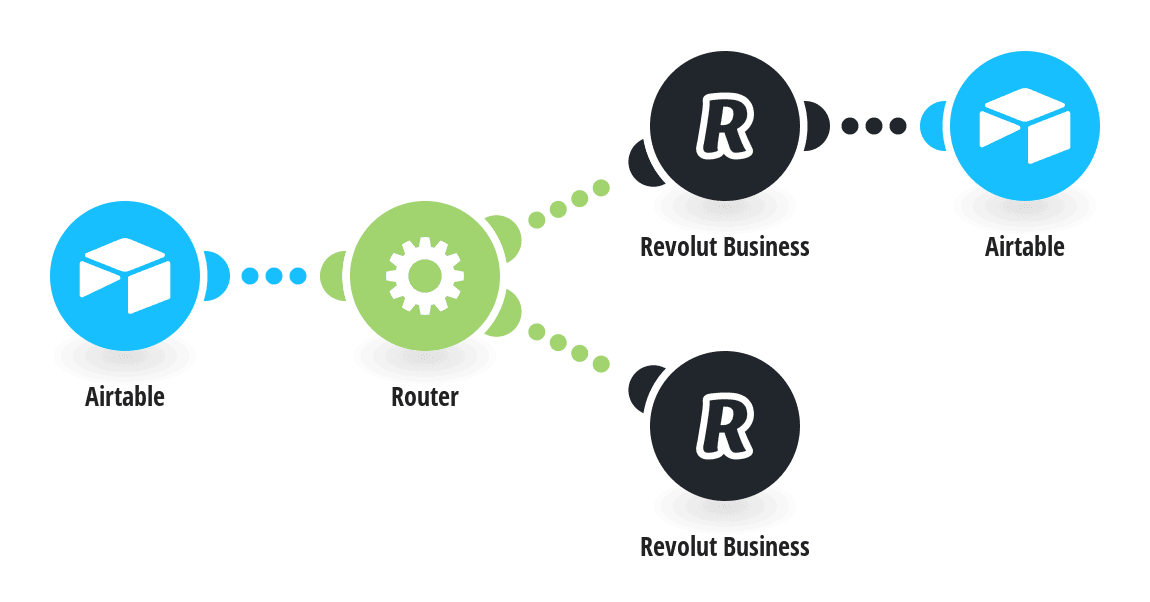
Standard offboarding checklists fail at complexity. When TalentEdge mapped nine automation opportunities through an OpsMap™ engagement, advanced Make.com™ scenario architecture — conditional routing, custom error handling, and cross-system orchestration — delivered $312,000 in annual savings and 207% ROI in 12 months. The lesson: deterministic automation, not manual coordination, is what closes every exit door.
Keap's real ROI is never the software cost—it's the time reclaimed from manual processes, errors eliminated, and revenue unlocked when your team stops maintaining systems and starts driving growth. Follow this six-step calculation framework to produce a defensible number your CFO will approve and your leadership team will act on.