Post: Custom Quotes vs. Transparent Pricing: An HR Strategy Guide
The transparent pricing vs. custom quotes decision in HR procurement is the choice between software vendors who publish fixed per-seat rates and vendors who require a sales conversation to deliver a price — and understanding which model serves your organization’s strategic goals determines whether you get predictable value or negotiated risk. For the framework that governs how AI should inform these procurement decisions, see our pillar on Explainable AI in HR: Your Complete 2026 Guide to Fair, Bias-Free Hiring.
Bottom line up front: Transparent pricing gives you speed, benchmarking ability, and budget predictability. Custom quotes give you flexibility, negotiating room, and enterprise-scale customization. Neither is universally better. The wrong choice for your org size and complexity costs more than the price difference between vendors.
Sarah, an HR Director at a regional healthcare system, wasted 12 hours a week managing a custom-quoted enterprise platform that was 40% over-spec for her actual workflows. The vendor had sold her the enterprise tier because her user count triggered it — but she needed 30% of the features. Switching to a transparent-priced mid-market tool cut her admin time in half and reduced her hiring cycle by 60%. The custom quote had been technically correct. The fit had been wrong. You can also learn how to benchmark HR software costs in our guide on Mastering HR Tech Spend: Strategic Benchmarking for Ultimate Value.
Definition: What Is the Transparent Pricing vs. Custom Quotes Distinction?
Transparent pricing is a vendor model where rates are publicly listed — typically per user per month — and buyers can calculate total cost before any sales engagement. Buyers evaluate the tool on its merits without a pricing conversation acting as a gatekeeping mechanism.
Custom quotes (also called enterprise pricing or contact sales pricing) require the buyer to enter a sales process before receiving a price. The vendor sizes the deal based on user count, feature requirements, integration complexity, and — often — perceived budget authority of the buyer.
The distinction matters because it changes your negotiating position, your budget predictability, and your ability to benchmark what you pay against the market.
How Does Each Pricing Model Work in Practice?
Transparent pricing: You visit the vendor’s pricing page, select a tier, enter your seat count, and see your annual cost. You can compare three vendors in 20 minutes. Implementation costs, if any, are typically flat-rate or documented. You know your number before you talk to anyone.
Custom quotes: You submit a request, enter a discovery call, complete a requirements worksheet, and receive a proposal — typically 2-4 weeks after first contact. The proposal is tailored to your stated requirements. Your cost reflects the vendor’s assessment of what your requirements are worth and what your organization will pay.
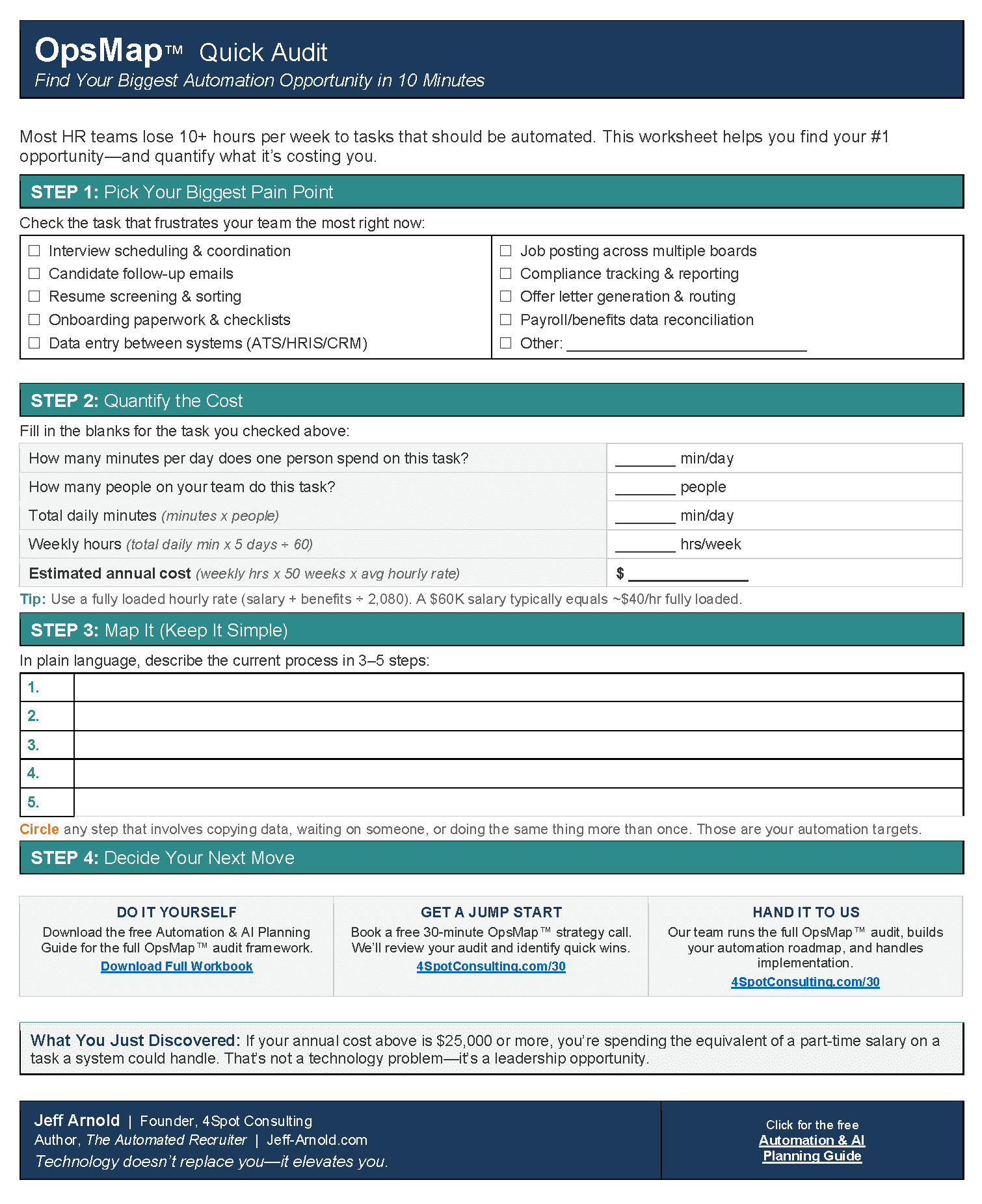
Our OpsMap™ process audit maps your actual HR workflow requirements before any vendor engagement, so you enter custom quote conversations with documented specs rather than verbal descriptions. This closes the information gap that vendors exploit in custom-quote negotiations.
Why Does This Distinction Matter for HR Leaders?
The pricing model shapes the entire vendor relationship. Transparent pricing creates accountability: the vendor cannot charge you more than the listed rate without your explicit agreement. Custom pricing creates a relationship where the vendor has permanent information advantage about what comparable buyers pay.
David’s $27K overpayment story illustrates the risk: he was billed at the $130K enterprise tier while using $103K worth of features. With transparent pricing, that discrepancy would have been visible at purchase. With custom pricing, it required an audit to uncover.
TalentEdge restructured from three custom-quoted platforms to a hybrid stack — two transparent-priced tools and one custom-quoted enterprise system where they genuinely needed the customization. The result was $312K in annual savings and 207% ROI. The savings were not from choosing cheaper tools. They were from matching the pricing model to the actual complexity of the use case.
Key Components: What to Evaluate in Each Model
| Factor | Transparent Pricing | Custom Quote |
|---|---|---|
| Budget predictability | High — rate is fixed at purchase | Low — subject to negotiation and annual increases |
| Benchmarking ability | High — compare vendors without sales calls | Low — prices are confidential |
| Customization depth | Limited to published tiers | High — negotiable features and terms |
| Sales cycle length | Days to weeks | Weeks to months |
| Switching cost | Lower — no negotiated lock-in | Higher — custom contracts include exit penalties |
| Implementation support | Standardized or self-serve | Negotiable and often bundled |
Our OpsSprint™ engagement includes a vendor model assessment that matches your HR complexity profile to the right pricing model before you enter any sales conversation.
Expert Take
Custom quotes are not a premium product — they are a sales mechanism. When a vendor hides their price, they are not protecting proprietary value. They are maximizing deal size by pricing to perceived budget. I have watched HR leaders pay 60% more than adjacent buyers for identical configurations because they entered the sales conversation before establishing their ceiling. Transparent pricing is not always cheaper. But it is always more honest. When I see a vendor who refuses to publish any pricing, I treat that as a risk signal, not a premium indicator. The question to ask is: what are they hiding, and from whom?
Related Terms
- Per-seat pricing: A billing model where cost scales with the number of users, common in transparent-priced SaaS tools.
- Enterprise tier: A pricing level for large organizations that typically includes advanced features, dedicated support, and custom contract terms.
- Total Cost of Ownership (TCO): The full cost of a software purchase including license fees, implementation, training, integration, and ongoing administration.
- Price lock: A contract provision preventing per-seat price increases for a defined period — negotiable in custom-quoted deals, automatic in many transparent-priced products.
- OpsBuild™: 4Spot’s HR tech architecture service, which includes a pricing model assessment and vendor fit analysis before any platform commitment.
Common Misconceptions
Misconception 1: “Custom quotes always mean better deals.”
Custom quotes mean flexible deals — which can be better or worse than list price depending on your preparation. An unprepared buyer in a custom quote conversation almost always pays more than a prepared buyer using a transparent-priced tool.
Misconception 2: “Transparent pricing means no room to negotiate.”
Most transparent-priced vendors negotiate on implementation fees, onboarding support, contract length, and annual price increases — even when the per-seat rate is fixed. The published rate is the floor for their sales team, not a ceiling for your negotiation.
Misconception 3: “Enterprise needs require custom quotes.”
Many mid-market HR needs are served by transparent-priced tools. The correlation between organization size and need for custom pricing is weaker than vendors imply. Evaluate your actual integration and workflow requirements before assuming enterprise pricing is necessary. See how we assess HR tech integration requirements in Make.com: Integrating HR Tech for Strategic Advantage.
Misconception 4: “The sales rep’s quote is the best price available.”
The initial quote in a custom pricing conversation is rarely the best price available. Vendors build discount room into initial proposals. A documented competitive quote and a clear deadline for decision are the two inputs that reliably move custom quotes toward their floor.
Frequently Asked Questions
What is transparent pricing in HR software?
Transparent pricing means the vendor publishes their rates publicly — typically per seat per month — so buyers can evaluate cost before contacting sales. You know what you will pay before the first conversation.
When should HR leaders choose custom-quoted HR software?
Choose custom quotes when your organization has complex integration requirements, non-standard workflows, or a user count that qualifies for enterprise pricing tiers. Custom quotes also make sense when you need bundled implementation support as part of the contract.
What are the risks of custom-quoted HR software pricing?
The primary risks are price opacity, long sales cycles, and high switching costs. Without a published rate, you cannot benchmark what you pay against comparable buyers, and vendors can price to perceived budget rather than actual value.
How do I compare custom-quoted vendors against transparent-priced alternatives?
Build a total cost of ownership model that includes implementation fees, training, integration costs, and projected annual increases. Require the custom vendor to provide a three-year cost projection in writing before signing.



RELATED POST